Significant Snappers
A subjective selection by Dr Marcus Bunyan
Anna Atkins (English, 1799-1871)
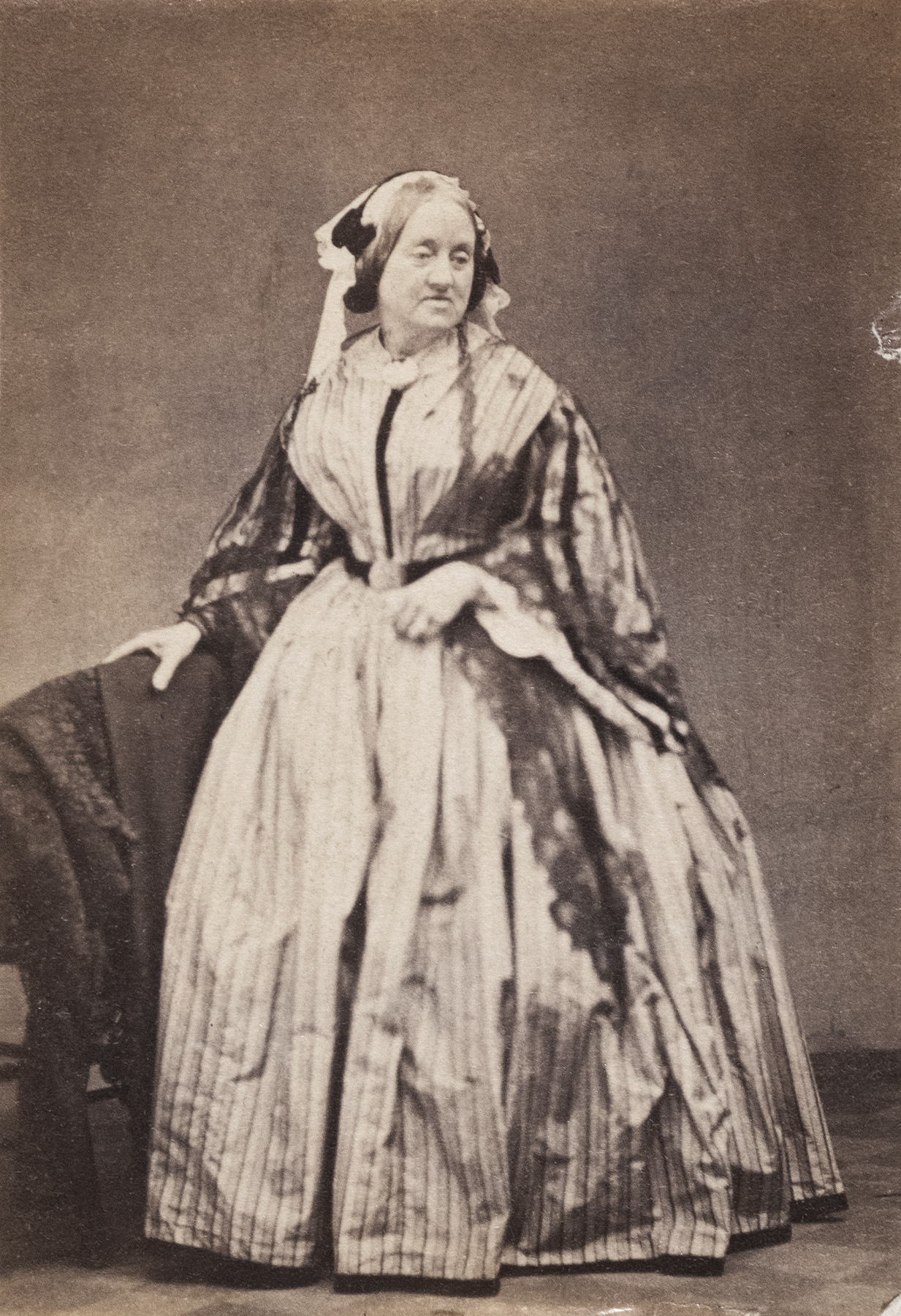
Unknown photographer
Portrait of Anna Atkins
c. 1862
Albumen print
From the Nurstead Court Archives
Anna Atkins (English, 1799-1871) is often considered the first person to publish a book illustrated with photographic images: the self-published book of her cyanotype photograms in the first instalment of Photographs of British Algae: Cyanotype Impressions in October 1843. The date is incredibly early, eight months before June 1844 when the first fascicle of William Henry Fox Talbot’s The Pencil of Nature was released; that book being the “first photographically illustrated book to be commercially published” or “the first commercially published book illustrated with photographs.” (Wikipedia)
Atkins learnt the cyanotype process a year after its invention by Sir John Herschel, a friend of the Atkins family, and then applied the process to algae (specifically, seaweed) by making cyanotype photograms that were contact printed “by placing the unmounted dried-algae original directly on the cyanotype paper”
What is interesting to me is not just Atkins choice of the new medium of photography to describe, both scientifically and aesthetically, the beauty and detail of her collection of seaweeds; but within that new medium of photography, she chose not the photogenic or calotype process, but the graphic cyanotype process with its vivid use of the colour blue, a ‘means of reproducing notes and diagrams, as in blueprints’.
Here we have a process that reproduces reality as in a diagram, a diagrammatic process that is then doubly reinforced when Atkins places her specimens directly on the cyanotype paper producing a photogram, a photographic image made without a camera. The resultant negative shadow image shows variations in tone that are dependent upon the transparency of the objects used. (Wikipedia)
Atkins photographs, produced “with great daring, creativity, and technical skill” are “a groundbreaking achievement in the history of photography and book publishing.” While Atkins’ books can be seen as the first systematic application of photography to science, each photograph used for scientific study or display of its species or type, there is a much more holistic creative project going on here.
Can you imagine the amount of work required to learn the calotype process, gather your thoughts, photograph the specimens, make the prints, write the text to accompany the images, and prepare the number of volumes to self-publish the book, all within a year? For any artist, this amount of concentrated, focused work requires an inordinate amount of time and energy and, above all, a clear visualisation of the outcome that you want to achieve.
That this was achieved by a woman in 1843, “in contrast to the constraints experienced by women in Victorian England,” makes Atkins achievement of scientific accuracy, ethereal beauty and sublime transcendence in her photographs truly breathtaking.
Dr Marcus Bunyan
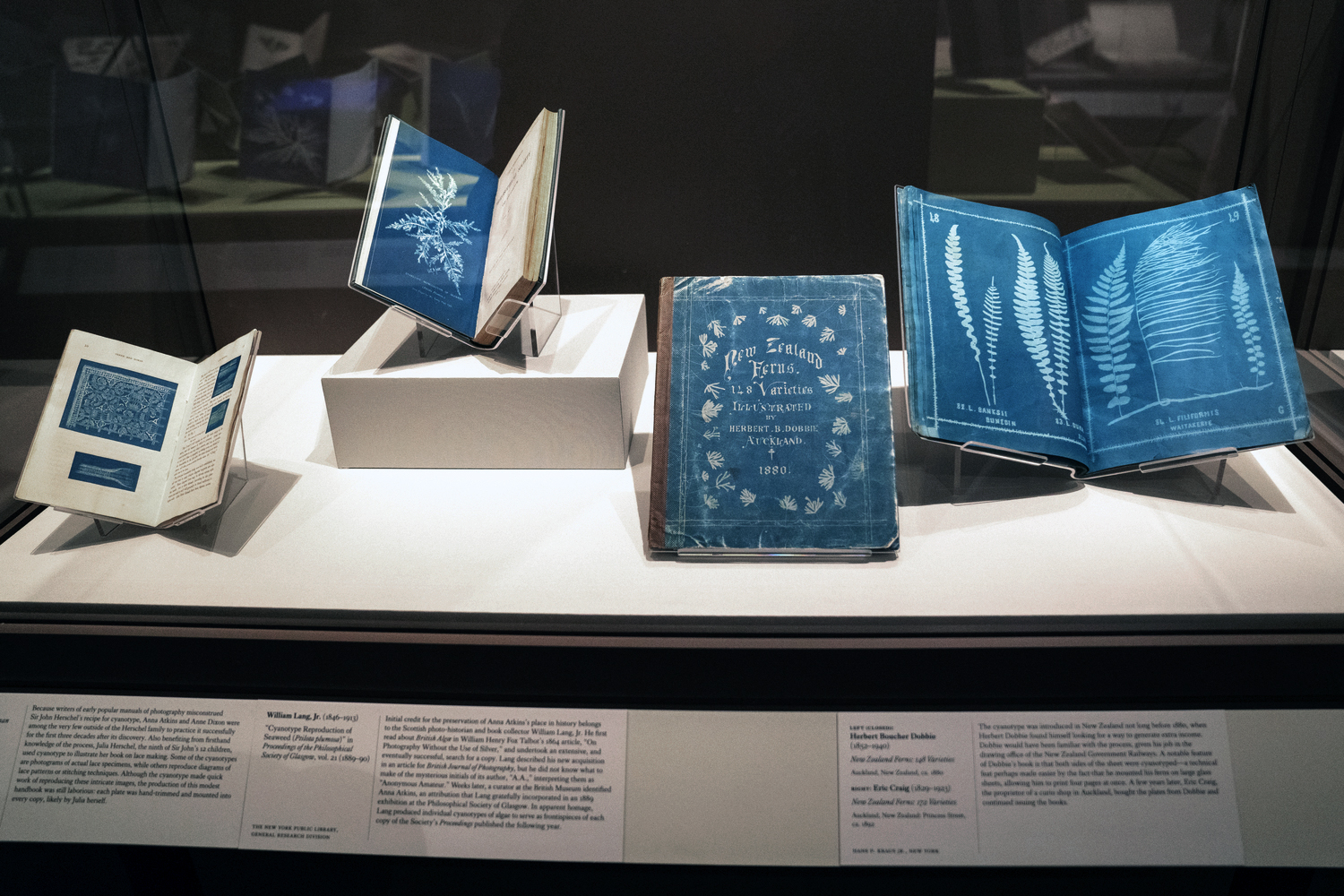
Installation view of the exhibition Blue Prints: The Pioneering Photographs of Anna Atkins at The New York Public Library

Anna Atkins (English, 1799-1871)
Laminaria bulbosa from Photographs of British Algae: Cyanotype Impressions
1843
Cyanotype
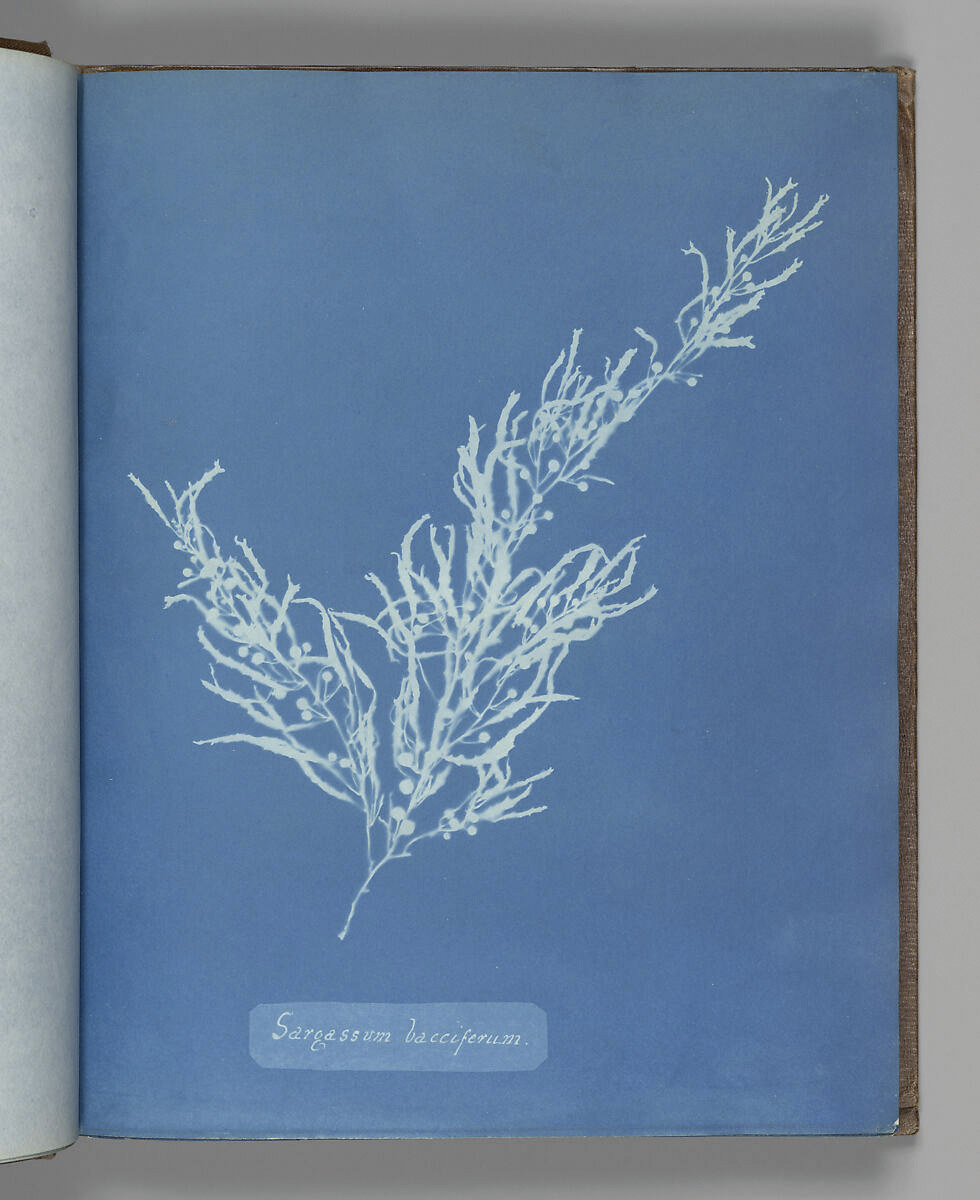
Anna Atkins (British, 1799-1871)
Sargassum bacciferum from Photographs of British Algae: Cyanotype Impressions (1843-1853)
1843
Cyanotype

Anna Atkins (British, 1799-1871)
Ferns, Specimen of Cyanotype
1840s
Cyanotype
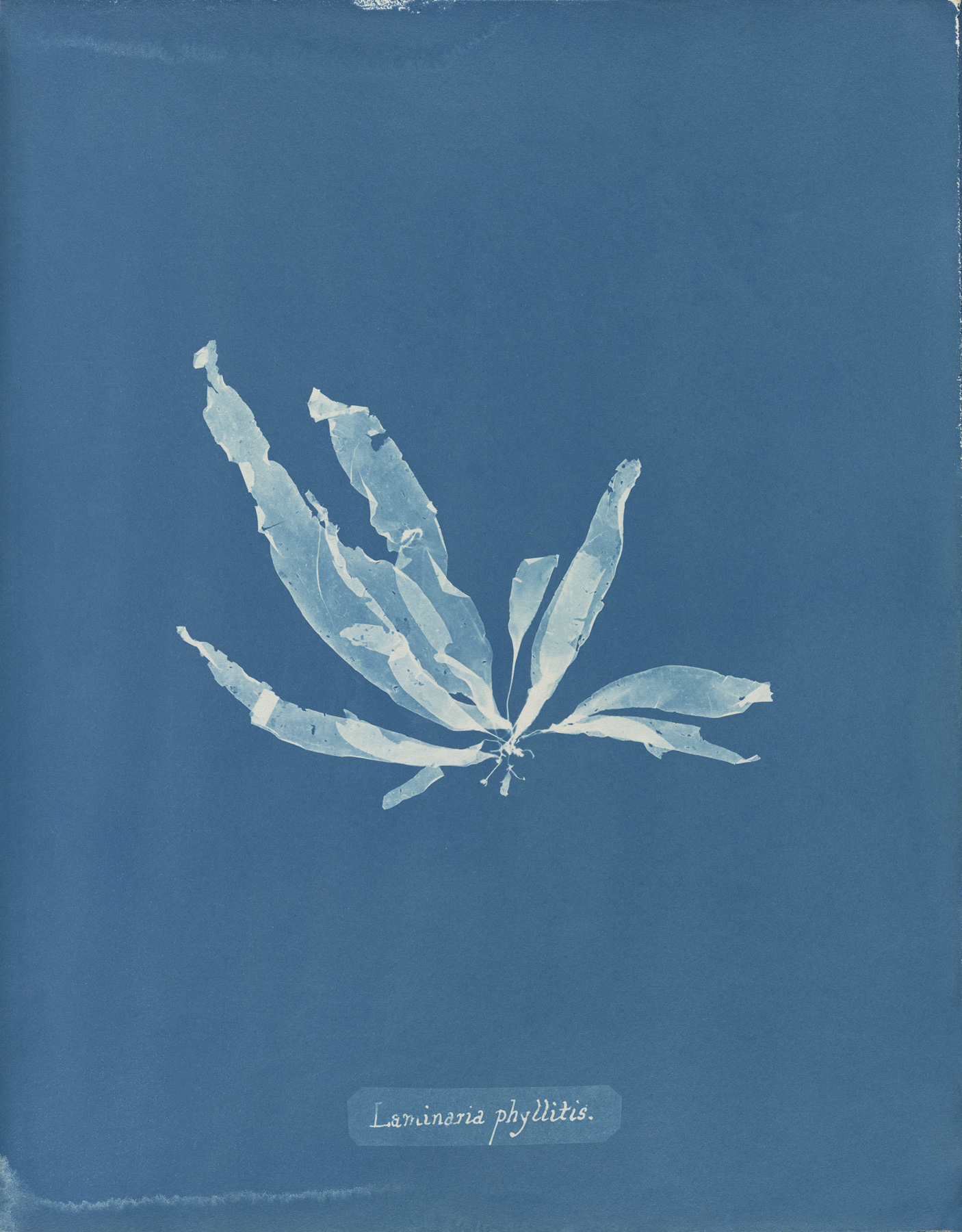
Anna Atkins (English, 1799-1871)
Laminaria phyllitis from Part V of Photographs of British Algae: Cyanotype Impressions
1844-1845
Cyanotype

Anna Atkins (English, 1799-1871)
Furcellaria fastigiata from Part IV, version 2 of Photographs of British Algae: Cyanotype Impressions
1846 or later
Cyanotype
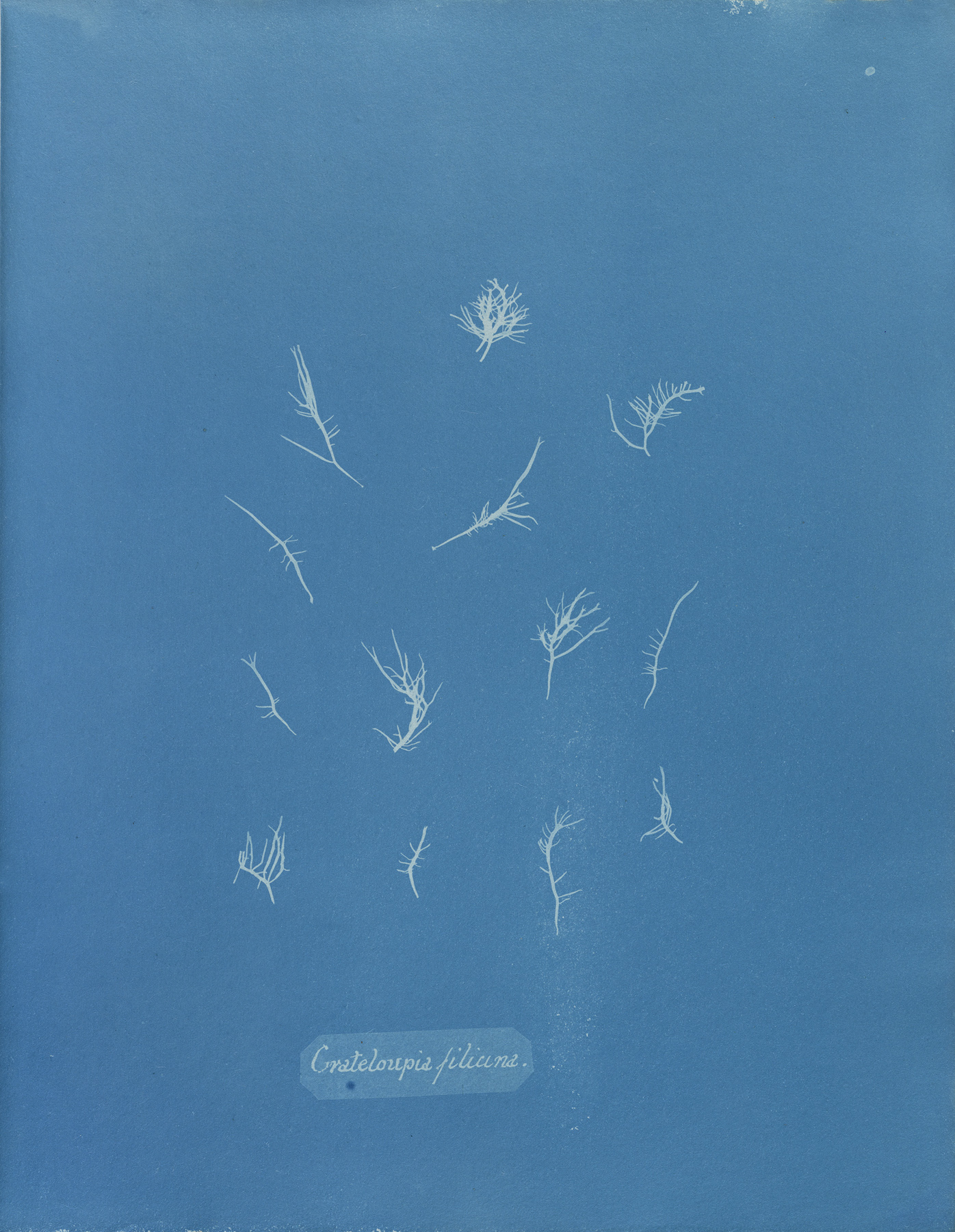
Anna Atkins (English, 1799-1871)
Grateloupia filicina from Part IX of Photographs of British Algae: Cyanotype Impressions
1848-1849
Cyanotype
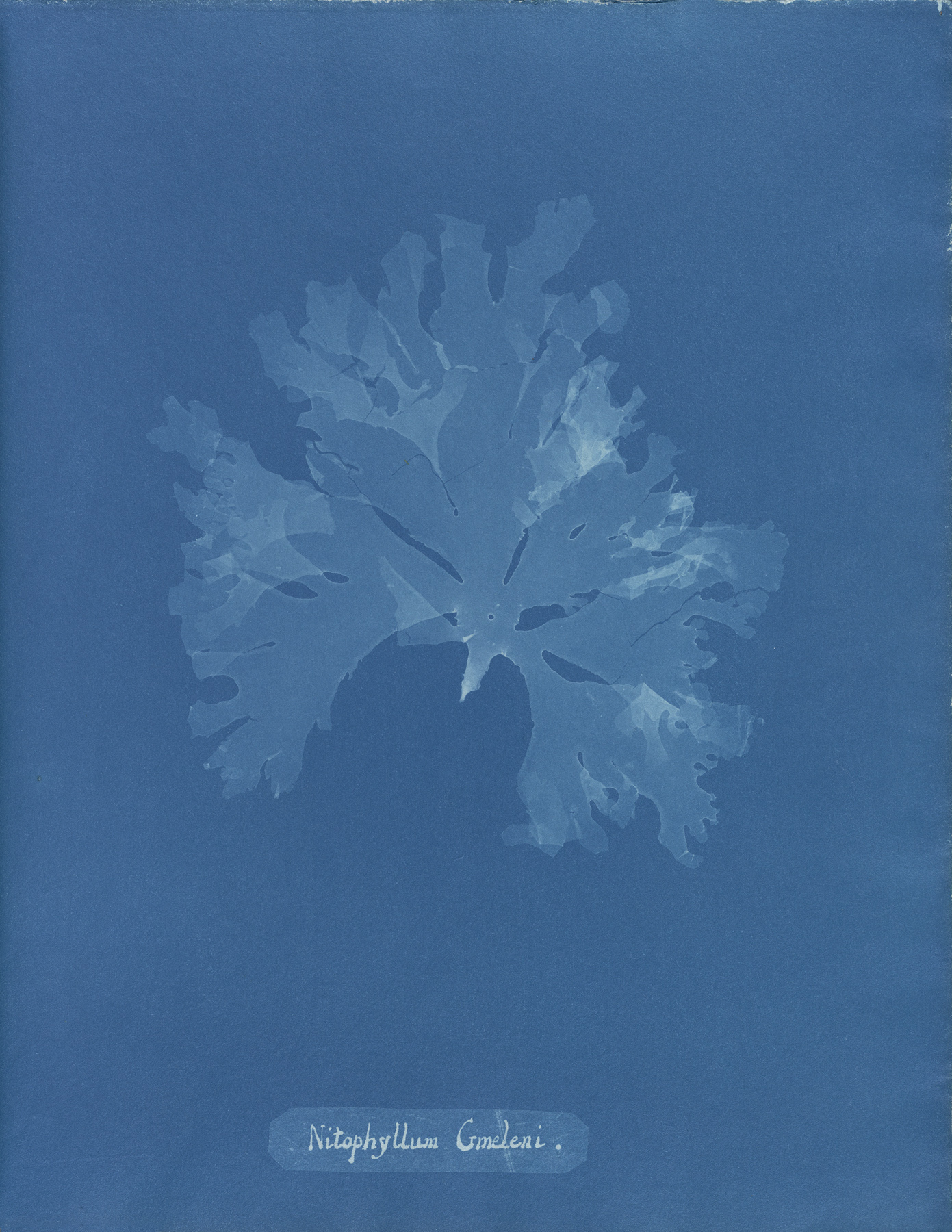
Anna Atkins (English, 1799-1871)
Nitophyllum gmeleni from Part XI of Photographs of British Algae: Cyanotype Impressions
1849-1850
Cyanotype

Anna Atkins (English, 1799-1871)
Halyseris polypodioides from Part XII of Photographs of British Algae: Cyanotype Impressions
1849-1850
Cyanotype
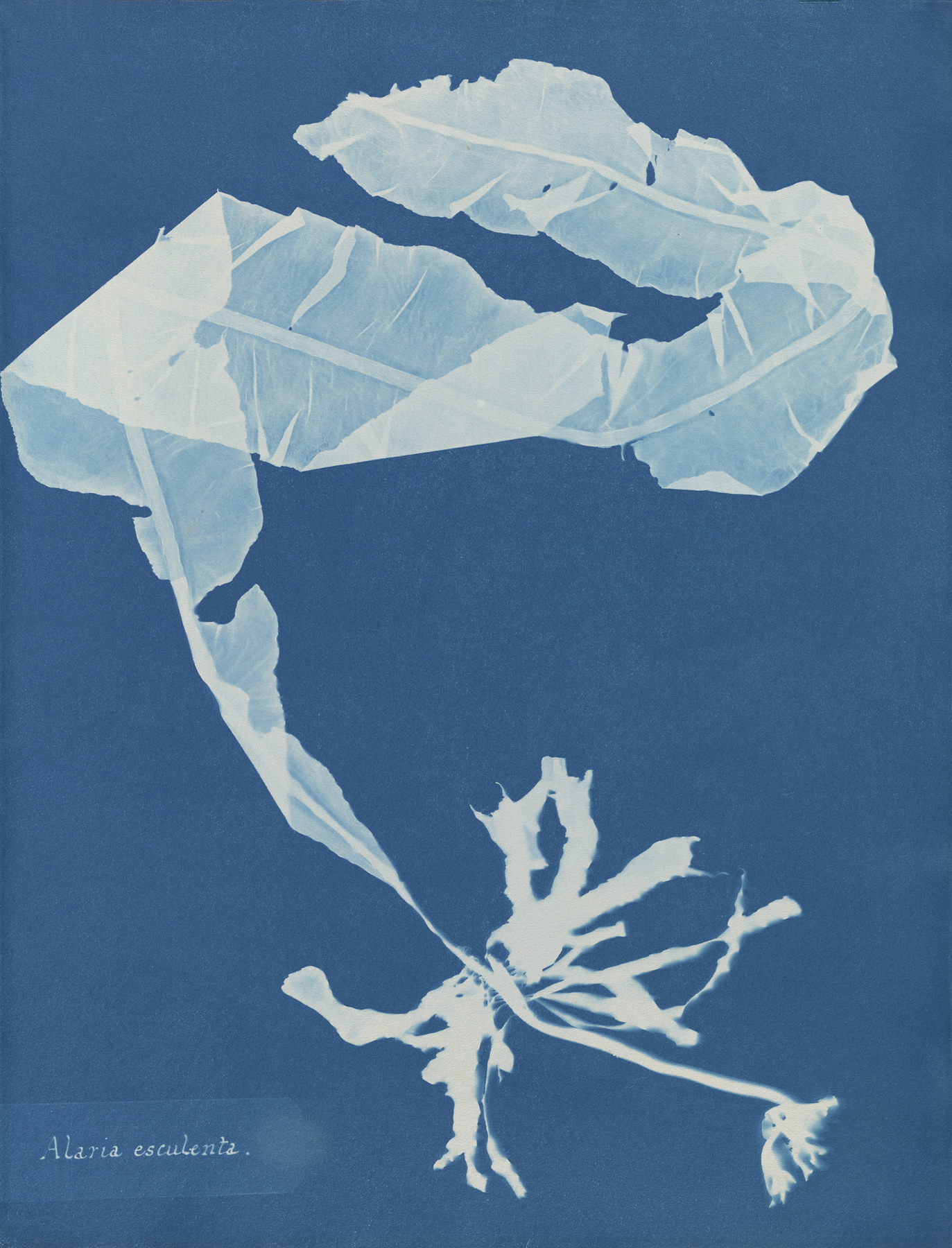
Anna Atkins (English, 1799-1871)
Alaria esculenta from Part XII of Photographs of British Algae: Cyanotype Impressions
1849-1850
Cyanotype

Anna Atkins (English, 1799-1871)
Dictyota dichotoma, in the young state & in fruit from Part XI of Photographs of British Algae: Cyanotype Impressions
1849-1850
Cyanotype
![Anna Atkins (English, 1799-1871) 'Ceylon [examples of ferns]' c. 1850](https://significantsnappers.com/wp-content/uploads/2024/11/anna-atkins-ceylon.jpg "Anna Atkins (English, 1799-1871) 'Ceylon [examples of ferns]' c. 1850")
Anna Atkins (English, 1799-1871)
Ceylon [examples of ferns]
c. 1850
Cyanotype

Anna Atkins (British, 1799-1871)
Mauritius from Cyanotypes of British and Foreign Flowering Plants and Fern
1851-1854
Cyanotype
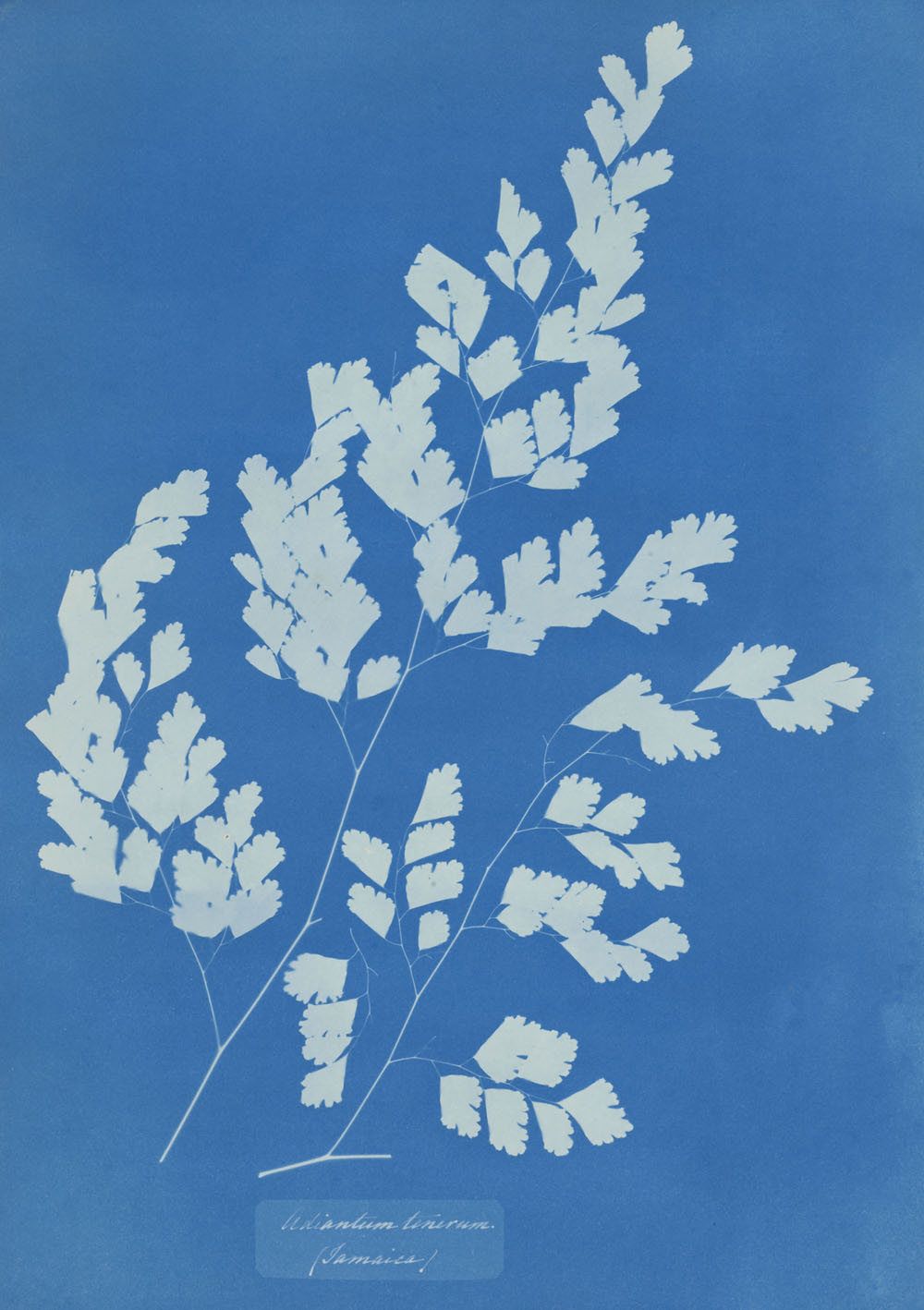
Anna Atkins (English, 1799-1871)
Adiantum tenerum (Jamaica)
c. 1852
Cyanotype
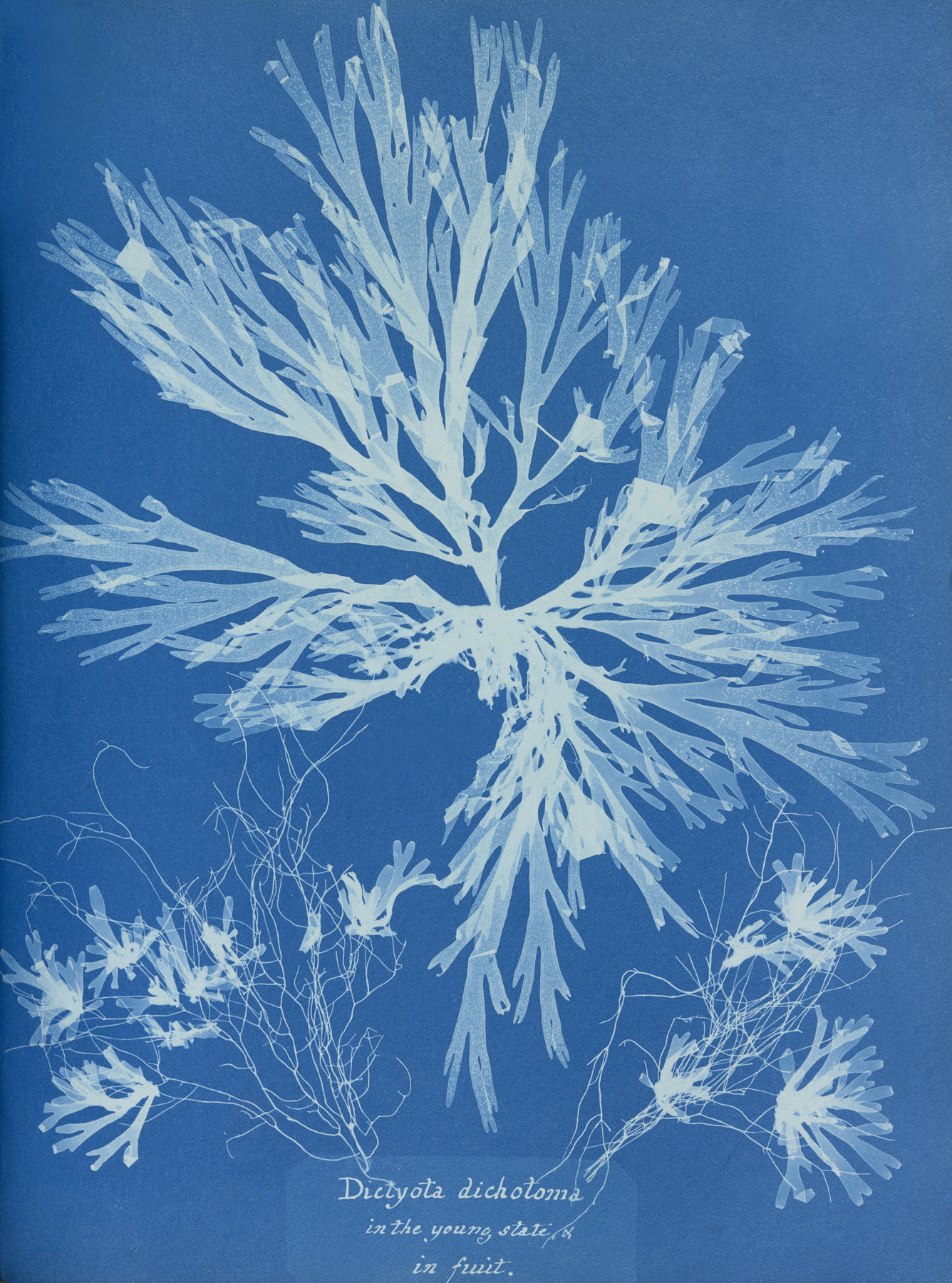
Anna Atkins (English, 1799-1871)
Plate 55 – Dictyota dichotoma, in the young state and in fruit from Volume 1, Part 1 of Photographs of British Algae: Cyanotype Impressions
1853
Cyanotype
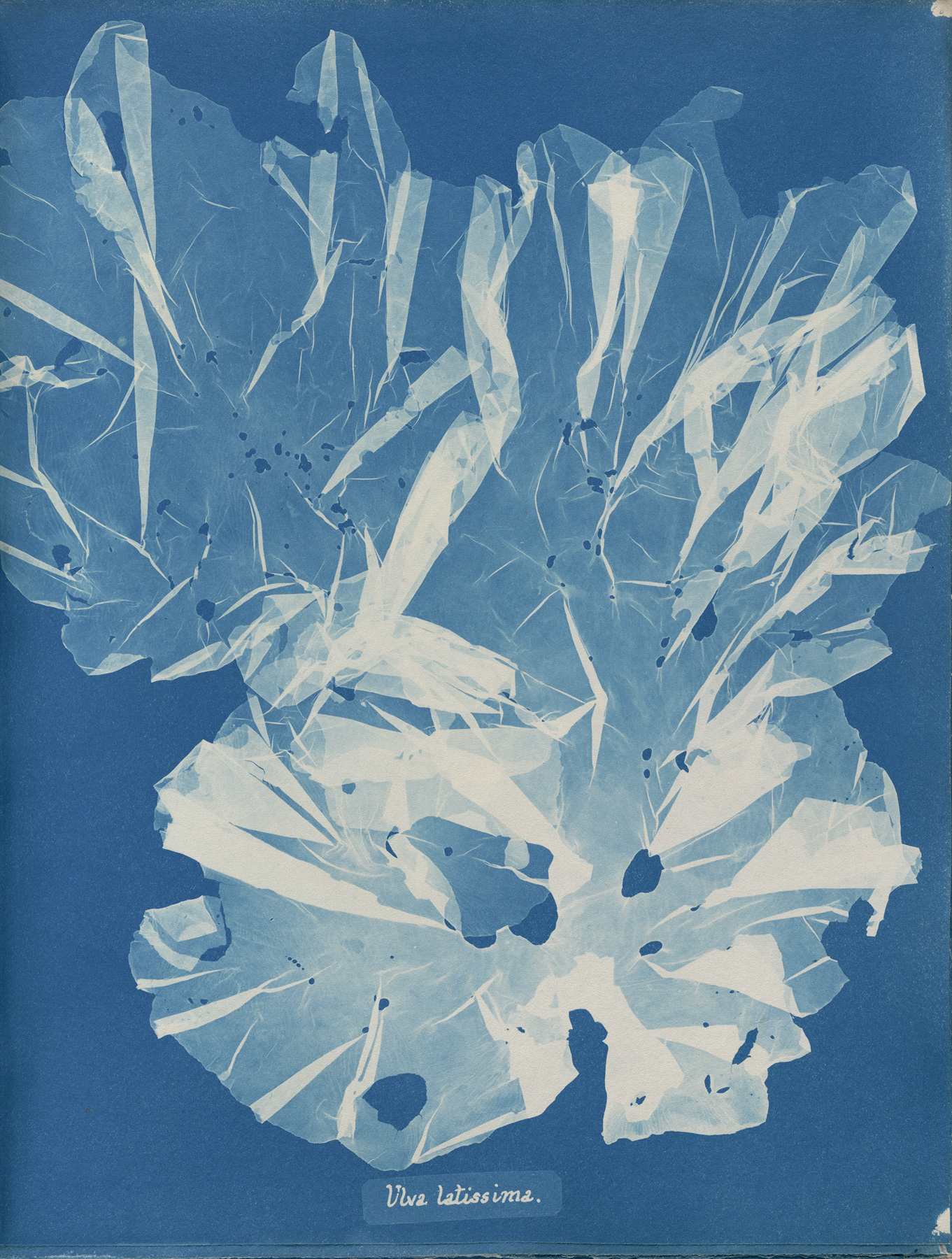
Anna Atkins (English, 1799-1871)
Ulva latissima from Volume III of Photographs of British Algae: Cyanotype Impressions
1853
Cyanotype
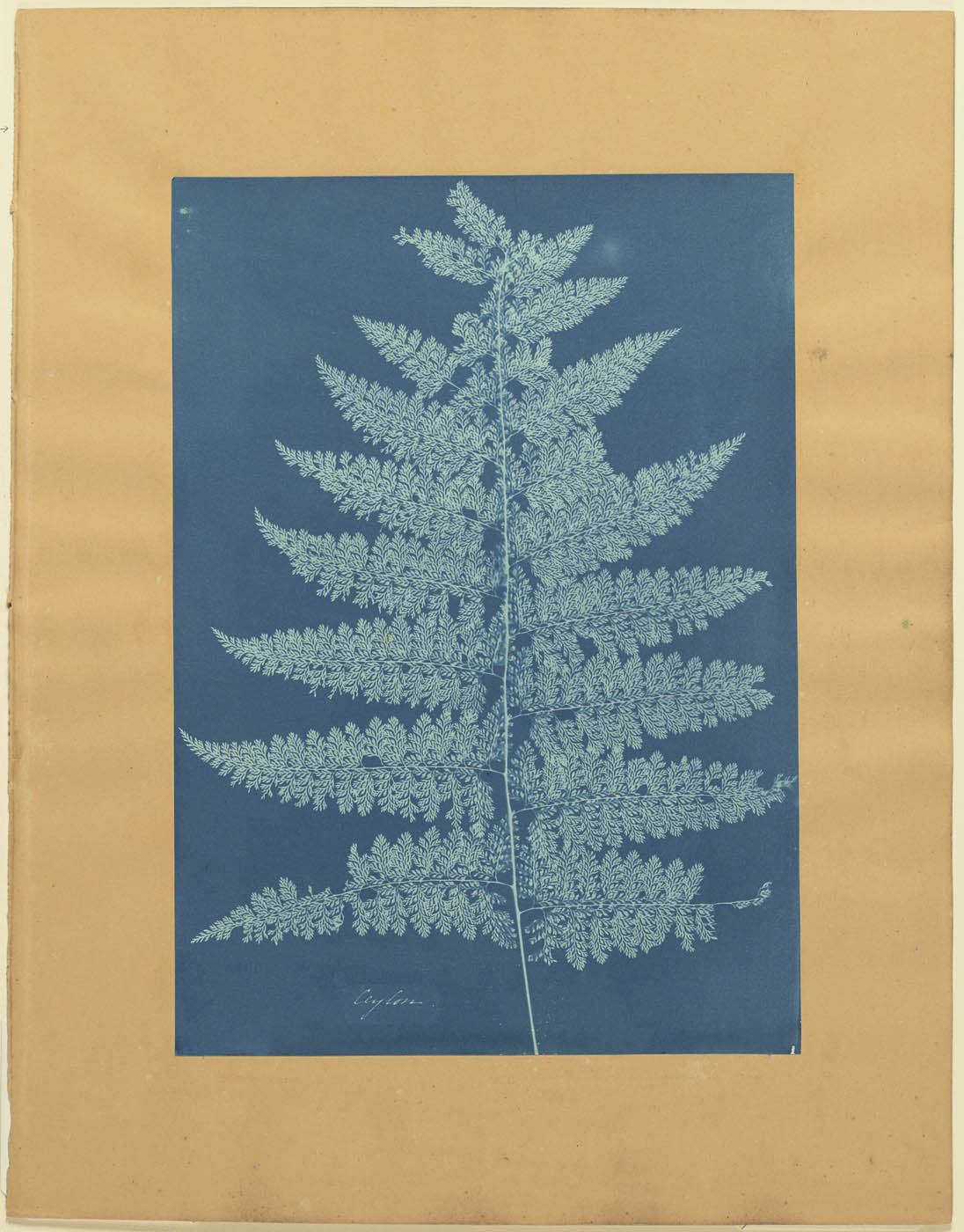
Anna Atkins (British, 1799-1871) possibly with Anne Dixon (British, 1799-1877)
Ceylon/Fern
About 1854
Cyanotype
Image: 34.8 × 24.7cm (13 11/16 × 9 3/4 in.)
Sheet: 48.3 × 37.5cm (19 × 14 3/4 in.)
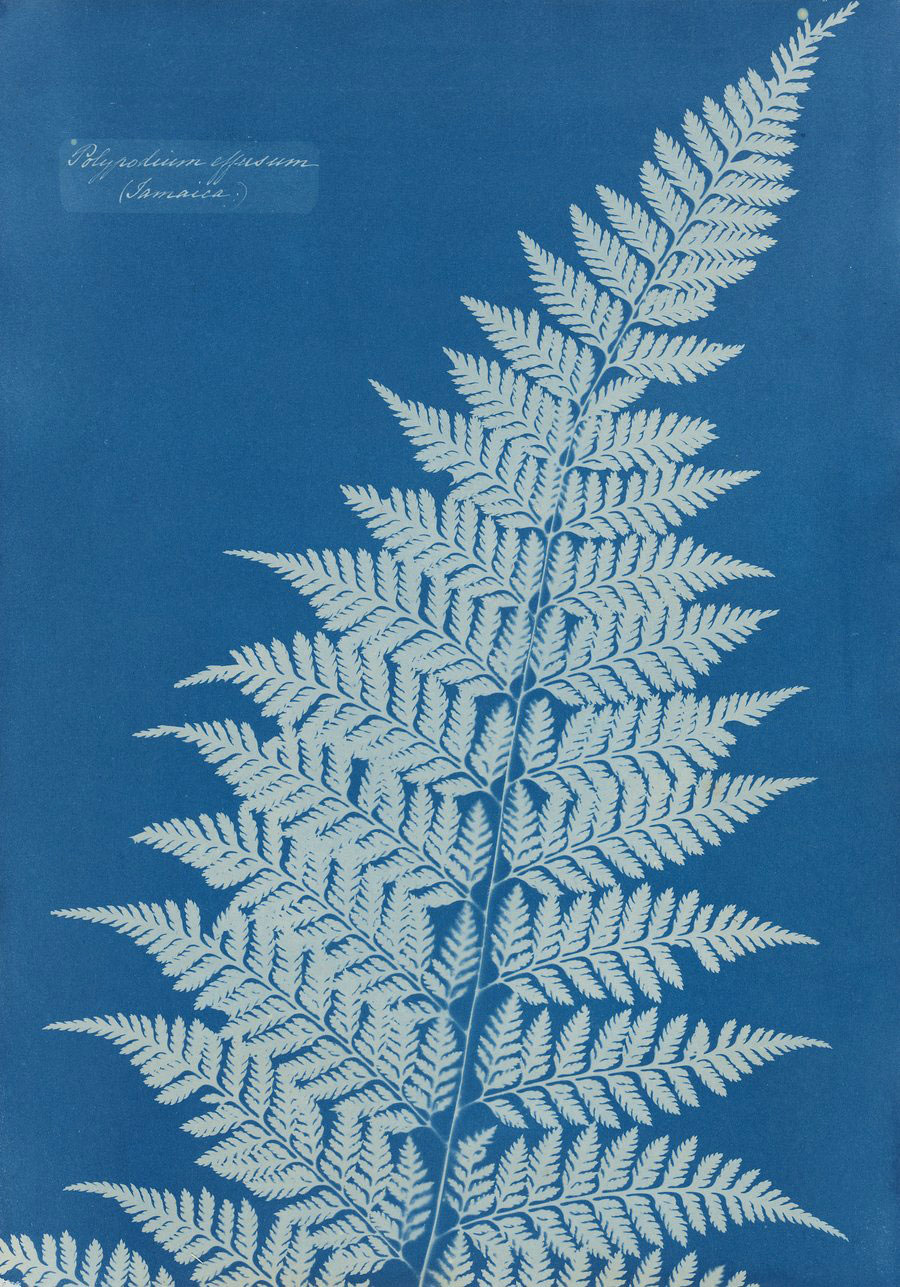
Anna Atkins (English, 1799-1871)
Polypodium effusum (Jamacia) from the Cyanotypes of British and Foreign Flowering Plants and Ferns
c. 1854
Cyanotype photograph
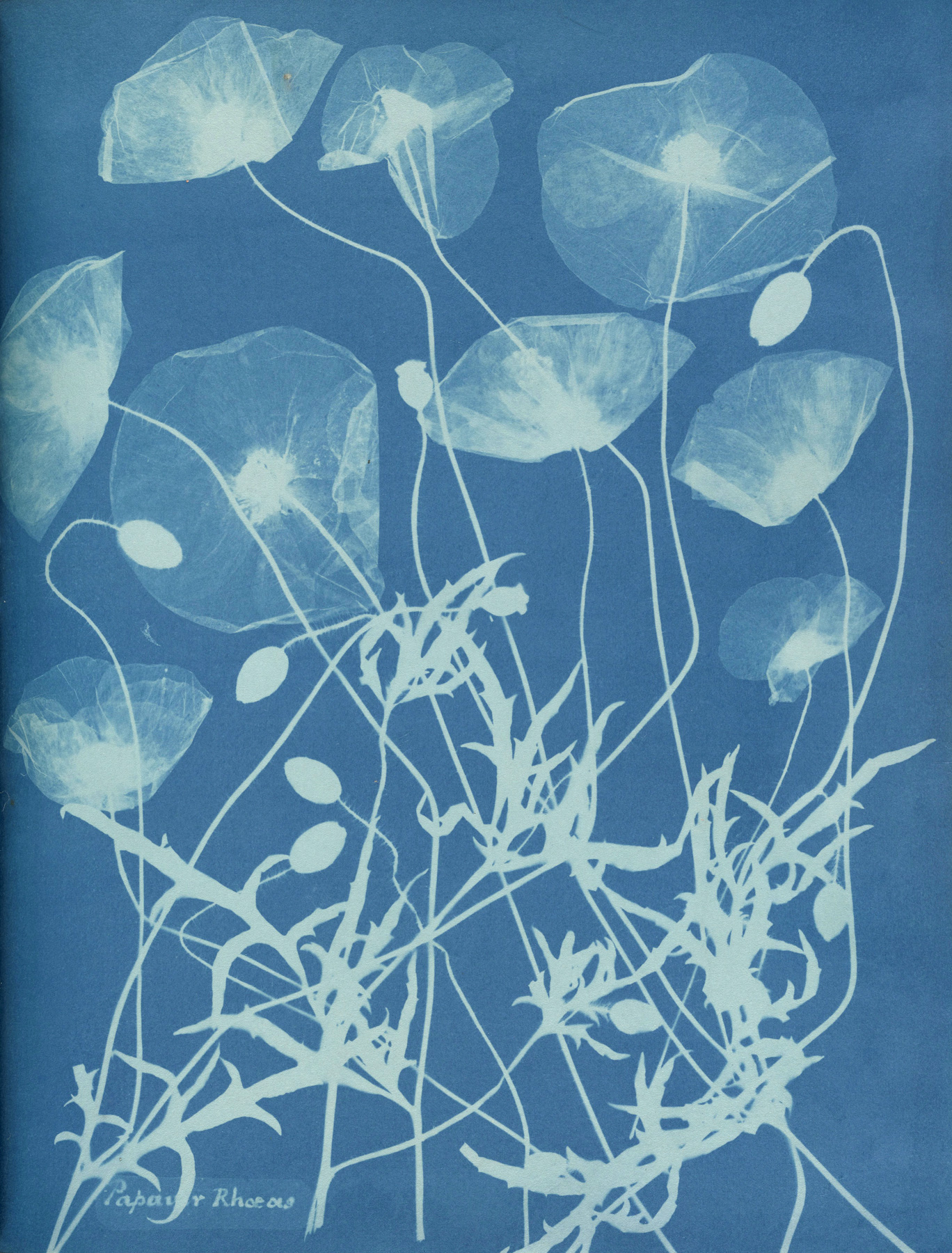
Anna Atkins (English, 1799-1871) and Anne Dixon (British, 1799-1864)
Papaver rhoeas from a presentation album to Henry Dixon
1861
Cyanotype
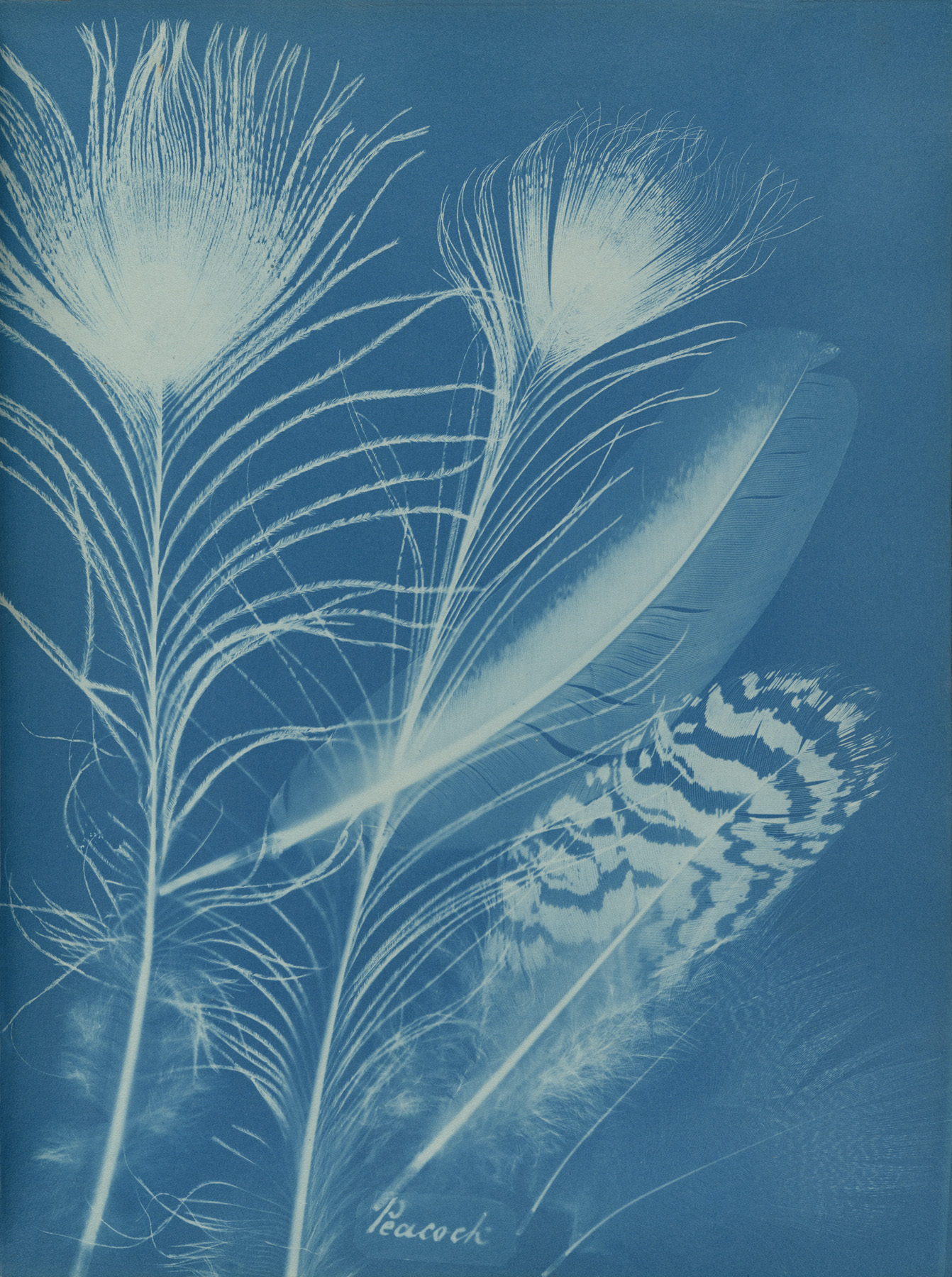
Anna Atkins (English, 1799-1871) and Anne Dixon (British, 1799-1864)
Peacock from a presentation album to Henry Dixon
1861
Cyanotype
Eugène Atget (French, 1857-1927)

Berenice Abbott (American, 1898-1991)
Eugène Atget
1927
Gelatin silver print
Atget’s shadow
Eugène Atget‘s (French, 1857-1927) photographs bridge the gap between subjective and objective representation – on the one hand extolling the subjective quality of art as an expression of the artist’s inner self; but on the other, providing a rejection of artistic consciousness, his objective “documents for artists” appealing to the Surrealists who used his images in publications such as Révolution Surréaliste.
In their presence, the photographs of Atget proffer an intimate in/tension (intention) – between representation and abstraction, documentary and modern, ordinary and dream. His photography, “which focussed on seemingly ordinary sights on the streets of Paris – a door knocker, a mannequin, a window rail – is seen as a forerunner of Surrealist and modern approaches to photography.”1
Further, “The critic and philosopher Walter Benjamin famously invoked crime scenes in discussing Atget’s photographs. He was pointing to their emptiness, their clinical attention to details of the urban landscape, their absolute rejection of the sentimental and the grandiose. … In Atget’s Paris, “the city is evacuated, like an apartment that hasn’t yet found its new tenant,” Benjamin wrote.”2
And yet, there is always something of the artist in every photograph, no matter how criminal the raping of time.
Looking at Atget’s photographs of parks, I believe that the “park” with Atget takes some of its meaning from the ownership of the parks and the royalty/citizen system that was in place at the time AND what that might allow. Here is the photographer bearing his heavy camera like a tramp on the road, wandering in an empty domain owned by a higher power – and using its magnificence to discover more about the self searching vagabond.
Sometimes the question: “is there anyone here” is answered like Cocteau in Beauty and the Beast, and the answer is: “yes there is – yourself” says the (objective) camera. Sometimes, in other ways, the photographer goes nearly crazy with the possibilities of photography: what is the truth about my presence, the presence of a rock, or the sky? Yes, there is you, but in saying that it opens up all these other (subjective) possibilities. The options of inserting ourselves into representation, into what photography can hold, drives us crazy.
As Lee Friedlander observes, “The photographs of these places … are a hint, just a blink at a piece of the real world. At most, an aphrodisiac.”
Dr Marcus Bunyan 2020
1/ “Surrealism did not always involve the strange and absurd. For example, the photography of Eugène Atget (1857-1927), which focussed on seemingly ordinary sights on the streets of Paris – a door knocker, a mannequin, a window rail – is seen as a forerunner of Surrealist and modern approaches to photography… Only a year before his death, in 1926, Atget was approached by Man Ray for approval to use his photograph, L’Eclipse – Avril 1912 for the front cover of the publication La Révolution Surréaliste. Despite protestations that, “these are simply documents I make”, Atget’s rejection of artistic self-consciousness combined with his pictures of an old, often hauntingly deserted Paris, appealed to Surrealists.”
Anonymous. “Surrealist photography,” on the V&A website [Online] Cited 07/08/2020
2/ Anonymous. “Atget’s Paris, 100 years later,” on the Art Daily website 31/05/2020
The power of imagination
“Imagination is more important than knowledge. For knowledge is limited to all we know and understand, while imagination embraces the entire world, and all there ever will be to know and understand.”
Albert Einstein
Imagination, or Visualisation, may be simply defined as the formation of mental images or pictures. It helps us form images of the world – in the case of Atget, images of Old Paris – in which the viewer can value the experience of walking in the city, Paris, walking in the footsteps of history through the gaze of the artist, our gaze.
If we exercise our imagination we can resist, and subvert, our presumed reality – undermining the so-called reality of the world, a world in which we are rationally and relationally forced to understand how things are and how they work.
This is what artists do… they undermine the logic of the world through being exposed to the qualities instantiated in the physical world, and by then stepping aside from that world they exercise their imagination to create, to imagine, to expose themselves (much like a photographic plate) to the perceptions of an external physical world viewed from multiple perspectives.
Thus, “Imagination … plays a central role in empirical cognition by serving as the basis for both memory and the creative arts. In addition it also plays a kind of mediating role between the faculties of sensibility and understanding. Kant calls this mediating role a “transcendental function” of the imagination. It mediates and transcends by being tied in its functioning to both faculties. On one hand, it produces sensible representations, and is thus connected to sensibility. On the other hand, it is not a purely passive faculty but rather engages in the activity of bringing together various representations, as does memory, for example. Kant explicitly connects understanding with this kind of active mental processing.”1
How appropriate for the visualisations of Atget, purported documents for artists but in an alternative reality, poetic concepts (of his imagination) in which he “invites us to exercise our gaze, to consider the complexity of the world as the source of our faculty of imagination.”
You only have to look at one image to imagine Atget lugging his large plate camera to the Place du Tertre, Montmartre in 1922 (below); scouting the square in the 18th arrondissement of Paris near the Basilica of the Sacré Cœur; setting up the camera on its heavy tripod, throwing the dark cloth over his head and then focusing the composition on the ground glass – to then place a tree dissected by another tree directly in your eye line, and starting half way up the tree.2 Who would do that!
It gives you the shivers… the scene is just a little too real. It appears from the transcendental function of the imagination as surrealist “other”. It is un/real. Super real.
Dr Marcus Bunyan 2021
1/ Colin McLear. “Kant: Philosophy of Mind,” on the Internet Encyclopaedia of Philosophy website [Online] Cited 20/06/2021.
2/ Also note how far the camera front has moved beyond the circle of light from the lens – so vertical parallels stay parallel.
![Eugène Atget (French, 1857-1927) 'Hôtel de Sens depuis la rue du Fauconnier' [Hôtel de Sens, viewed from rue du Fauconnier] c. 1898-1905](https://significantsnappers.com/wp-content/uploads/2024/11/atget_hotel_de_sens.jpg "Eugène Atget (French, 1857-1927) 'Hôtel de Sens depuis la rue du Fauconnier' [Hôtel de Sens, viewed from rue du Fauconnier] c. 1898-1905")
Eugène Atget (French, 1857-1927)
Hôtel de Sens depuis la rue du Fauconnier [Hôtel de Sens, viewed from rue du Fauconnier]
c. 1898-1905
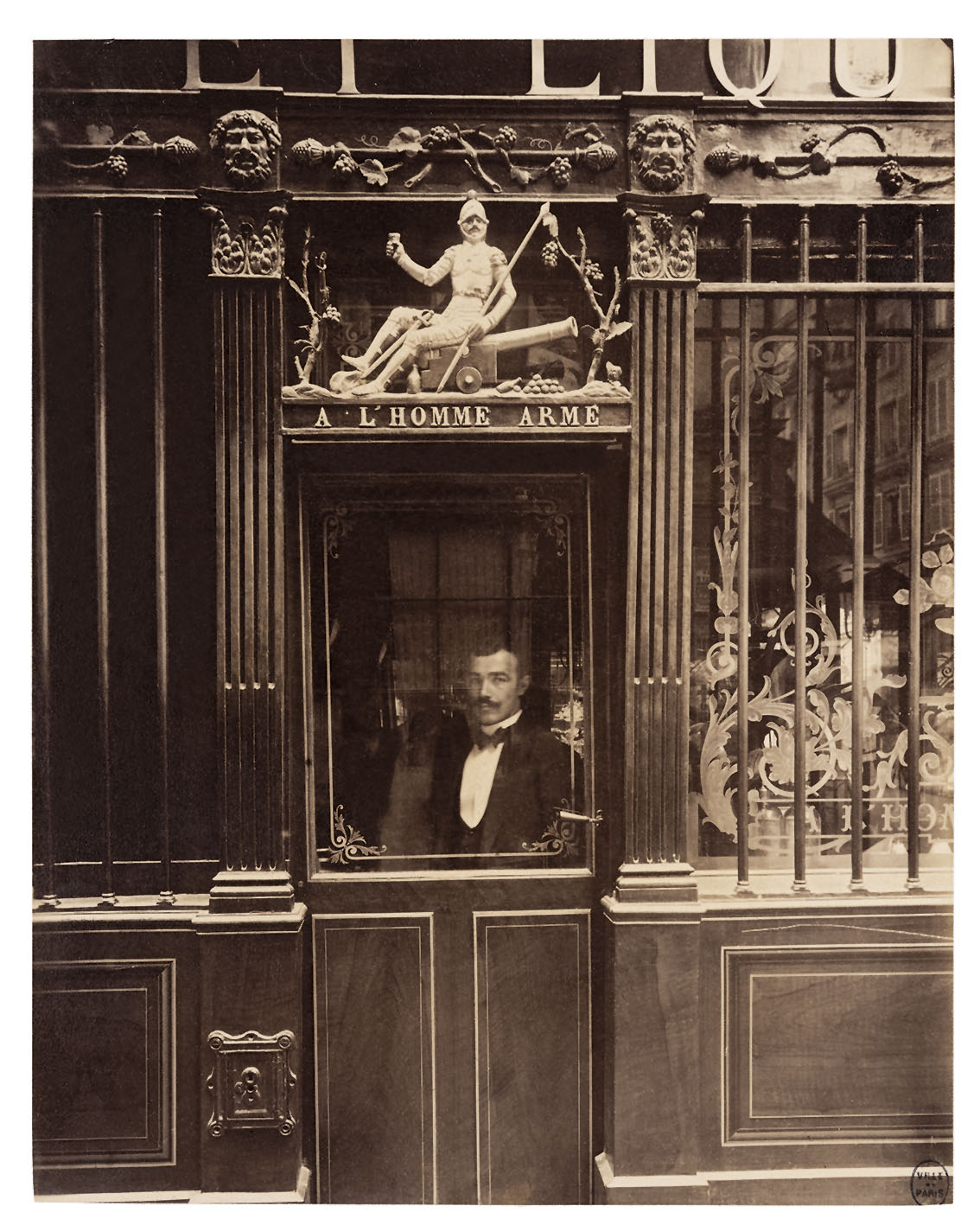
Eugène Atget (French, 1857-1927)
Cabaret de l’Homme armé, 25, rue des Blancs-Manteaux, IVe
September 1900
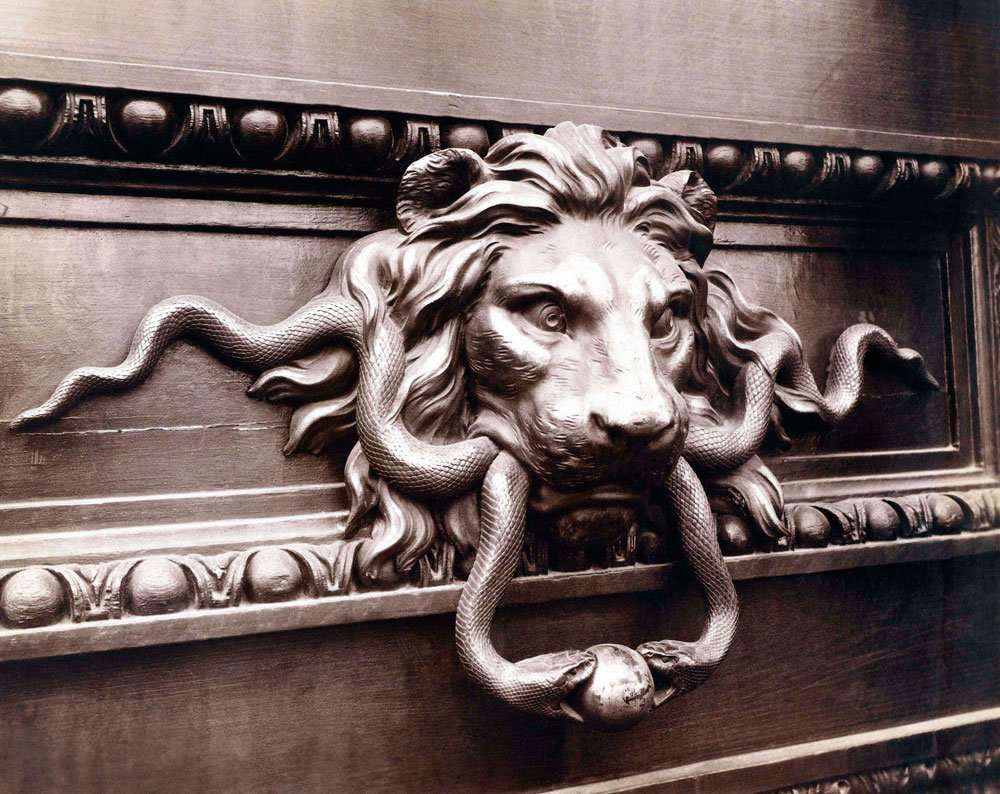
Eugène Atget (French, 1857-1927)
Heurtoir à tête de lion, hôtel de la Monnaie, quai Conti, 6e arrondissement
(Lion head knocker, Hotel Monnaie, Quai Conti, 6th District)
September 1900
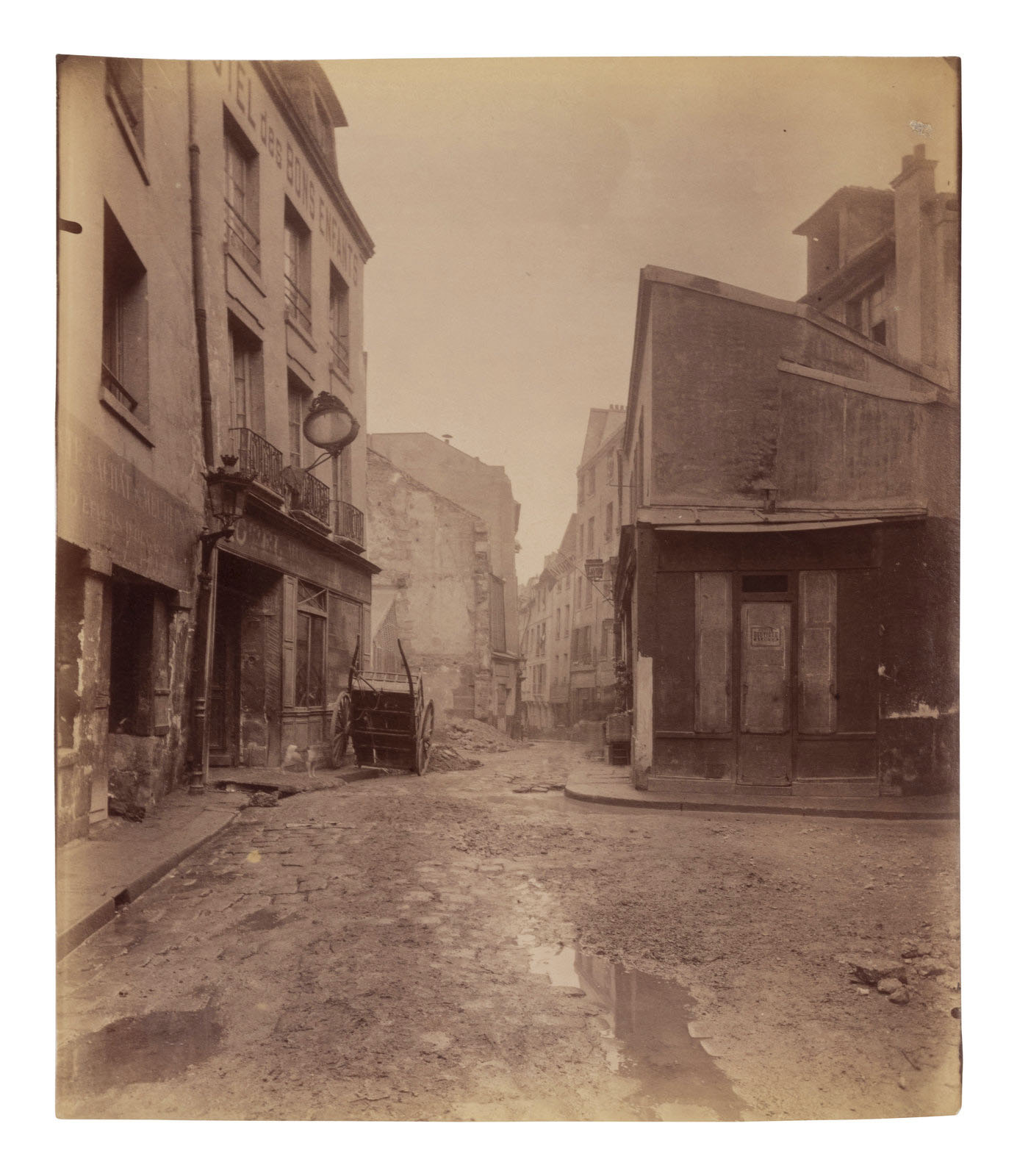
Eugène Atget (French, 1857-1927)
Rue Saint-Médard, 5e arrondissement
1899-1900

Eugène Atget (French, 1857-1927)
Église Saint-Médard, Ve
1900-1901
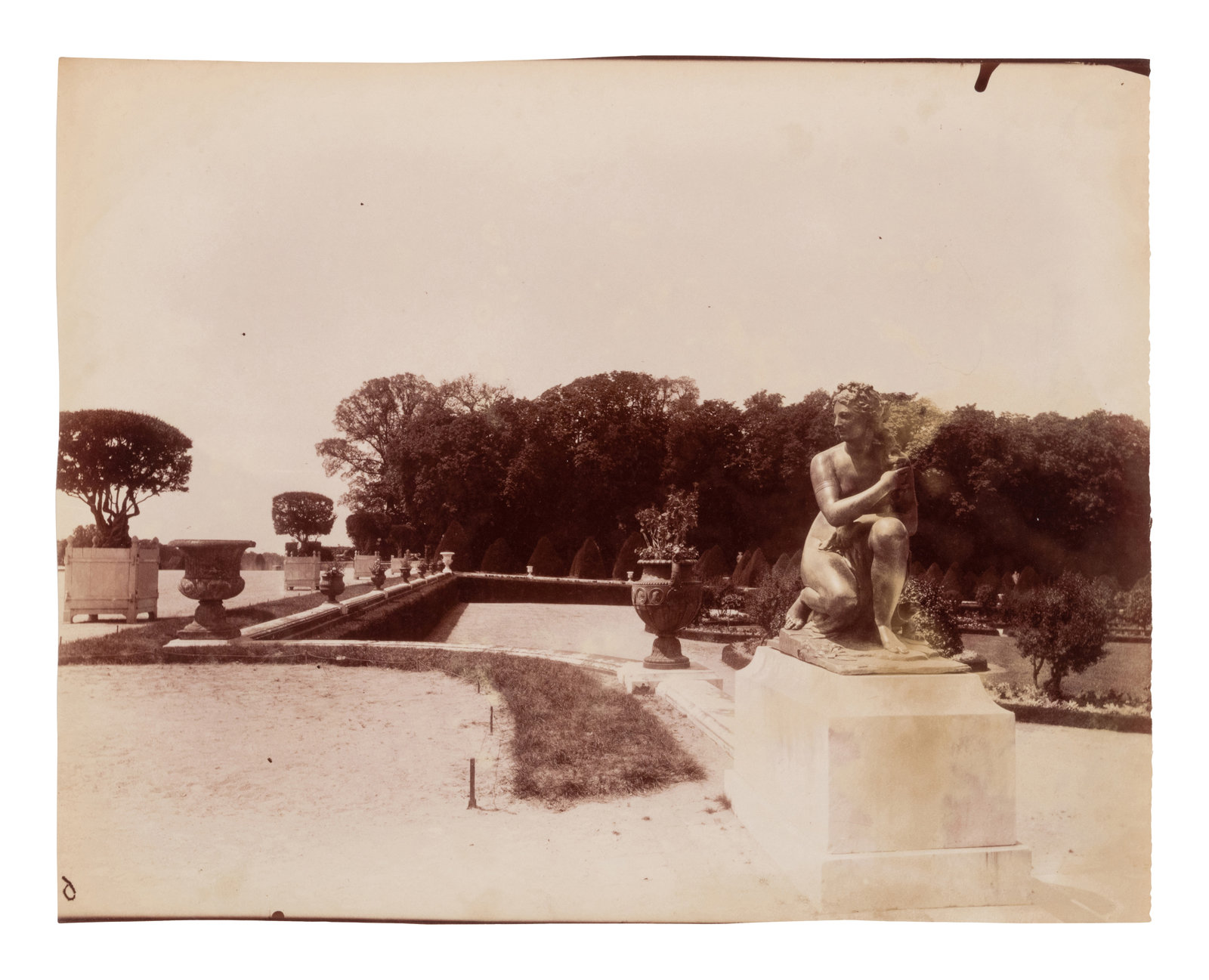
Eugène Atget (French, 1857-1927)
La Vénus accroupie, par Coysevox (Versailles)
1902
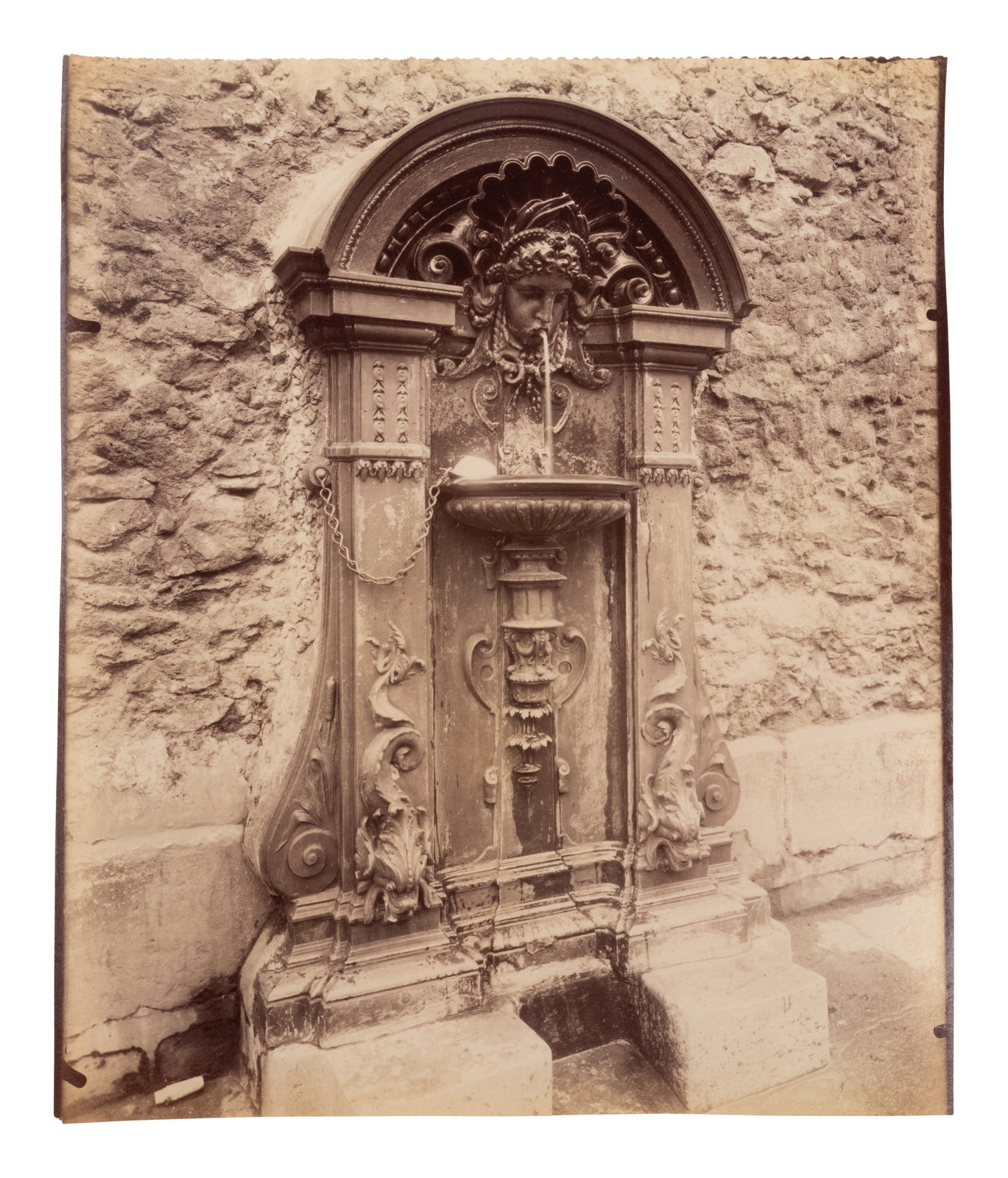
Eugène Atget (French, 1857-1927)
Fontaine, rue Geoffrey Saint-Hilaire
1905

Eugène Atget (French, 1857-1927)
Ambassade d’Autriche, 57, rue de Varenne, VIIe
1905
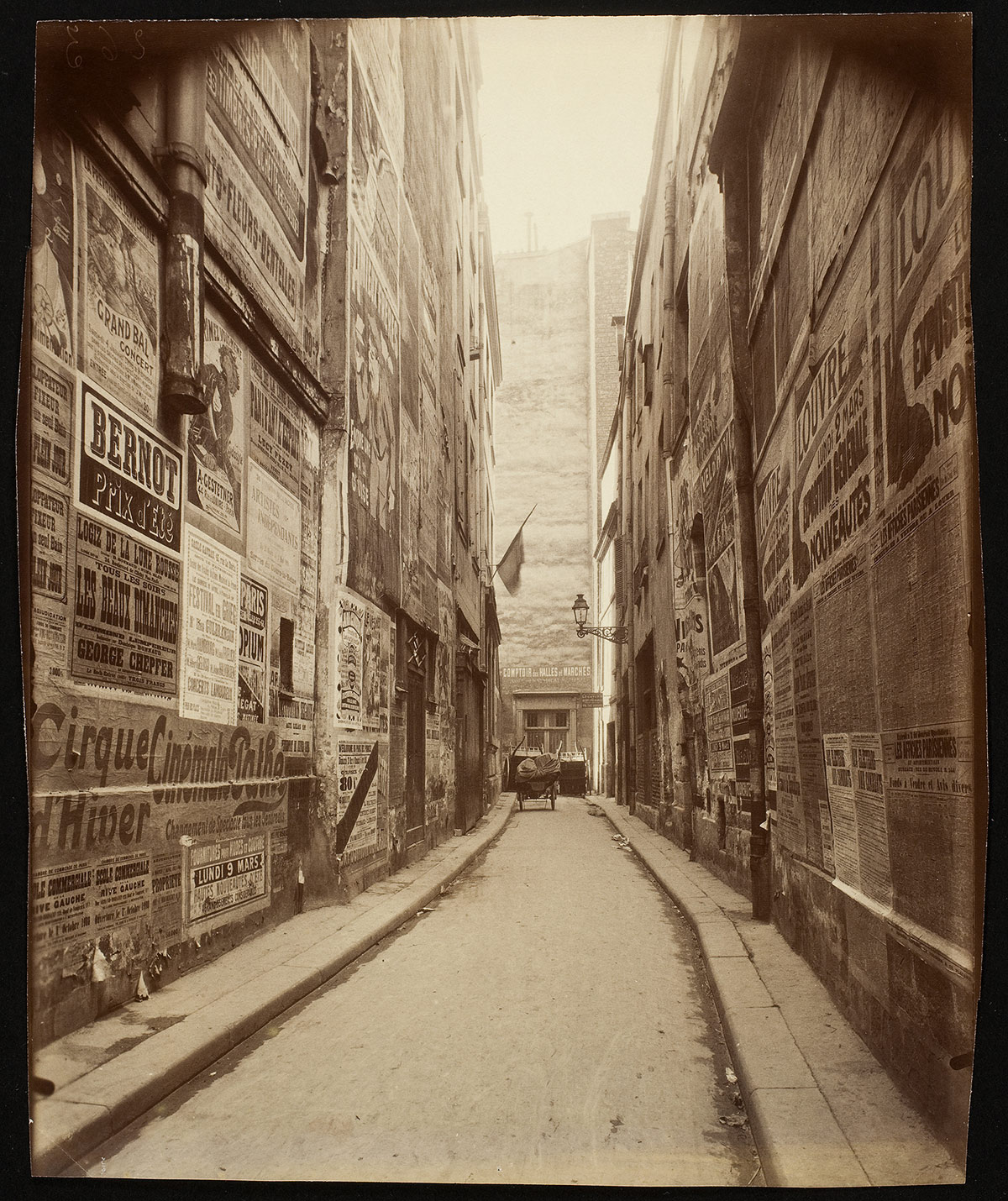
Eugène Atget (French, 1857-1927)
Impasse des Bourdonnais
c. 1908
![Eugène Atget (French, 1857-1927) 'Pommiers [et blés]' 1910 or earlier](https://significantsnappers.com/wp-content/uploads/2024/11/atget-pommiers-et-bles-1910-or-earlier.jpg "Eugène Atget (French, 1857-1927) 'Pommiers [et blés]' 1910 or earlier")
Eugène Atget (French, 1857-1927)
Pommiers [et blés]
1910 or earlier
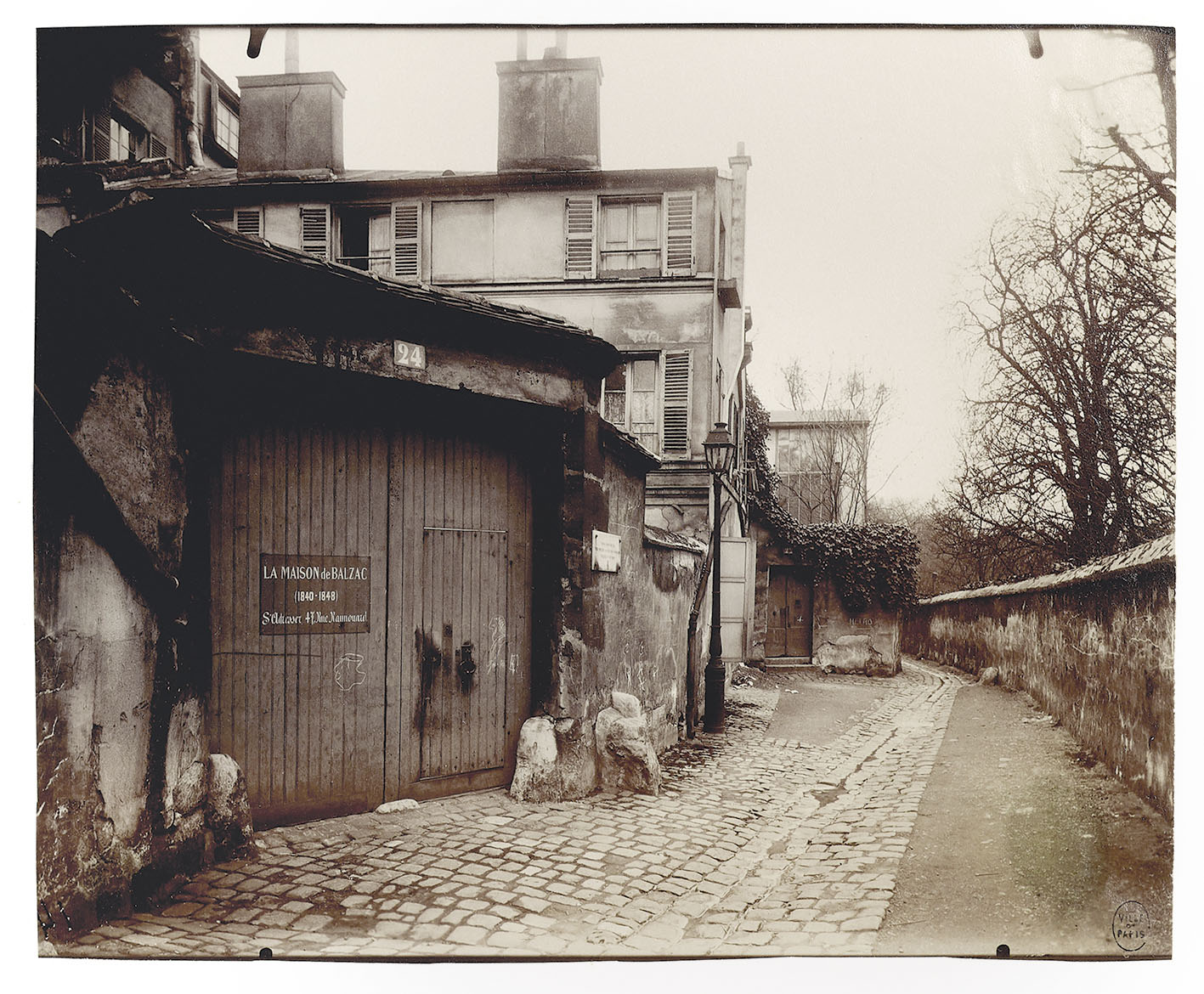
Eugène Atget (French, 1857-1927)
Maison de Balzac, 24, rue Berton, XVIe
1913
![Eugène Atget (French, 1857-1927) 'Plessis Piquet [Entrée pittoresque, Châtillon]' 1921](https://significantsnappers.com/wp-content/uploads/2024/11/atget-plessis-piquet-entree-pittoresque-chatillon-1921.jpg "Eugène Atget (French, 1857-1927) 'Plessis Piquet [Entrée pittoresque, Châtillon]' 1921")
Eugène Atget (French, 1857-1927)
Plessis Piquet [Entrée pittoresque, Châtillon]
1921

Eugène Atget (French, 1857-1927)
Courtyard, 7 Rue de Valence, 5th arr.
June 1922
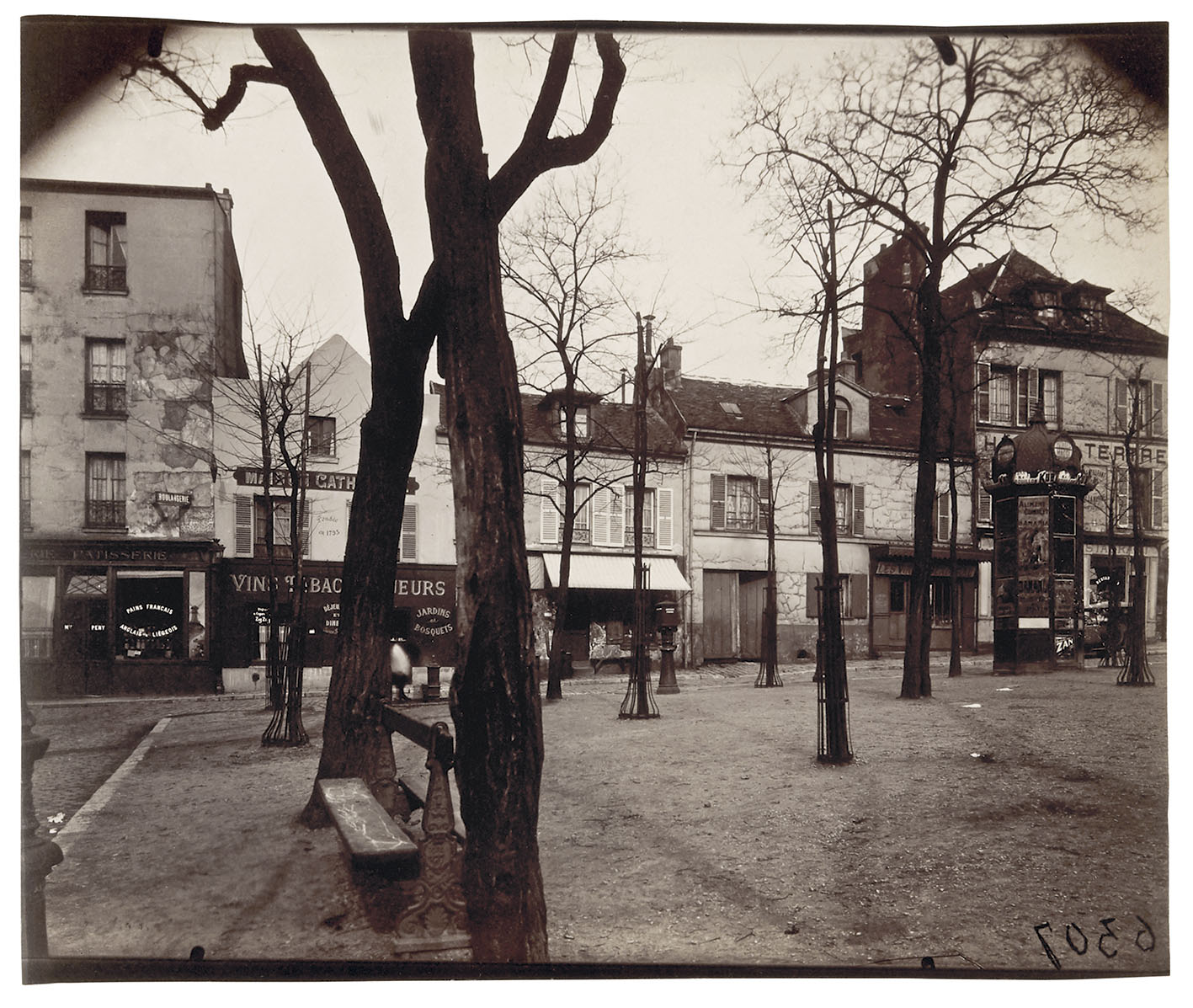
Eugène Atget (French, 1857-1927)
Place du Tertre, Montmartre, XVIIIe
1922
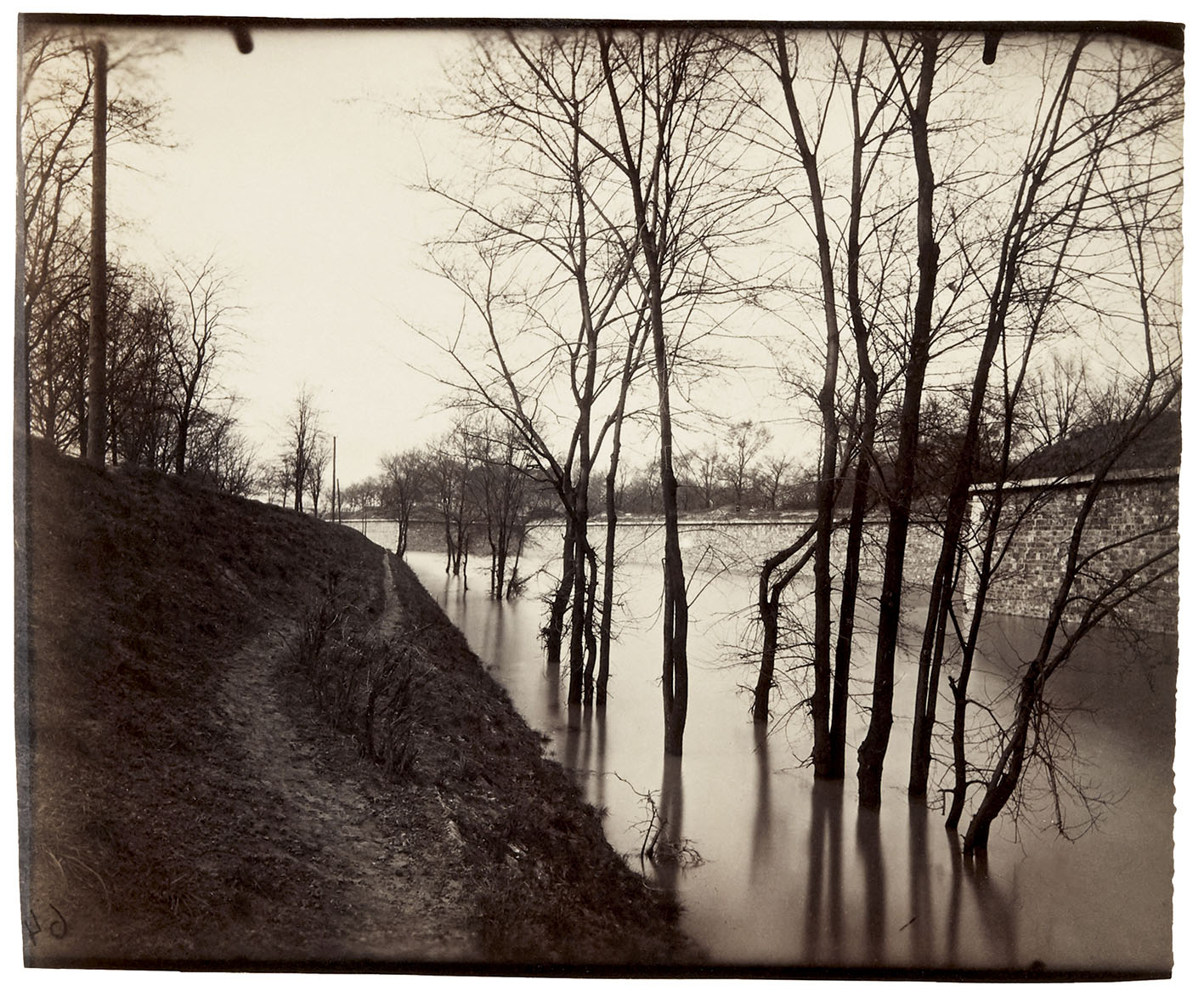
Eugène Atget (French, 1857-1927)
Fortifications, porte de Sèvres, XVe
1923
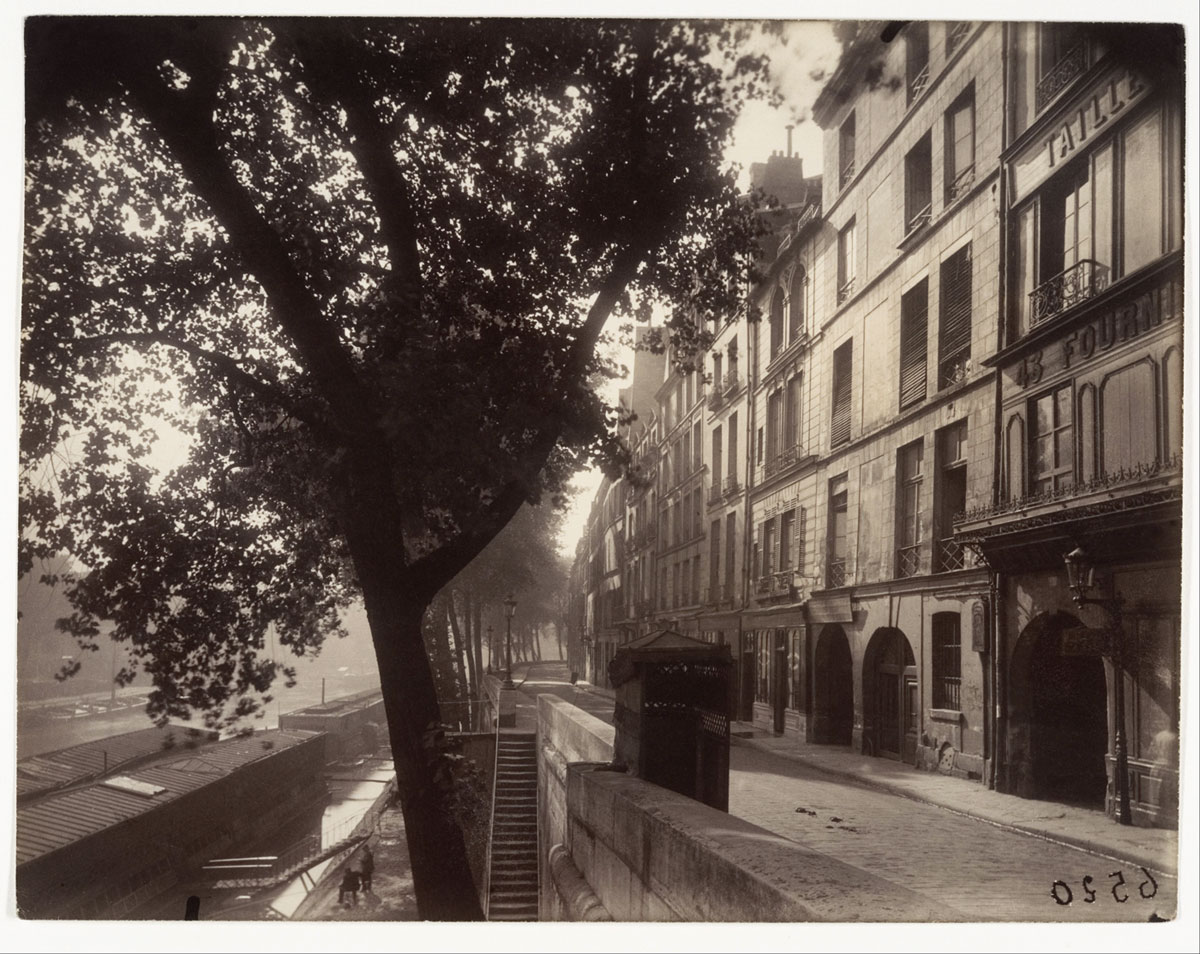
Eugène Atget (French, 1857-1927)
Quai d’Anjou, 6h du matin
1924
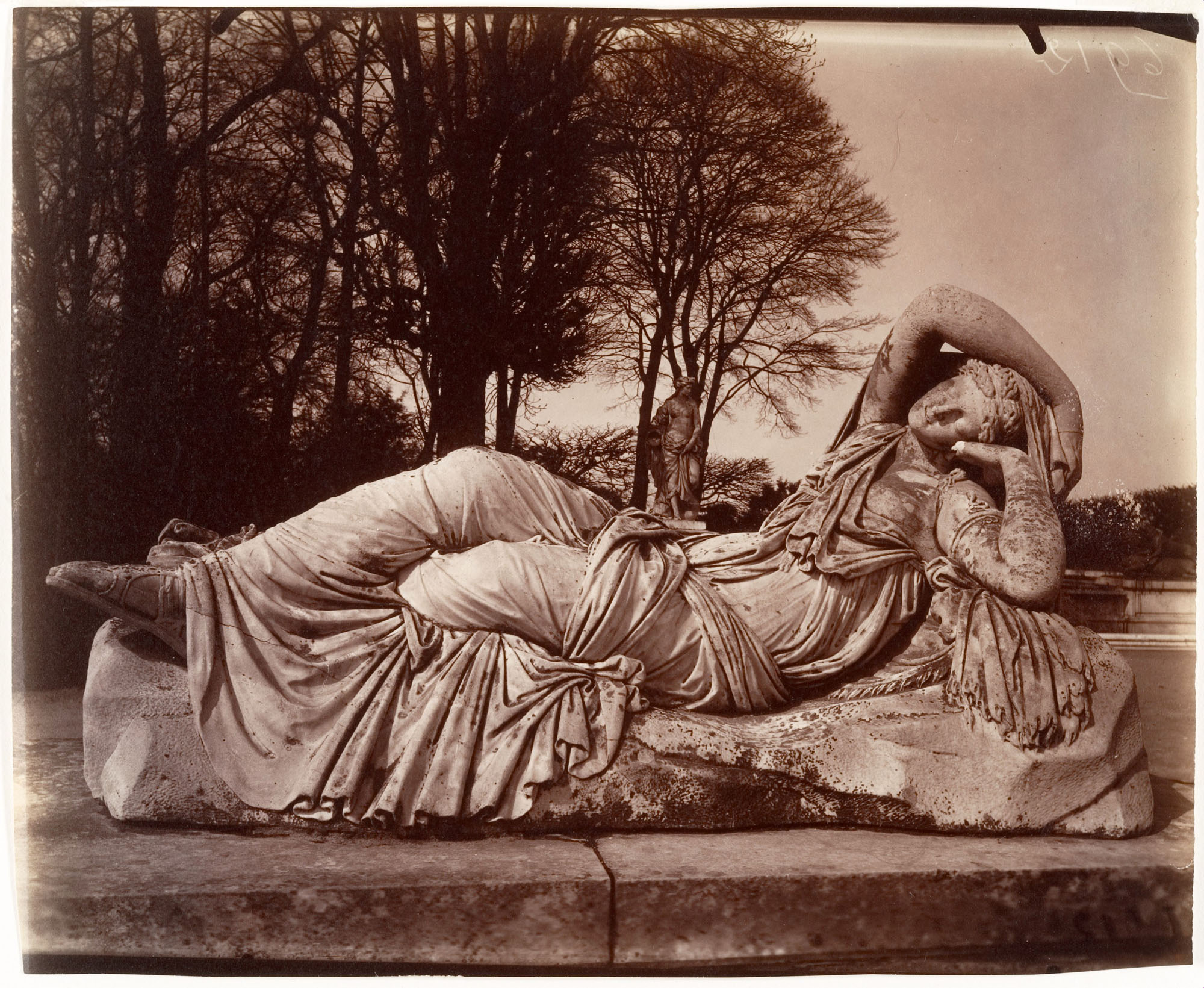
Eugène Atget (French, 1857-1927)
Versailles
1924-1925
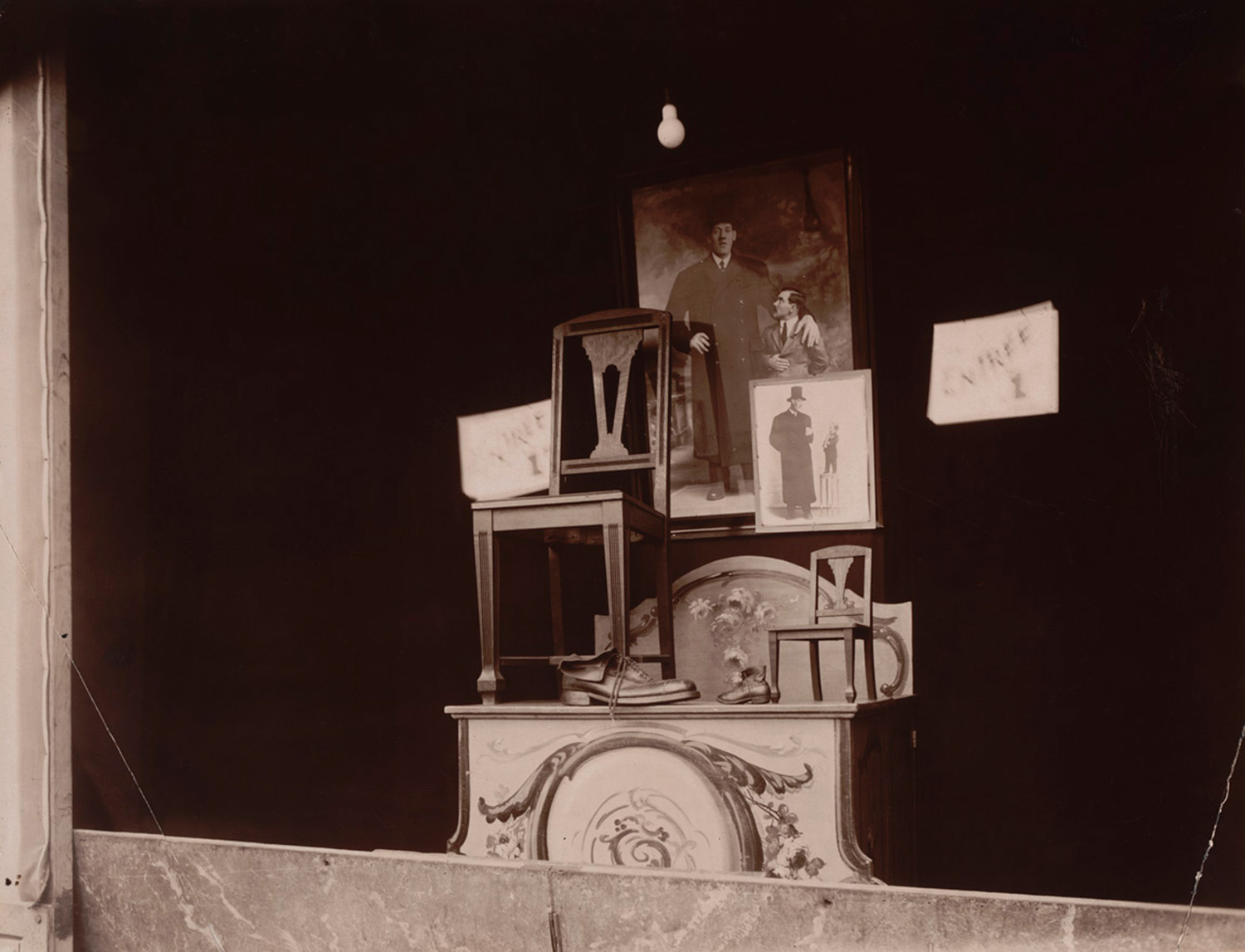
Eugène Atget (French, 1857-1927)
Fête du Trône
1925
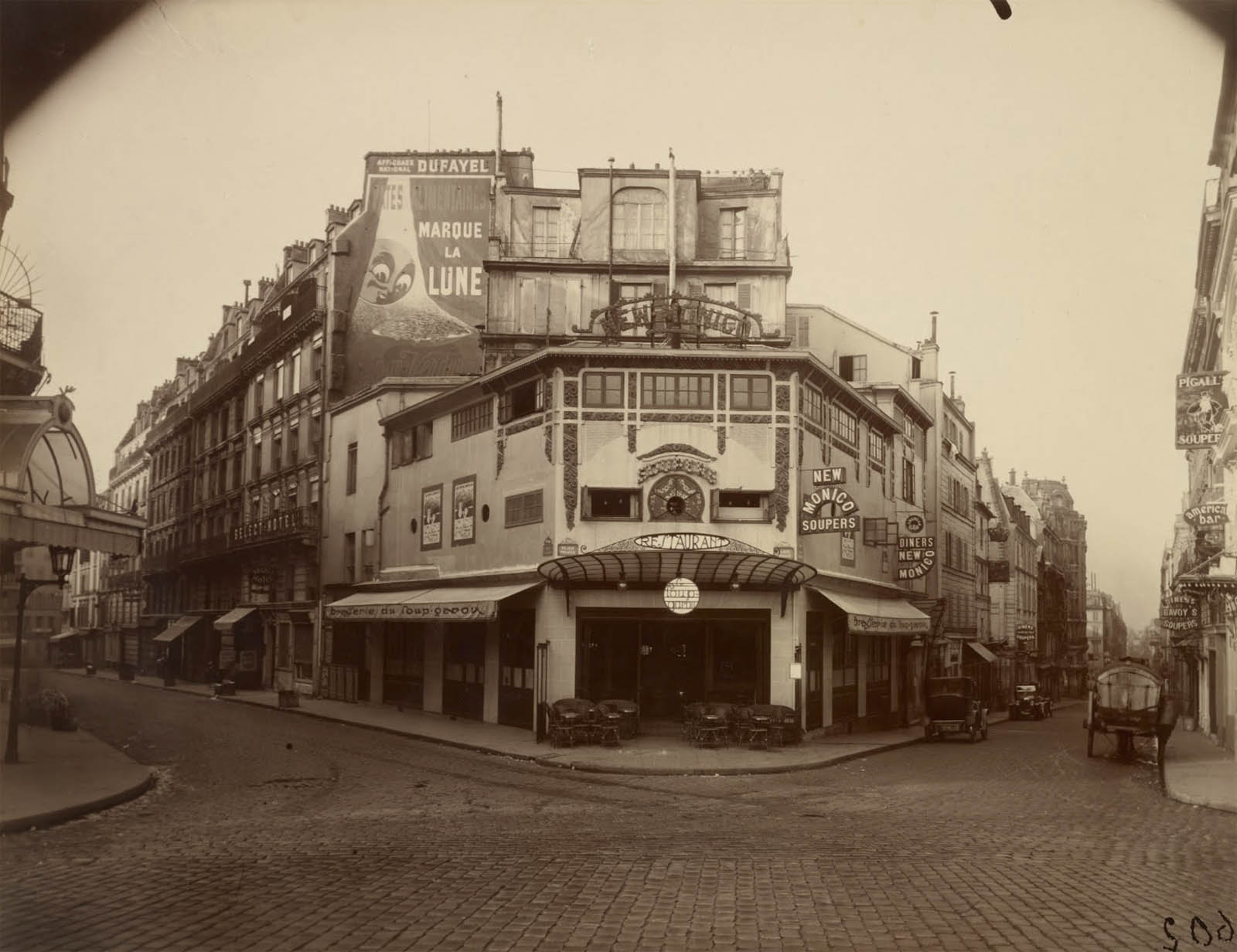
Eugène Atget (French, 1857-1927)
Place Pigalle
1925

Eugène Atget (French, 1857-1927)
Le Dôme, boulevard Montparnasse
June 1925

Eugène Atget (French, 1857-1927)
Parc de Sceaux
June 1925
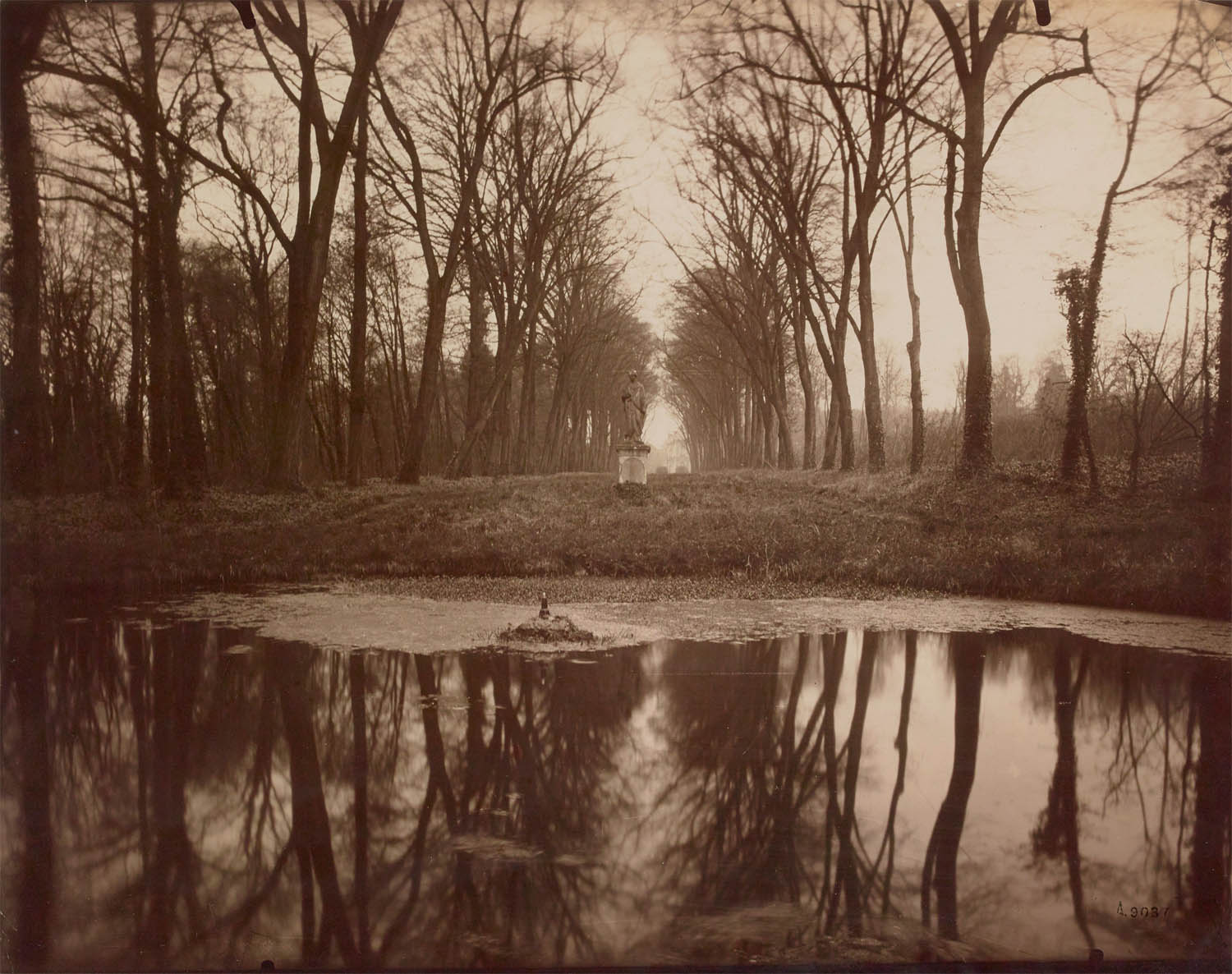
Eugène Atget (French, 1857-1927)
Parc de Sceaux, Duchess Alley
Between 1925 and 1927
![Eugène Atget (French, 1857-1927) '[Atget's Work Room with Contact Printing Frames]' c. 1910](https://significantsnappers.com/wp-content/uploads/2024/11/atgets-work-room.jpg "Eugène Atget (French, 1857-1927) '[Atget's Work Room with Contact Printing Frames]' c. 1910")
Eugène Atget (French, 1857-1927)
[Atget’s Work Room with Contact Printing Frames]
c. 1910
Eugène Atget exhibitions and photographs on Art Blart
~ Photographs: Eugène Atget (French, 1857-1927), November 2023
~ Text/Exhibition: “The power of imagination” on the exhibition ‘Eugène Atget, Voir Paris’ at the Fondation Henri Cartier-Bresson, Paris, June – September 2021
~Text: “Atget’s shadow,” on his Paris photographs, August 2020
~ Exhibition: ‘Eugène Atget: Old Paris’ at the Art Gallery of New South Wales, Sydney, August – November 2012
~ Exhibition: ‘Eugène Atget, Paris’ at the Carnavalet Museum, Paris, April – July 2012
~ Exhibition: ‘Eugène Atget: As Paris Was’ at Ticho House, the Museum of Israel, Jerusalem, March – June 2012
~ Exhibition: ‘Eugène Atget: “Documents pour artistes”’ at the Museum of Modern Art (MoMA), New York, February – April 2012
Diane Arbus (American, 1923-1971)
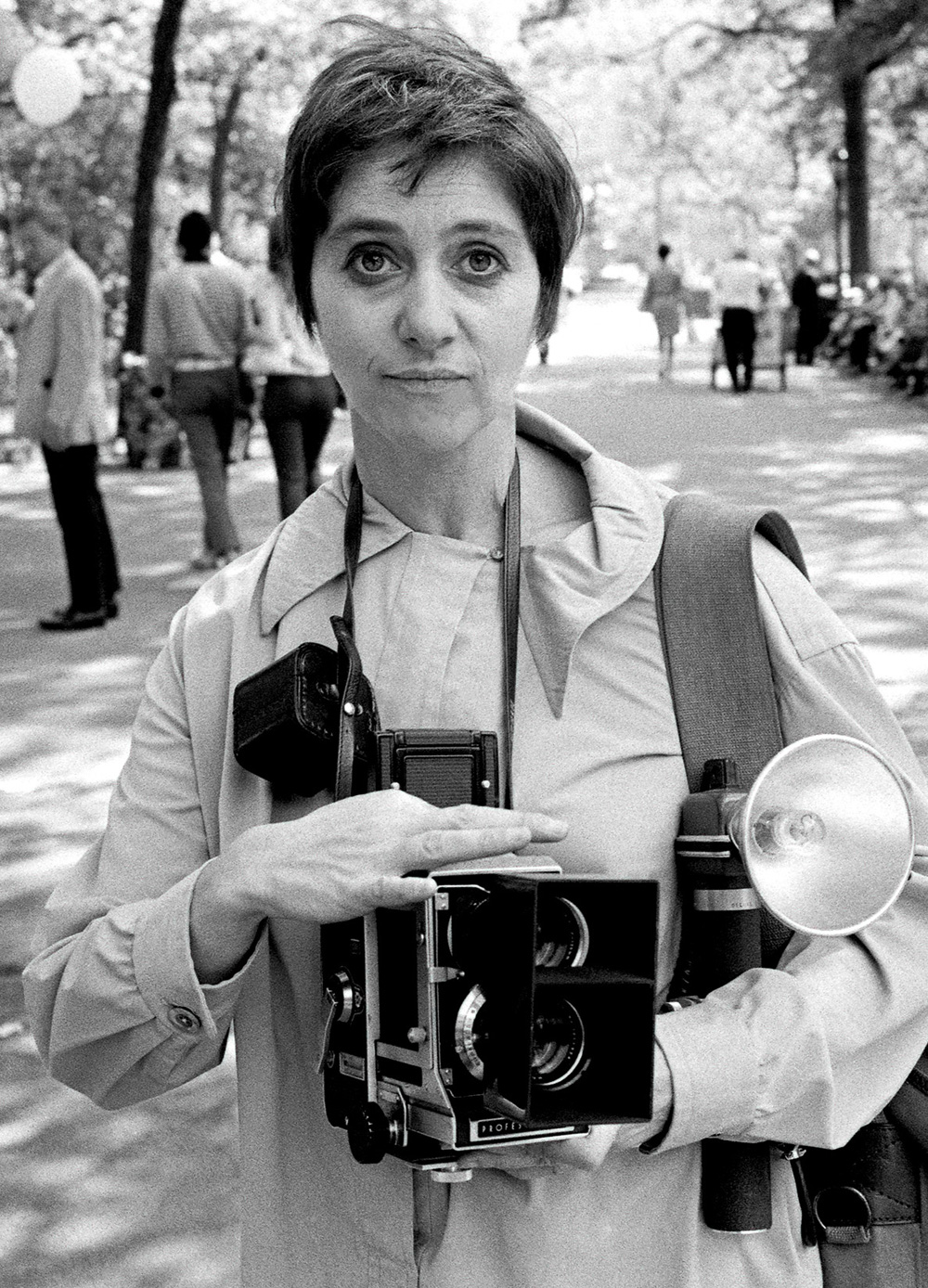
Unknown photographer
Diane Arbus in Central Park with her Mamiya Camera in 1967
1967
Gelatin silver print
The power of intention
If I had to nominate one photographer who is my favourite of all time, it would be Diane Arbus. There is just something about her photographs that impinge on my consciousness, my love of difference in human beings, their subversiveness and diversity. She pictures it all, some with irony, some with love, some with outright contempt, but always with interest. In photographs of dwarfs you don’t get the majesty and beauty that Susan Sontag desired, you get something else instead: the closeness of intention and effect – this is who this person was at that particular moment represented in a photograph, the essence of their being at that particular time.
Arbus was fascinated by the relationships between the psychological and the physical, probing her subjects with the camera to elicit a physical response. Her sensory, emotional, intellectual and aesthetic intelligence creates a single experience in relation to subject, stimulating her to respond to the world in her own unique way. While Arbus may well have hated aspects of American culture – “Its hypocrisy, this ‘happy happy’ story after the war, the consumerism, the racism, she feels deeply about that,” as Anne O’Hehir, curator of the National Gallery of Australia’s American Portraits observes – she photographed everything that makes us human in profound and powerful photographs. To me, her subjects were not ‘caught off guard’ nor did they unintentionally reveal aspects of themselves – they revealed themselves to Arbus just as they are, because she gained their trust, she had empathy for who they were, an empathy that flowed both ways, enhanced by the subjects sense of Arbus’ own personal travails. …
These archetypal images have become deeply embedded in the collective conscience where conscience is pre-eminently the organ of sentiments and representations. The snap, snap, snap of the shutter evinces the flaws of human nature, reveals the presence of a quality or feeling to which we can all relate. As Arbus states, the subject of the picture is always more important than the picture. And more complicated. This is why these photographs always capture our attention because we become, we inhabit, we are the subject. They are the flaw in us all. They are legend.
Dr Marcus Bunyan 2012/2018

Diane Arbus (American, 1923-1971)
Muscle Man in his dressing room with trophy, Brooklyn, N.Y.
1962
Gelatin silver print

Diane Arbus (American, 1923-1971)
Child with toy hand grenade, in Central Park, New York City, 1962
1962
Gelatin silver print
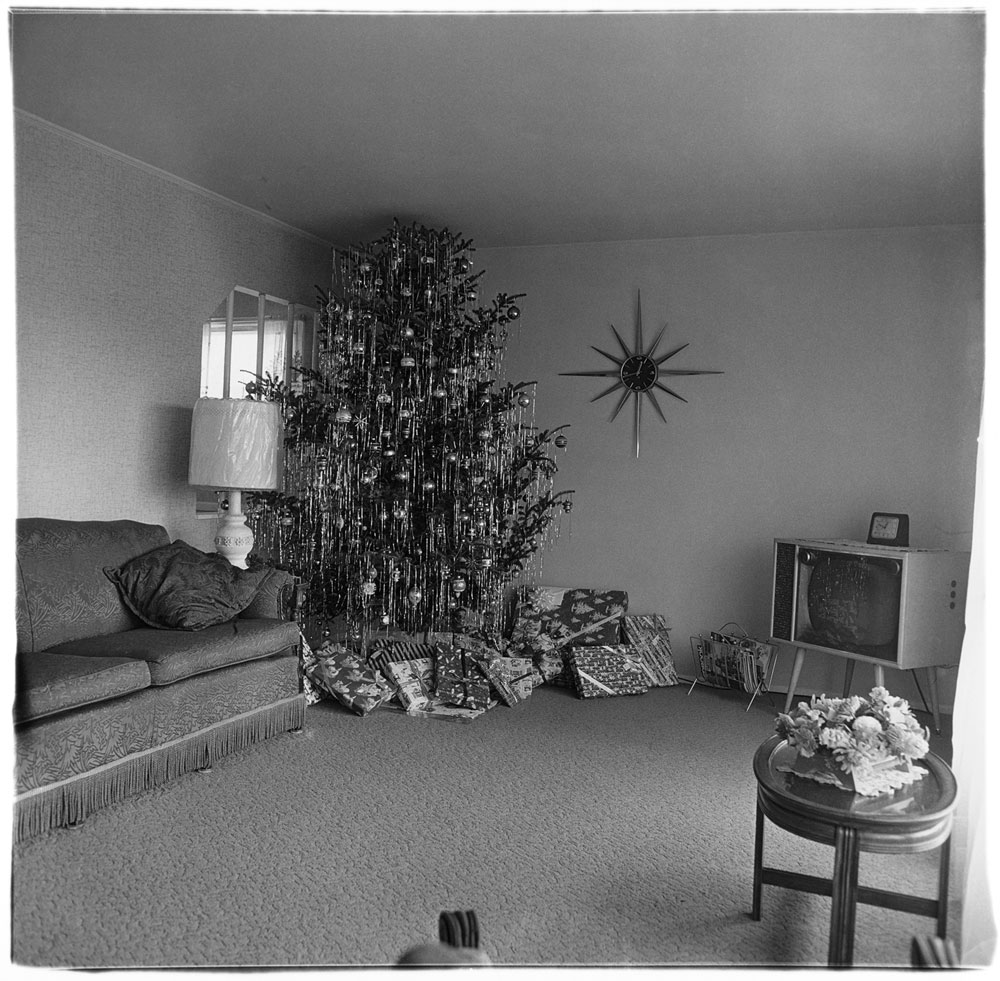
Diane Arbus (American, 1923-1971)
Xmas tree in a living room in Levittown, L.I., 1963
1963
Gelatin silver print
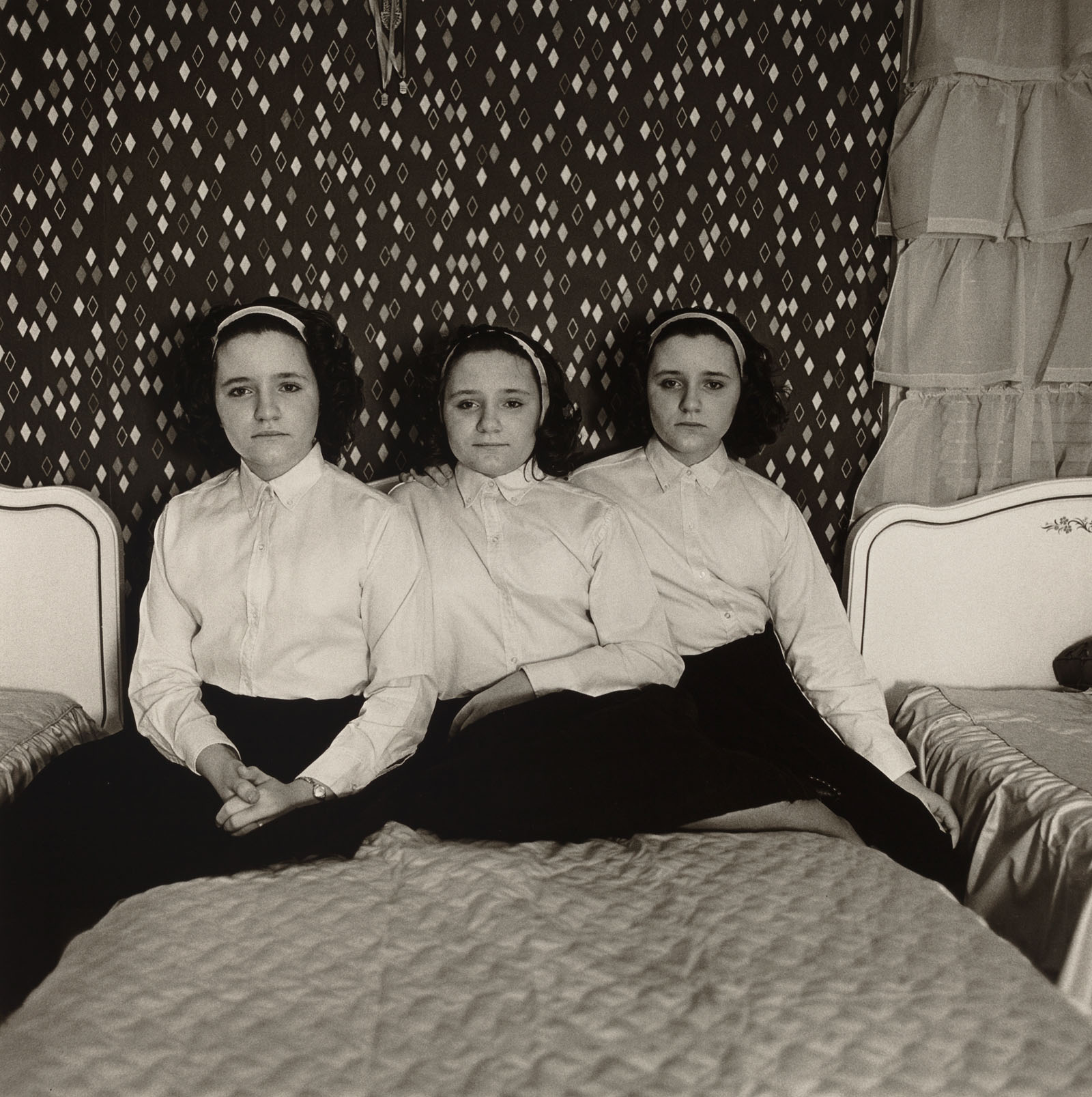
Diane Arbus (American, 1923-1971)
Triplets in their Bedroom, N.J.
1963
Gelatin silver print
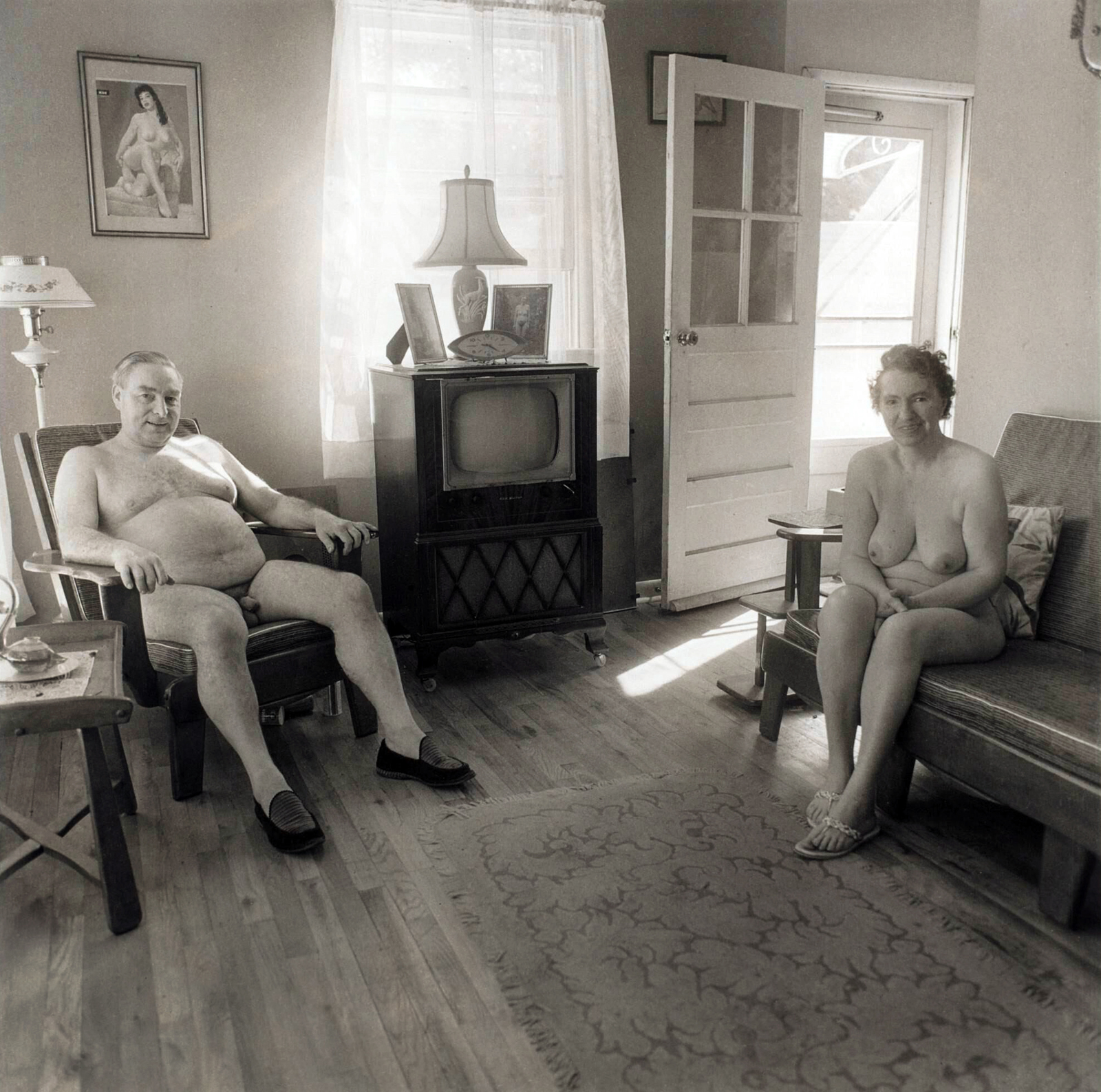
Diane Arbus (American, 1923-1971)
Retired man and his wife at home in a nudist camp one morning, N.J.
1963
Gelatin silver print
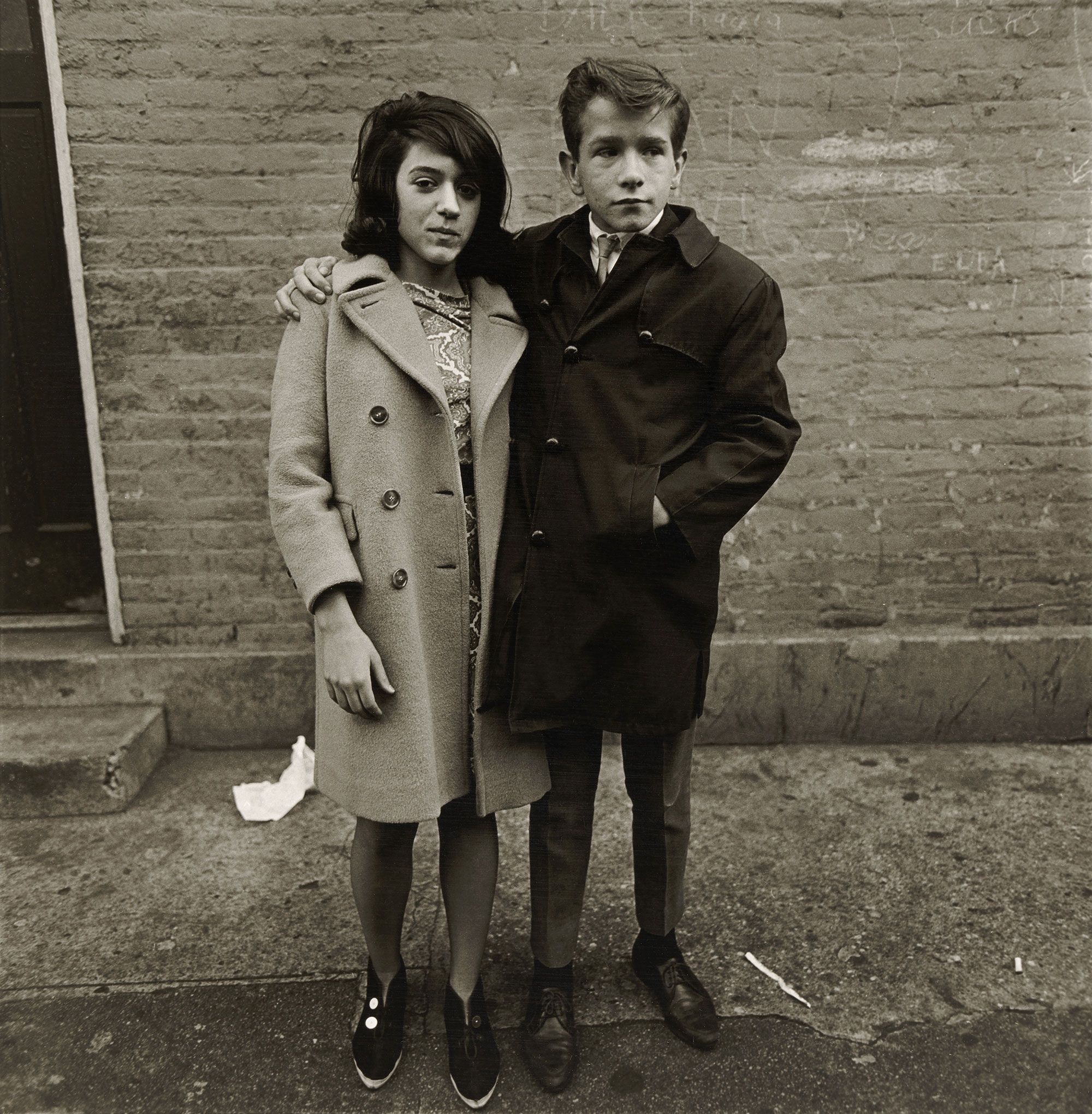
Diane Arbus (American, 1923-1971)
Teenage couple on Hudson Street, N.Y.C., 1963
1963
Gelatin silver print
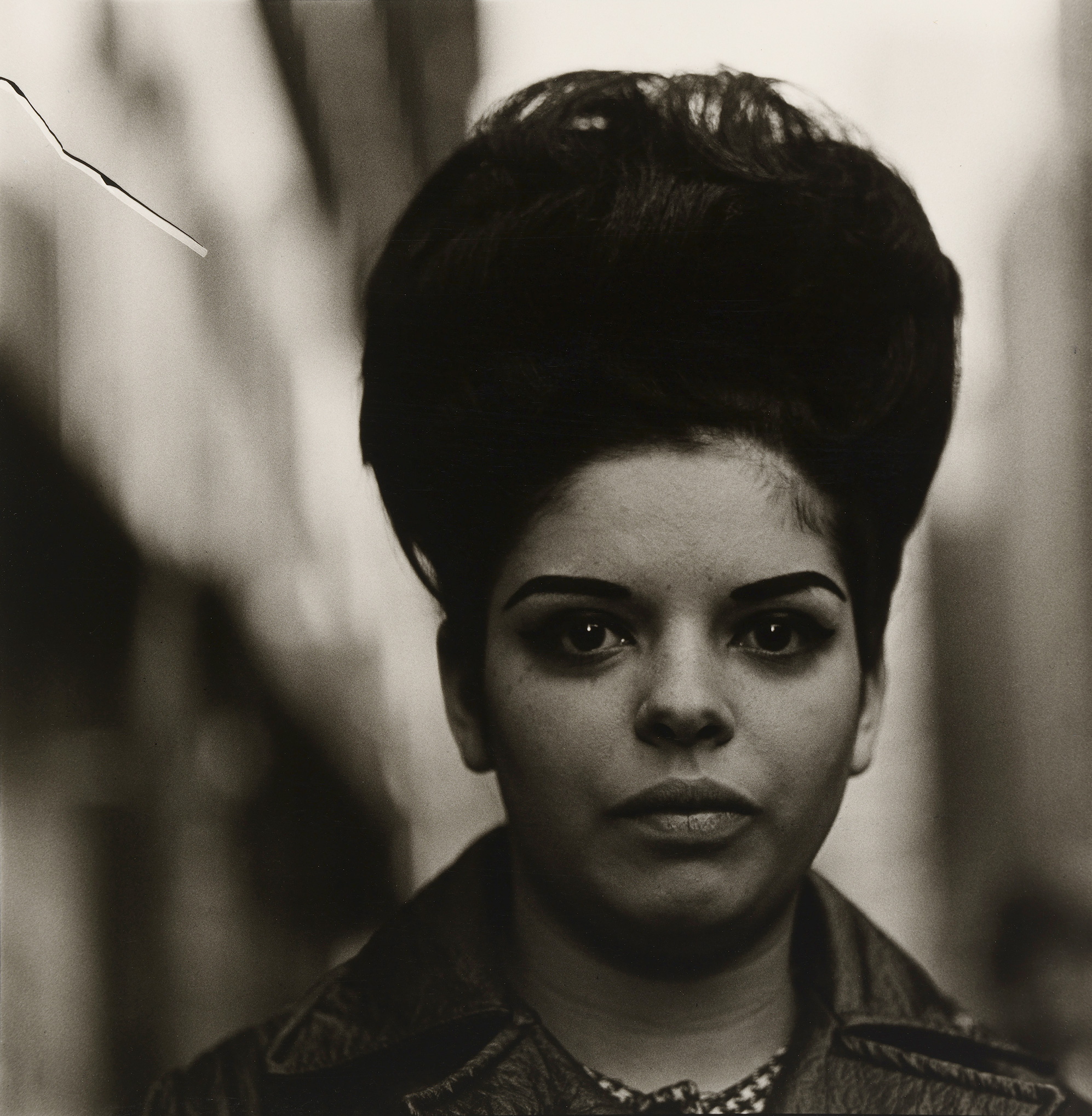
Diane Arbus (American, 1923-1971)
Woman with a beehive hairdo
1965
Gelatin silver print

Diane Arbus (American, 1923-1971)
A young man and his pregnant wife in Washington Square Park, N.Y.C., 1965
1965
Gelatin silver print
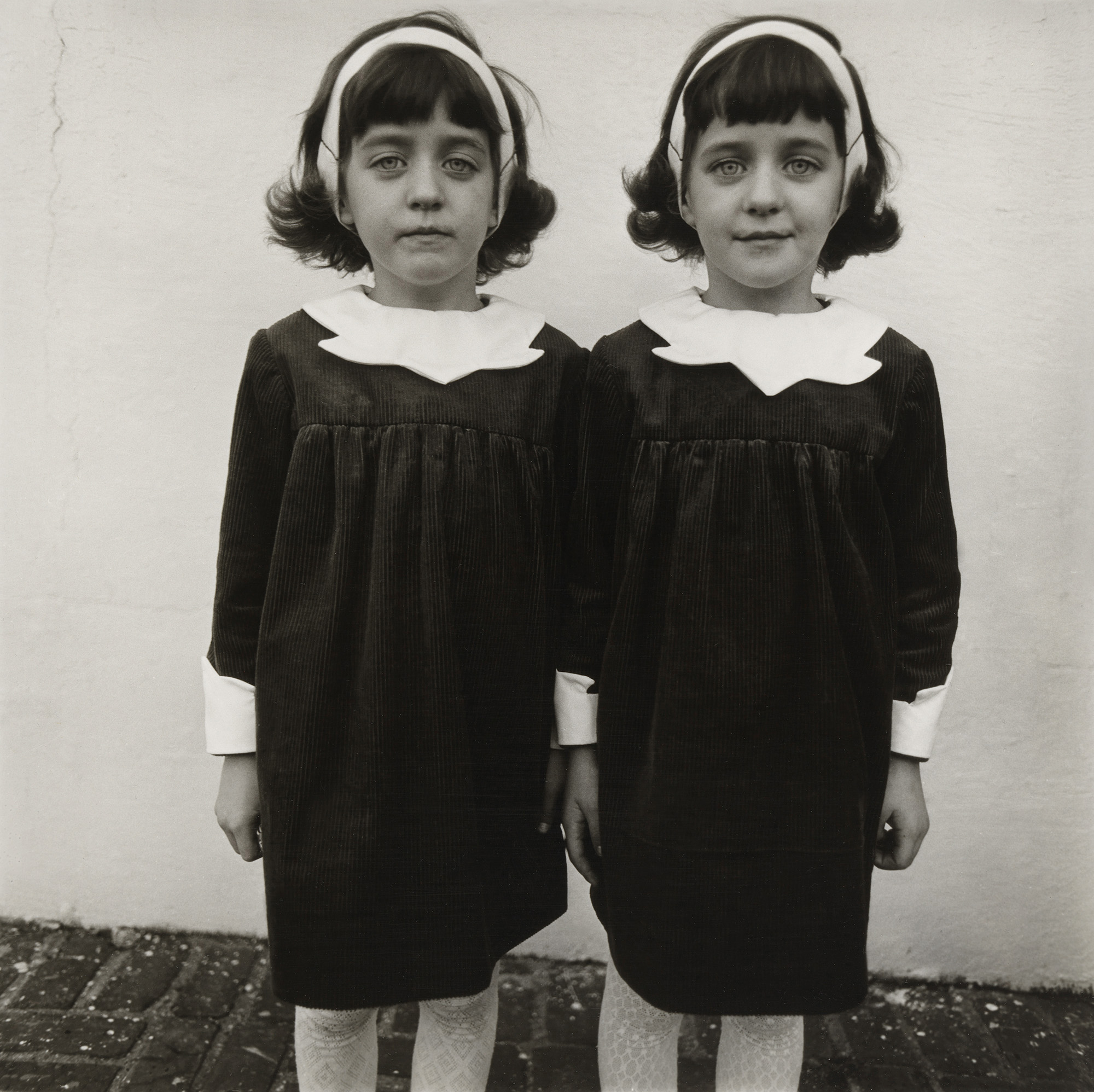
Diane Arbus (American, 1923-1971)
Identical twins, Roselle, N.J., 1966
1966
Gelatin silver print
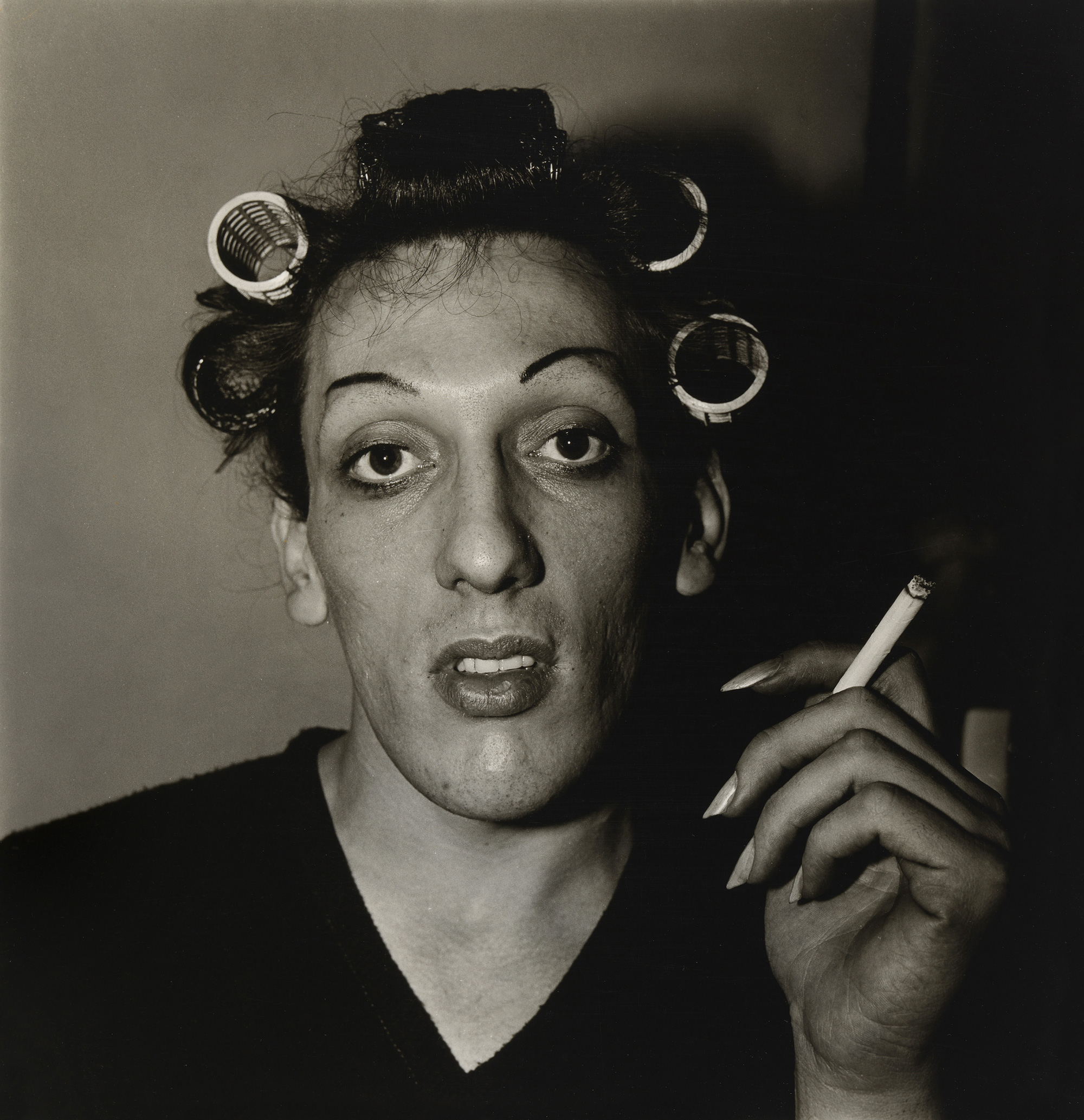
Diane Arbus (American, 1923-1971)
A young man in curlers at home on West 20th St., N.Y.C., 1966
1966
Gelatin silver print
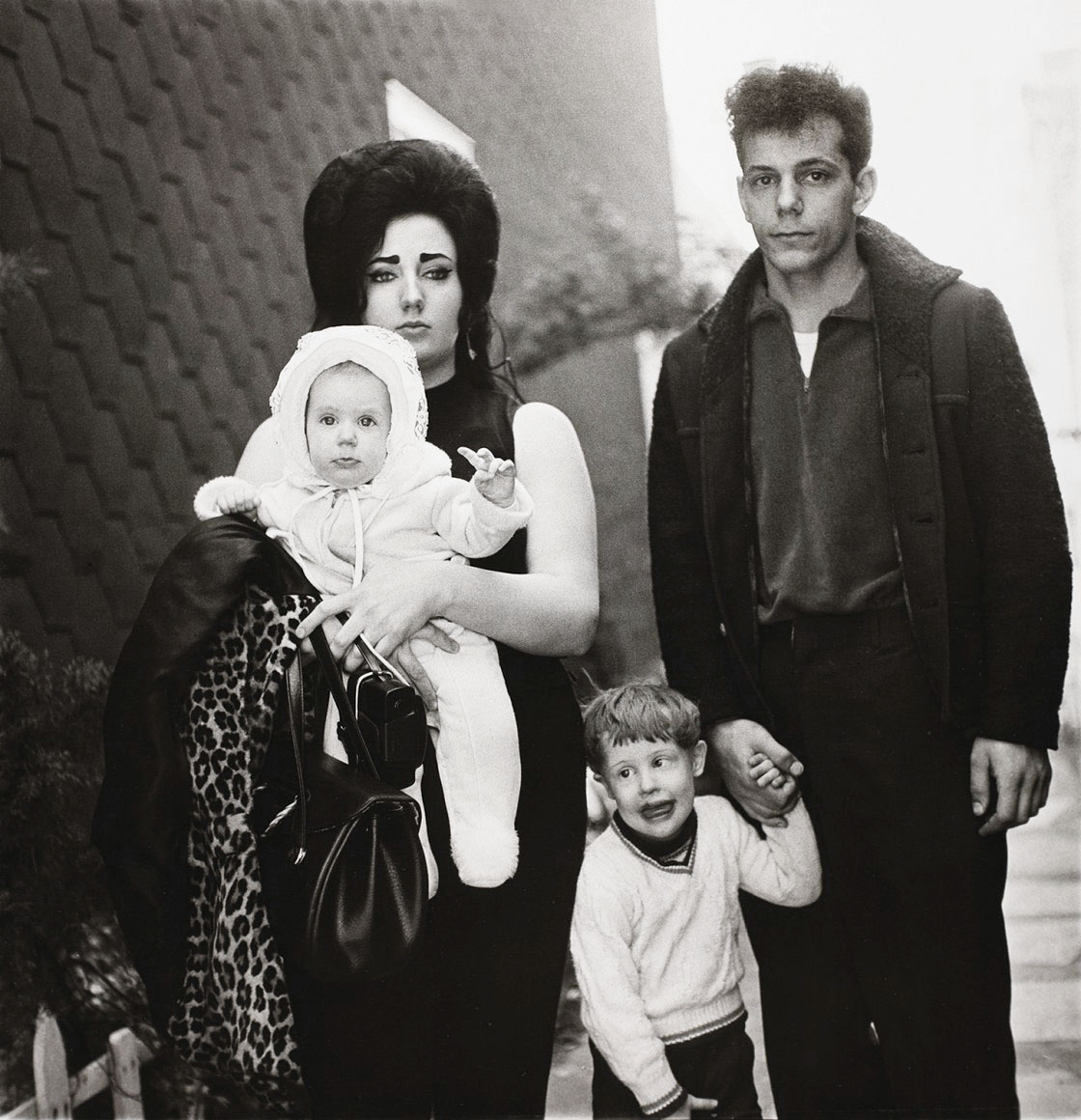
Diane Arbus (American, 1923-1971)
A young Brooklyn family going for a Sunday outing, NYC., 1966
1966
Gelatin silver print
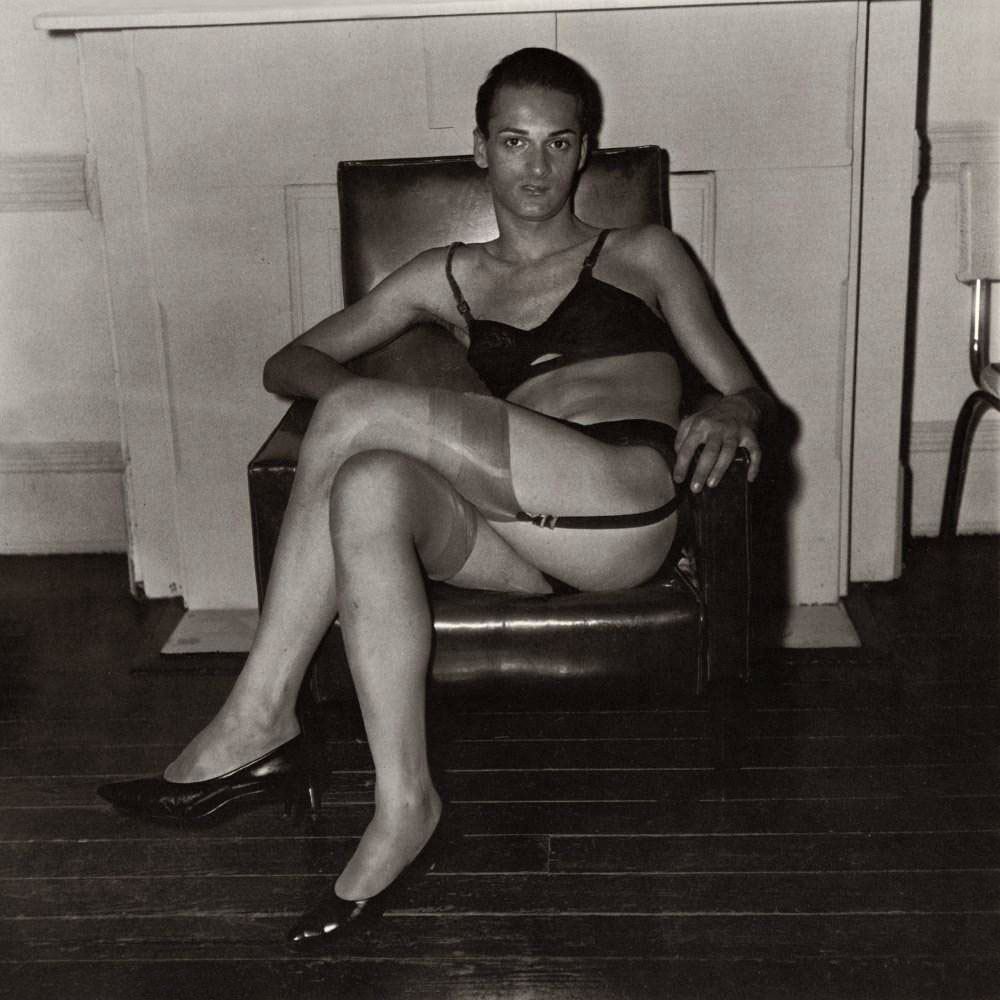
Diane Arbus (American, 1923-1971)
Seated man in a bra and stockings, N.Y.C., 1967
1967
Gelatin silver print
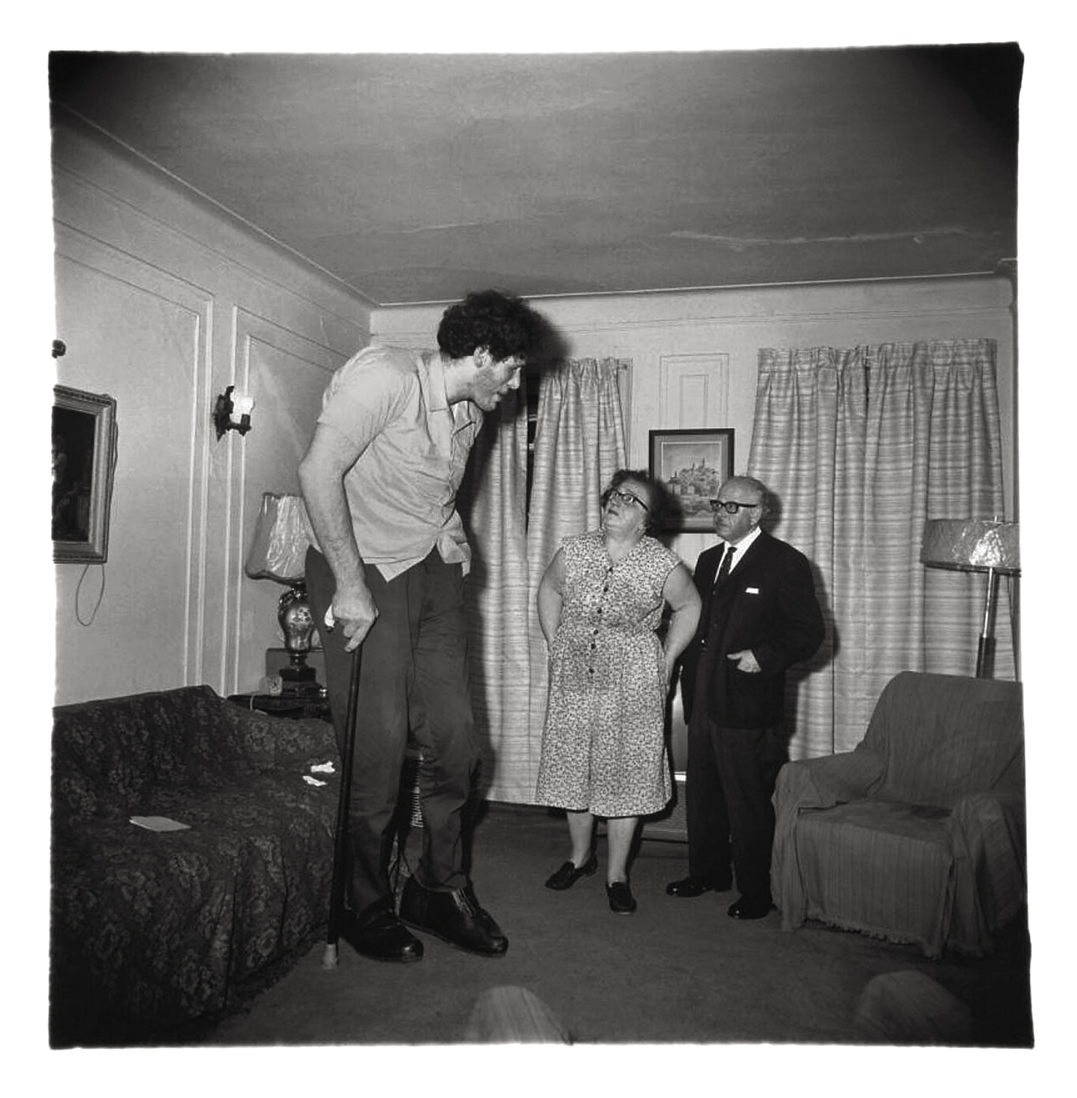
Diane Arbus (American, 1923-1971)
A Jewish Giant at home with his parents
1967
Gelatin silver print

Diane Arbus (American, 1923-1971)
Boy with a straw hat waiting to march in a pro-war parade, N.Y.C., 1967
1967
Gelatin silver print
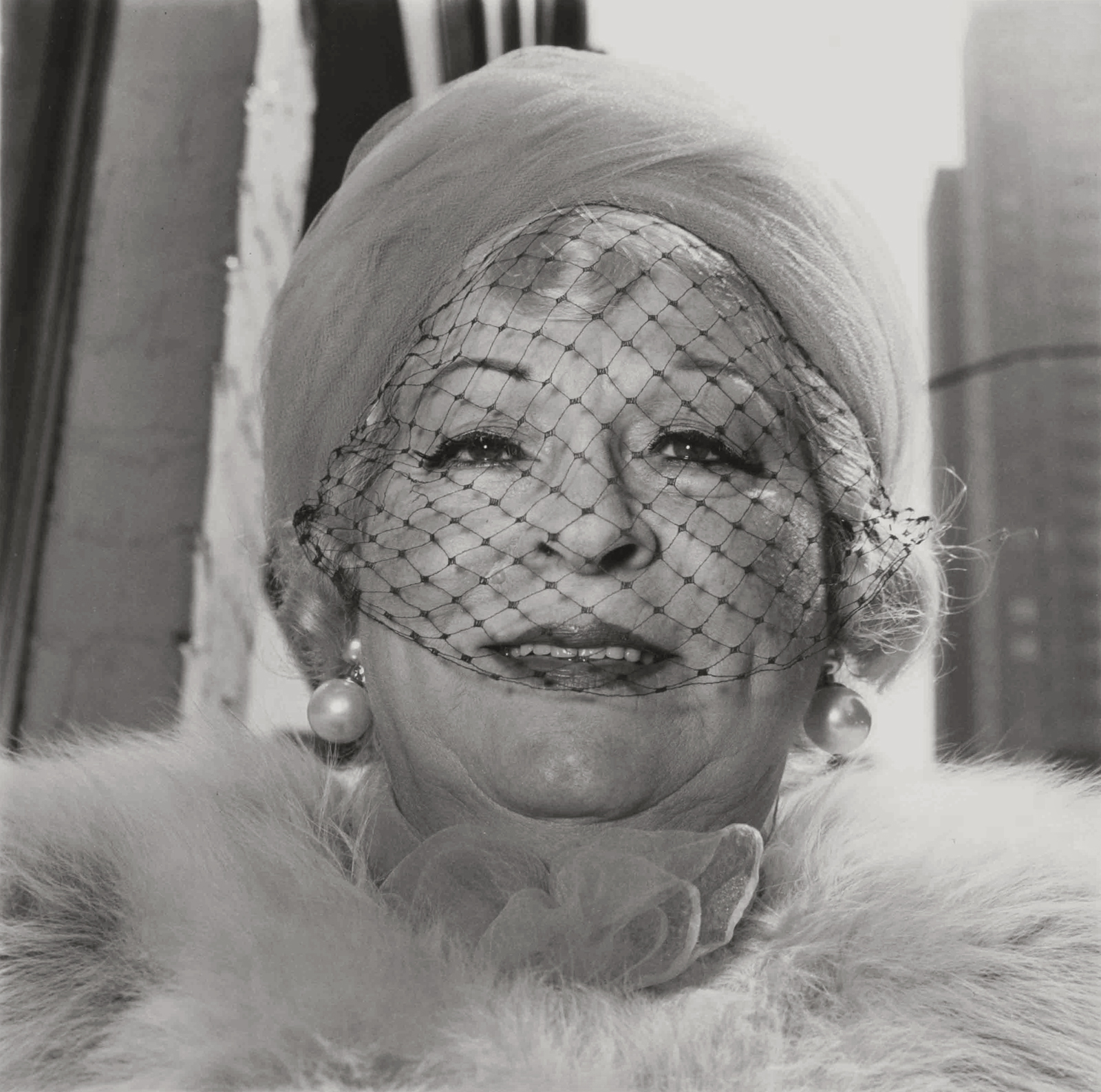
Diane Arbus (American, 1923-1971)
Woman with Veil on Fifth Avenue, N.Y.C.
1968
Gelatin silver print
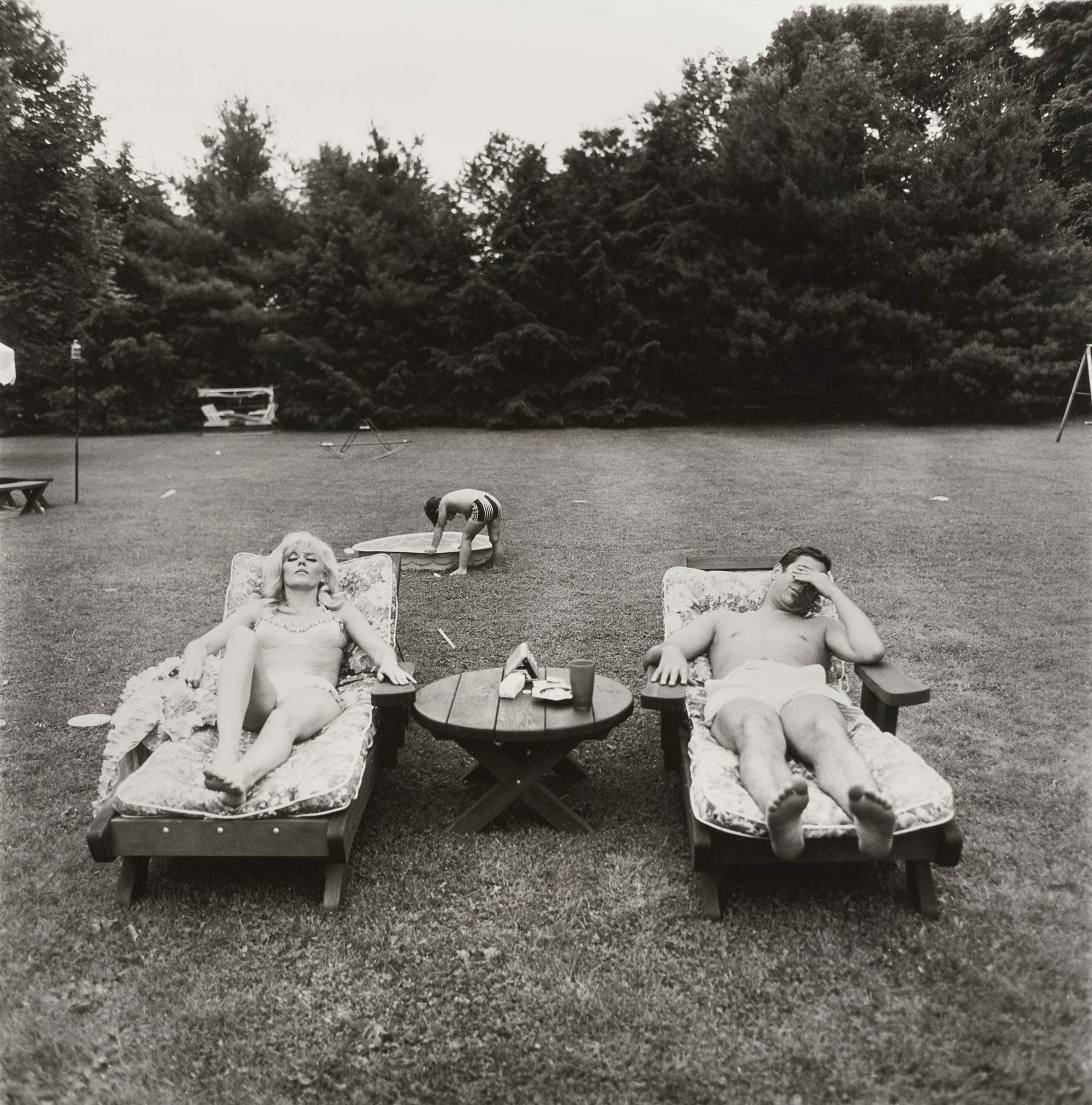
Diane Arbus (American, 1923-1971)
A family on their lawn one Sunday in Westchester, N.Y.
1968
Gelatin silver print
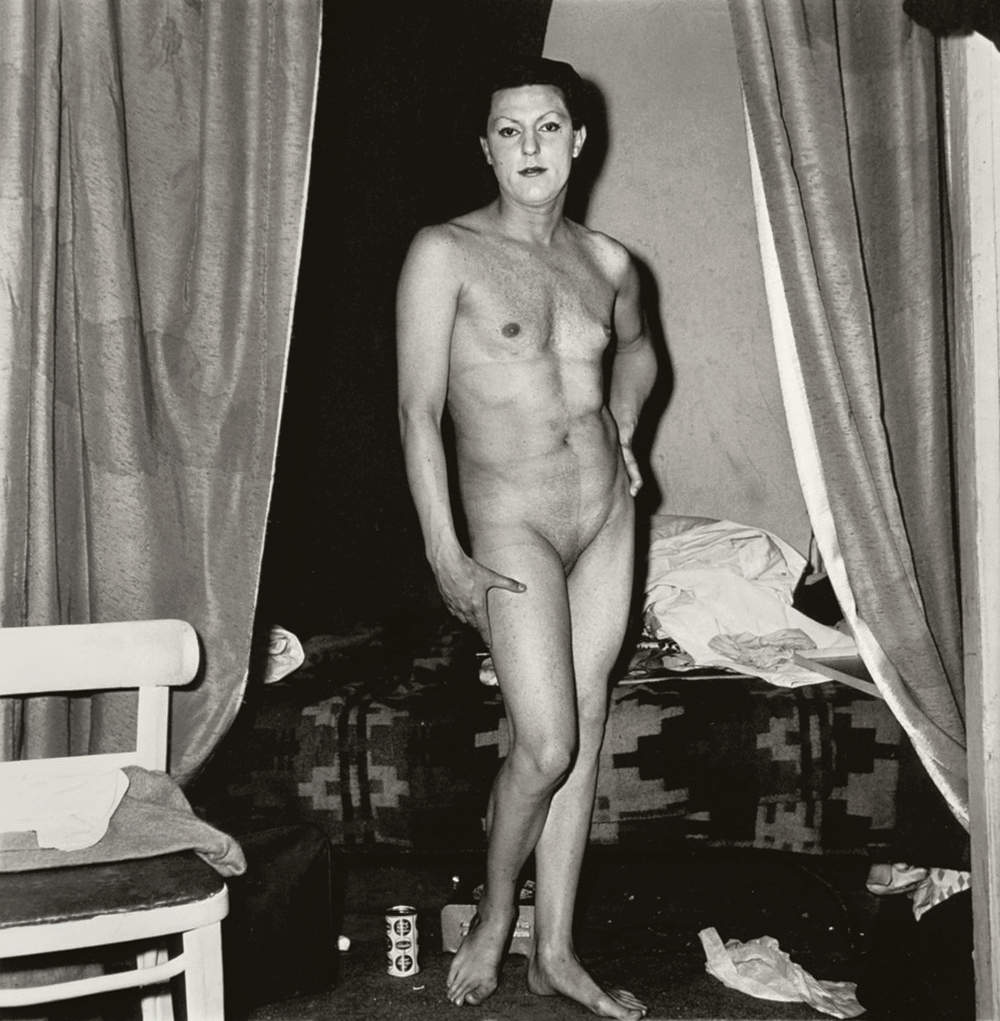
Diane Arbus (American, 1923-1971)
A naked man being a woman, N.Y.C.
1968
Gelatin silver print
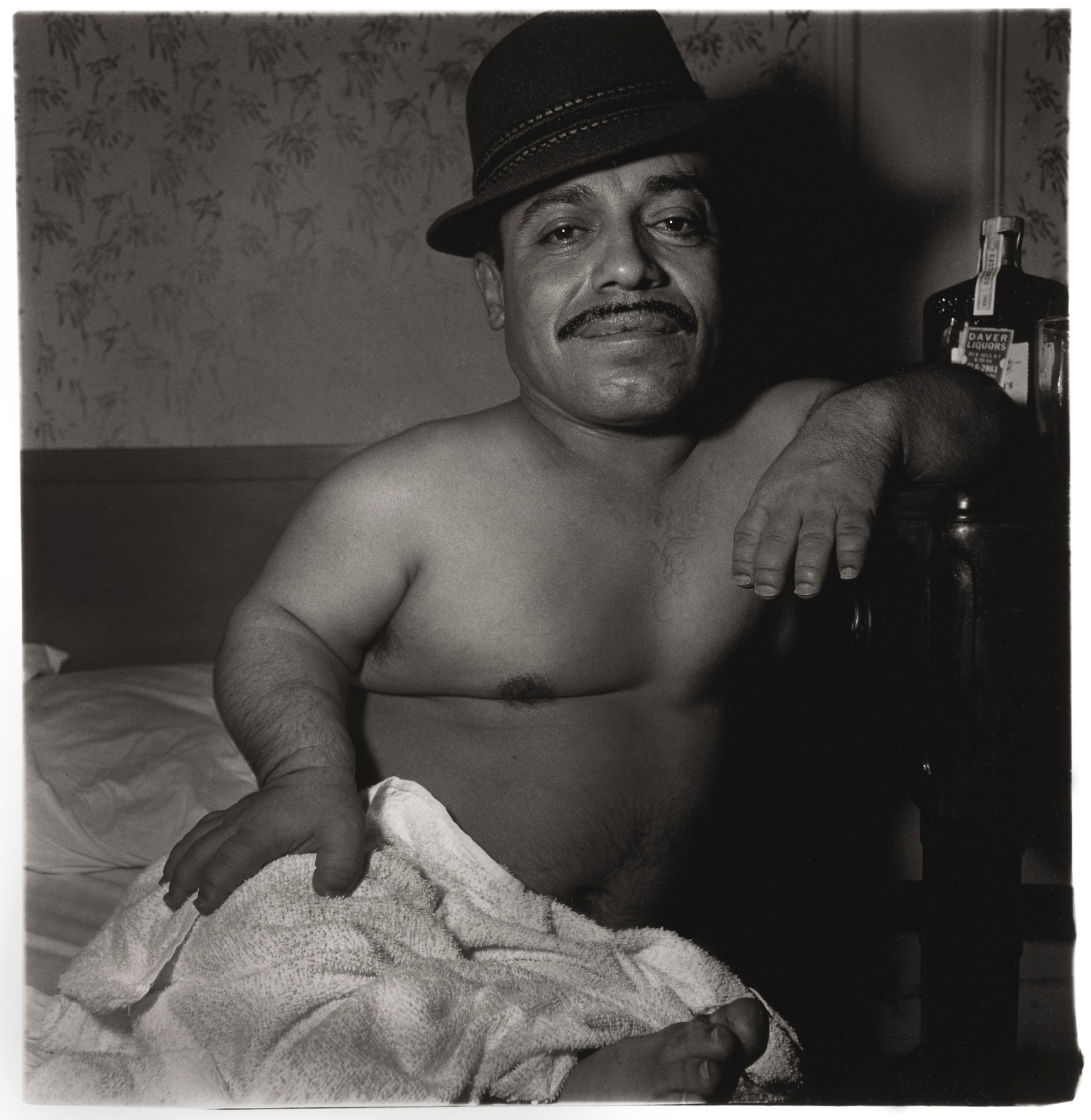
Diane Arbus (American, 1923-1971)
Mexican dwarf in his hotel room N.Y.C., 1970
1970
Gelatin silver print

Diane Arbus (American, 1923-1971)
Tattooed Man at a Carnival, MD
1970
Gelatin silver print
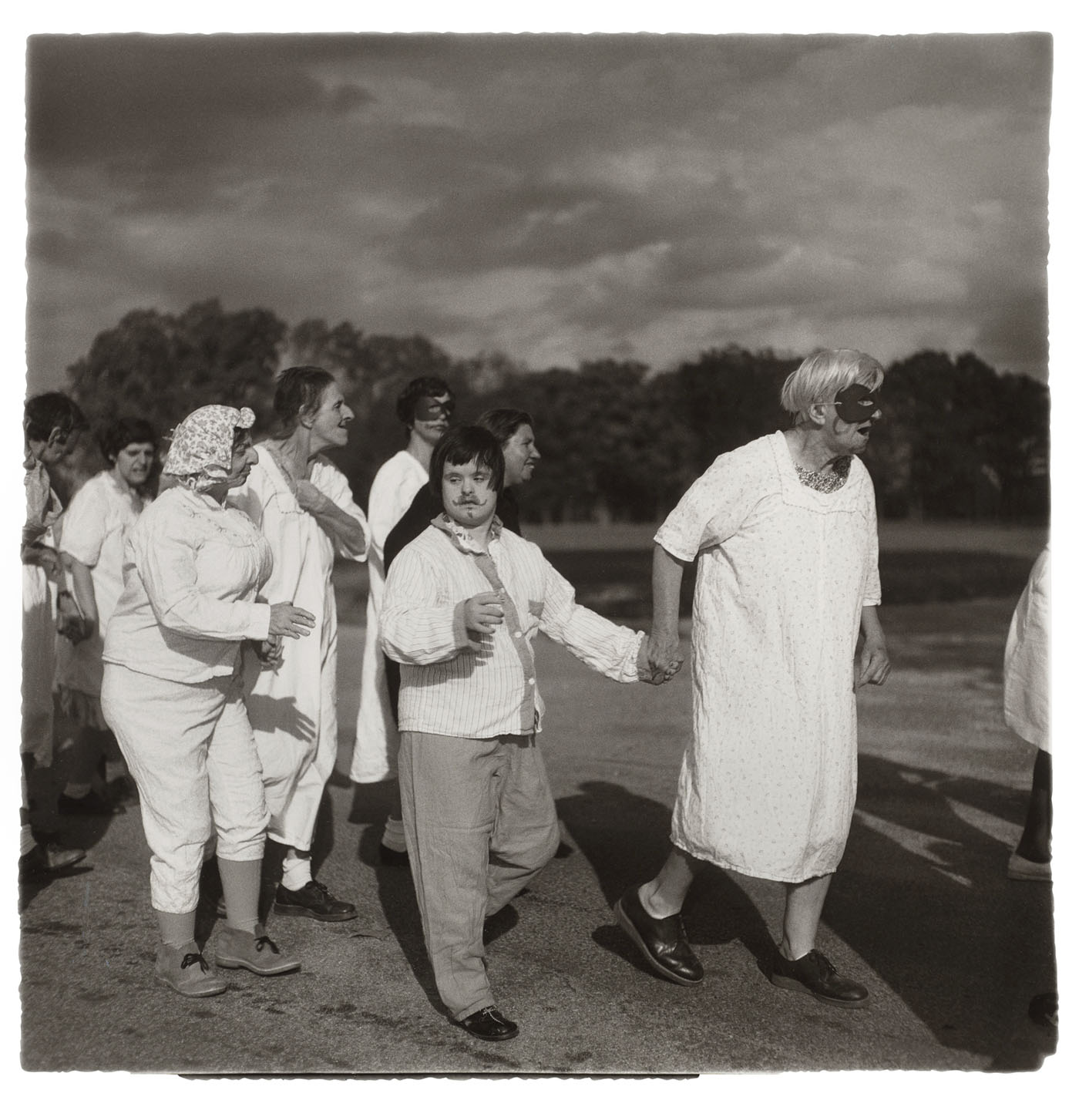
Diane Arbus (American, 1923-1971)
Untitled
1970-1971
Gelatin silver print

Diane Arbus (American, 1923-1971)
Untitled (6)
1970-1971
Gelatin silver print
Diane Arbus exhibitions and photographs on Art Blart
~ Review: ‘Diane Arbus: American Portraits’ at the Heide Museum of Modern Art, Melbourne, March – June 2018
~ Exhibition: ‘Diane Arbus’ at Jeu de Paume, Paris, October 2011 – February 2012
~ Exhibition: ‘Pierre Leguillon features Diane Arbus: A Printed Retrospective, 1960-1971’ at the Modern Museum, Malmo, March – August 2010
~ Exhibition: ‘Diane Arbus’ at the National Museum of Wales, Cardiff, May – August 2009
Robert Adams (American, 1937 – )
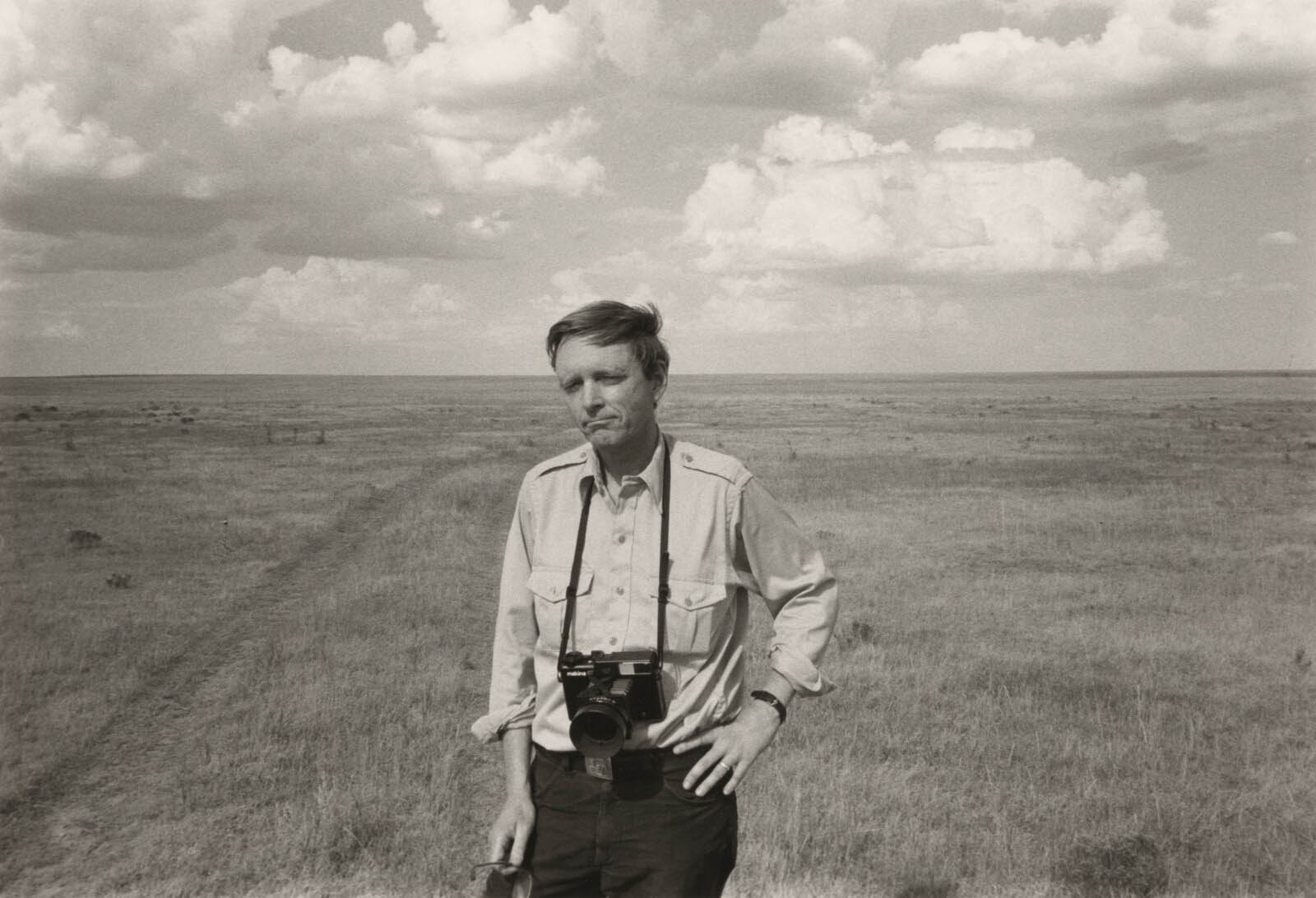
Robert Adams (American, b. 1937)
Self-Portrait on the Pawnee Grassland, Colorado
1983
Gelatin silver print
The quiet of the great beyond
With gratitude, I admire the photographs of Robert Adams. I admire their perspicuous (“clear, lucid”, able to be seen through) and perspicacious (“keen, astute,” able to see through) nature.
They imbibe (“absorb, assimilate,” ideas or knowledge) in us “the wonder and fragility of the American landscape, its inherent beauty, and the inadequacy of our response to it… [they] capture the sense of peace and harmony that the beauty of nature can instil in us – “the silence of light,” as he calls it… [and they] question our silent complicity in the desecration of that beauty by consumerism, industrialisation, and lack of environmental stewardship… While these photographs lament the ravages that have been inflicted on the land, they also pay homage to what remains.”
Like so many photographers of the American landscape, Adams’ debt to the vision of Walker Evans can be seen in his early work, in images such as Movie Theater, Otis, Colorado (1965) and Catholic Church, Summer, Ramah, Colorado (1965) – but even in images such as Wheat Stubble, South of Thurman, Colorado (1965) we can begin to see the beginnings of Adams personal artistic signature, the quiet of “the great beyond” (both physically and spiritually).
In modernist photographs that step off from Walker Evans’ legacy, Adams quiet, still photographs require of the viewer contemplation and reflection… reflection on the isolation of tract housing seemingly dropped into the vast American landscape. In these photographs (such as the two photographs Newly Occupied Tract Houses, Colorado Springs, 1968) Adams’ use of near/far is exemplary, with the nearness of the new excavation, the new scarring of the earth, contrasting with the sublime majesty of the mountains beyond. Other more personal psychological scarring can be seen in the two photographs Colorado Springs (1968-1971) where single, isolated, anonymous human beings are occluded in silhouette or shadow, damned by the hot sun.
In other photographs houses become like fossilised dinosaur skeletons, their graves marked by ironic street names such as Darwin Pl. (Frame for a Tract House, Colorado Springs, 1969), or multiply across the landscape, breeding like some genetically identical sequence (Pikes Peak Park, Colorado Springs, 1969). Even petrol stations blare out the name “Frontier” as though to irrevocably define that here we live on the edge of nowhere. And so it goes in Adams’ work… isolated people living in a barren landscape being colonised and inhabited without much thought for the beauty or the destruction of the landscape.
From the mid-1970s onwards, Adams’ landscape photographs begin to eschew all but the smallest pointers to human habitation, but this makes these human marks on the landscape all the more intrusive because of it. For example, in the photograph of the vast landscape South of the Rocky Flats Nuclear Weapons Plant, Jefferson County, Colorado (1976) the only markings of human activity are the tyre marks in the foreground and the telegraph poles, road and cars at far right… and then the title hits you with a double-whammy, “Rocky Flats Nuclear Weapons Plant”, not present in the photograph but present in our consciousness (of the landscape). Even less evidence of human existence is signalled in the photograph Missouri River, Clay County, South Dakota (1977), but then we notice at bottom left a discarded tin can, just a discarded tin can, but this one tin can says so much about our use and abuse of our only habitable planet, earth.
In image after image, roads scar the landscape, planes fly overhead, industry and housing colonise the sublime, and human beings hug and are alienated amongst concrete jungles and car parks. New development erodes the earth leaving behind the detritus of human existence. Old growth trees are slaughtered in clearcut operations in which every tree has been cut down and removed. A dead albatross rots on an expanse of beach (The Sea Beach, Albatross, 2015) while in the distance the photographer picks out 4 ghosts of human beings (The Sea Beach, 2015).
Adams’ photographic vision is extra ordinary and I cannot fault his individual photographs. I become engrossed in them. I breathe their atmosphere. He has a resolution, both in terms of large format aesthetic, the aesthetic of beauty and of using materials, light and composition… that seems exactly right. He possesses that superlative skill of few great photographers, and by that I mean: sometimes he has true compassion** / parallel to a religious compassion, but not based on something higher / just perfect human. In some of his photographs (such as East from Flagstaff Mountain, Boulder County, Colorado 1975) he possesses real forgiveness, in others there is the perfection of cruel, the perfection of de/composition.
** achieved by Arbus, Atget and sometimes by Clift, Gowin.
And then, each image holds small clues vital to the overall conversation that is the accumulation of his work and it is in their collective accumulation of meaning that Adams’ photographs grow and build to shatter not just the American silence on environmental issues, but the deafening silence of the whole industrialised world. In their holistic nature, Adams’ body of work becomes punctum and because of this his work produces other “things”, things as great as anything the French literary theorist, essayist, philosopher, critic, and semiotician Roland Barthes wrote about. As in Barthes’ seminal work Camera Lucida, Adams’ work reminds us that the “photograph is evidence of ‘what has ceased to be’. Instead of making reality solid, it reminds us of the world’s ever changing nature.”1
Human beings can never leave anything as they find it, they always have to possess and change whatever they see in a form of desecration (the action of damaging or showing no respect toward something holy or very much respected). Except human beings do not respect the only place that have to live on, this earth. When will it change?
As Alain de Botton observes on the importance of the sublime places to the human psyche,
“If the world is unfair or beyond our understanding, sublime places suggest it is not surprising things should be thus. We are the playthings of the forces that laid out the oceans and chiselled the mountains. Sublime places acknowledge limitations that we might otherwise encounter with anxiety or anger in the ordinary flow of events. It is not just nature that defies us. Human life is as overwhelming, but it is the vast spaces of nature that perhaps provide us with the finest, the most respectful reminder of all that exceeds us. If we spend time with them, they may help us to accept more graciously the great unfathomable events that molest our lives and will inevitably return us to dust.”2
We loose these places at our peril and the peril of the entire human race.
Dr Marcus Bunyan 2022
1/ Anonymous. “Roland Barthes,” on the Wikipedia website Nd [Online] Cited 23/09/2022
2/ Alain de Botton. The Art of Travel. London: Penguin, 2002, pp. 178-179.
“Robert Adams’s photographs often seem to demand that viewers do a double-take. Seemingly ordinary subjects like tree stumps, tract housing or the moon seen from a parking lot “require very careful looking and careful consideration,” says curator Sarah Greenough, before they reveal the photographer’s deeply personal visions of nature – and, sometimes, his despair at what humans have done with it.”
Peter Saenger. “Robert Adams Takes Photos That Face Facts,” on The Wall Street Journal website May 13, 2022 [Online] Cited 23/06/2022
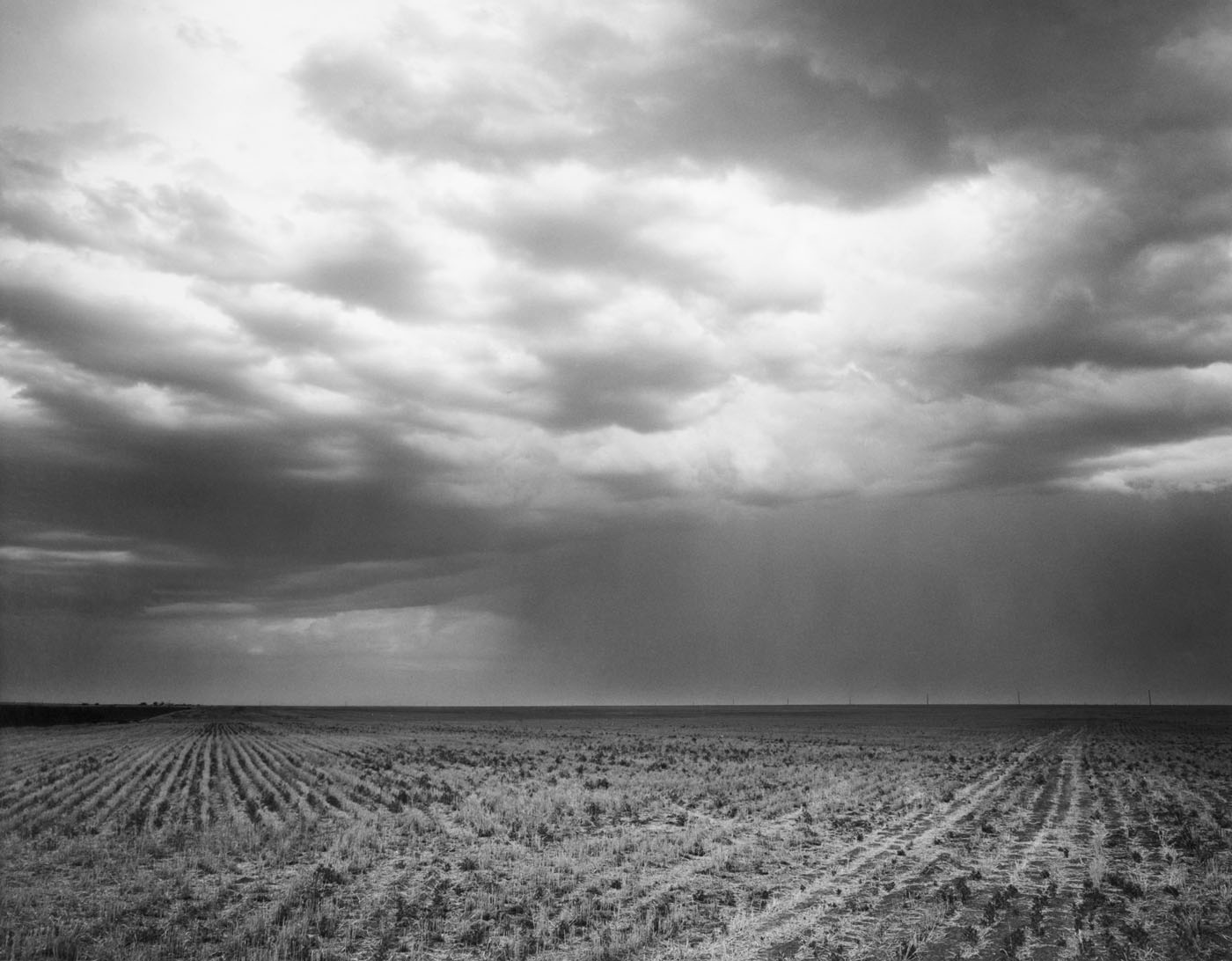
Robert Adams (American, b. 1937)
Wheat Stubble, South of Thurman, Colorado
1965, printed 1988
Gelatin silver print
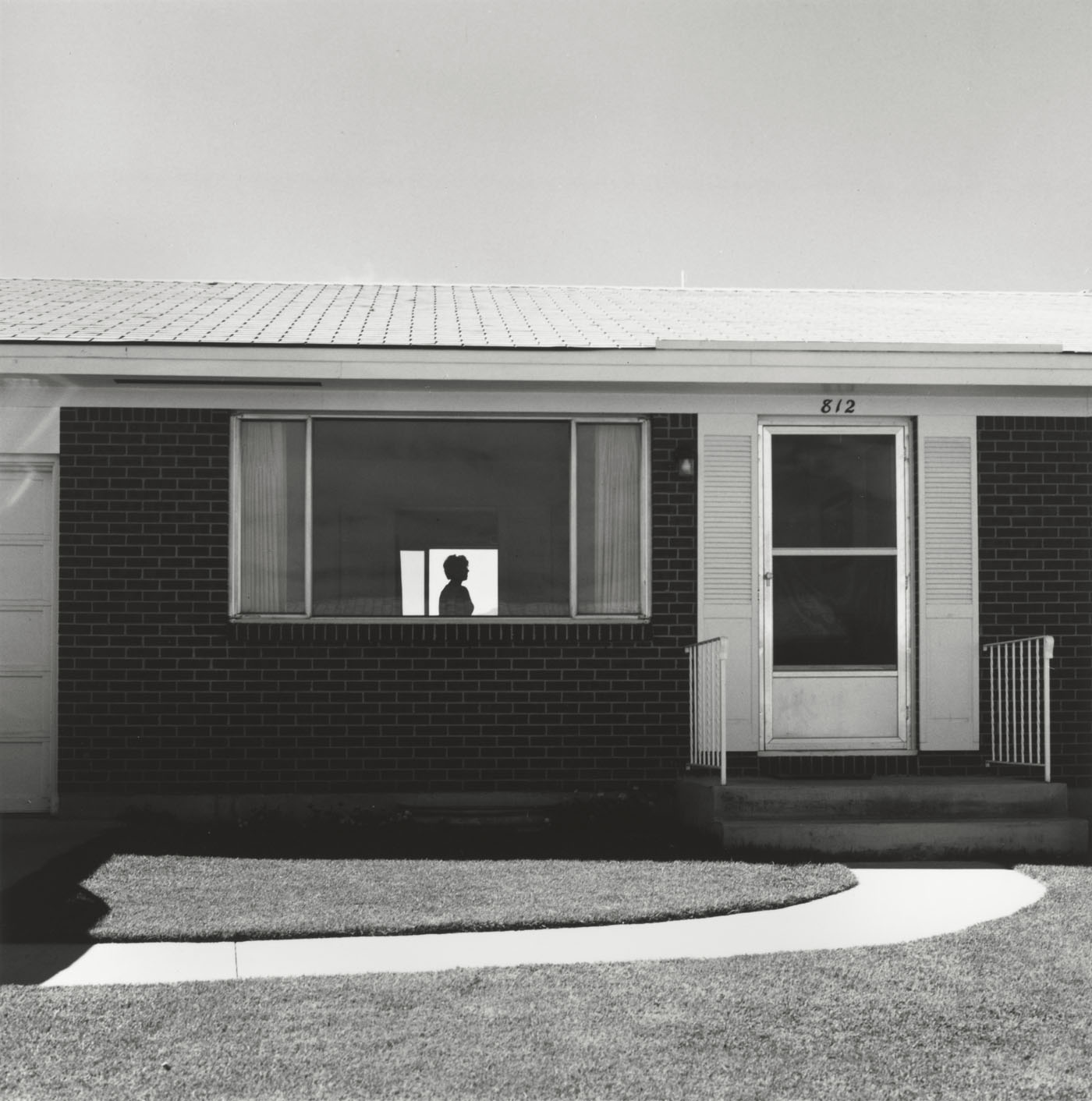
Robert Adams (American, b. 1937)
Colorado Springs
1968, printed 1983
Gelatin silver print

Robert Adams (American, b. 1937)
Burning oil sludge, north of Denver, Colorado
1973-1974
Gelatin silver print
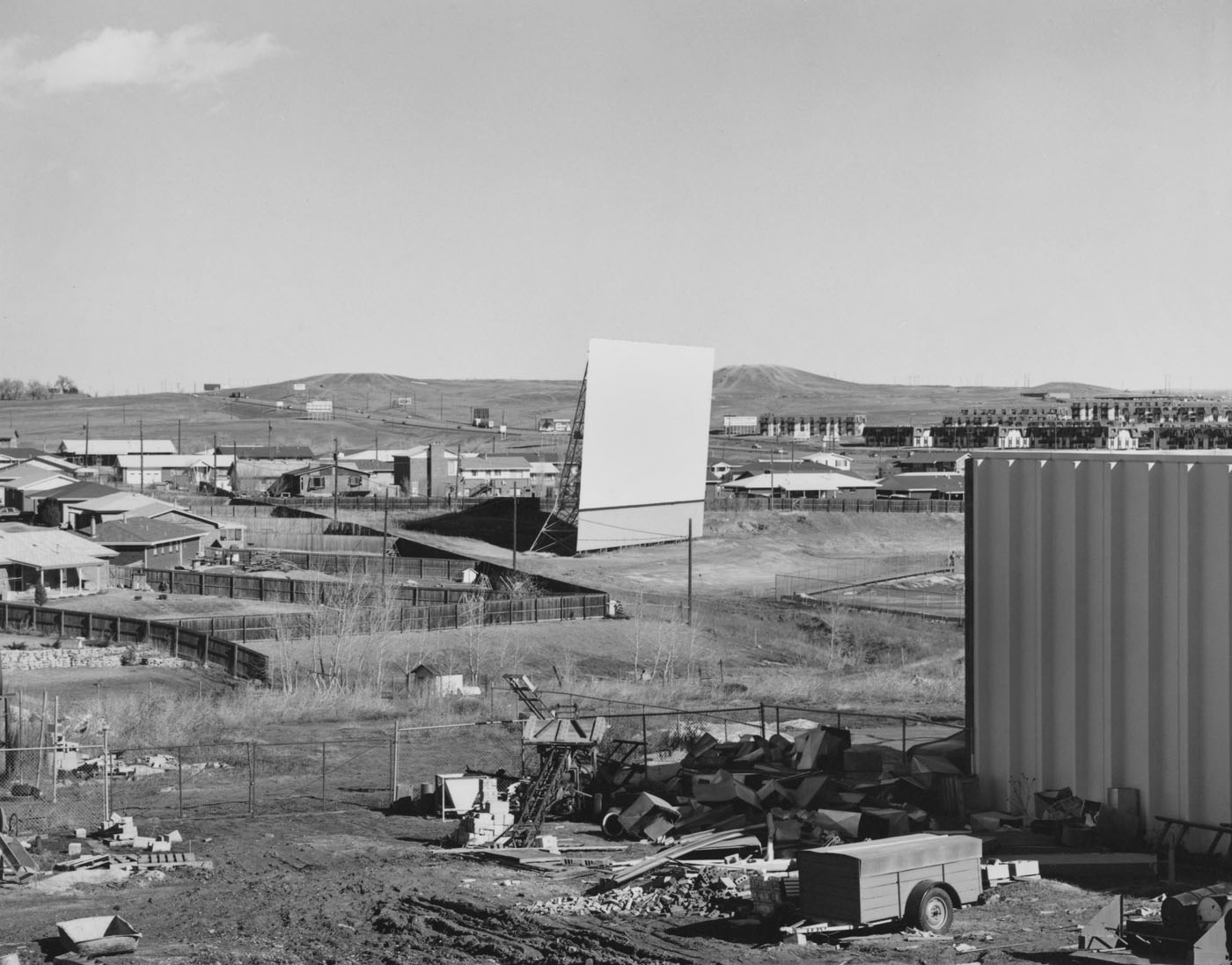
Robert Adams (American, b. 1937)
Outdoor Theater, North Edge of Denver
1973-1974
Gelatin silver print

Robert Adams (American, b. 1937)
Cottonwood, Longmont, Colorado
1973-1975
Gelatin silver print
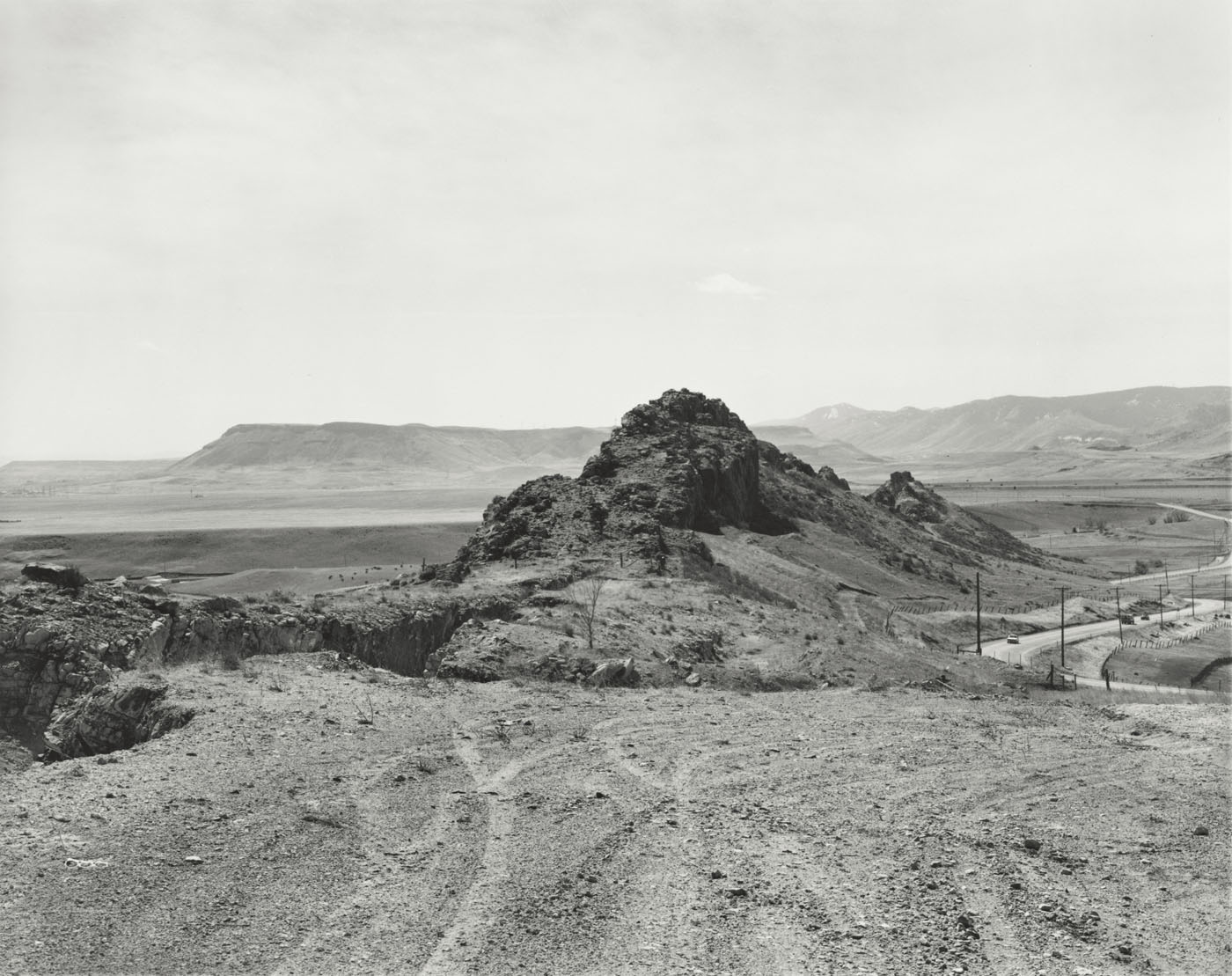
Robert Adams (American, b. 1937)
South of the Rocky Flats Nuclear Weapons Plant, Jefferson County, Colorado
1976
Gelatin silver print
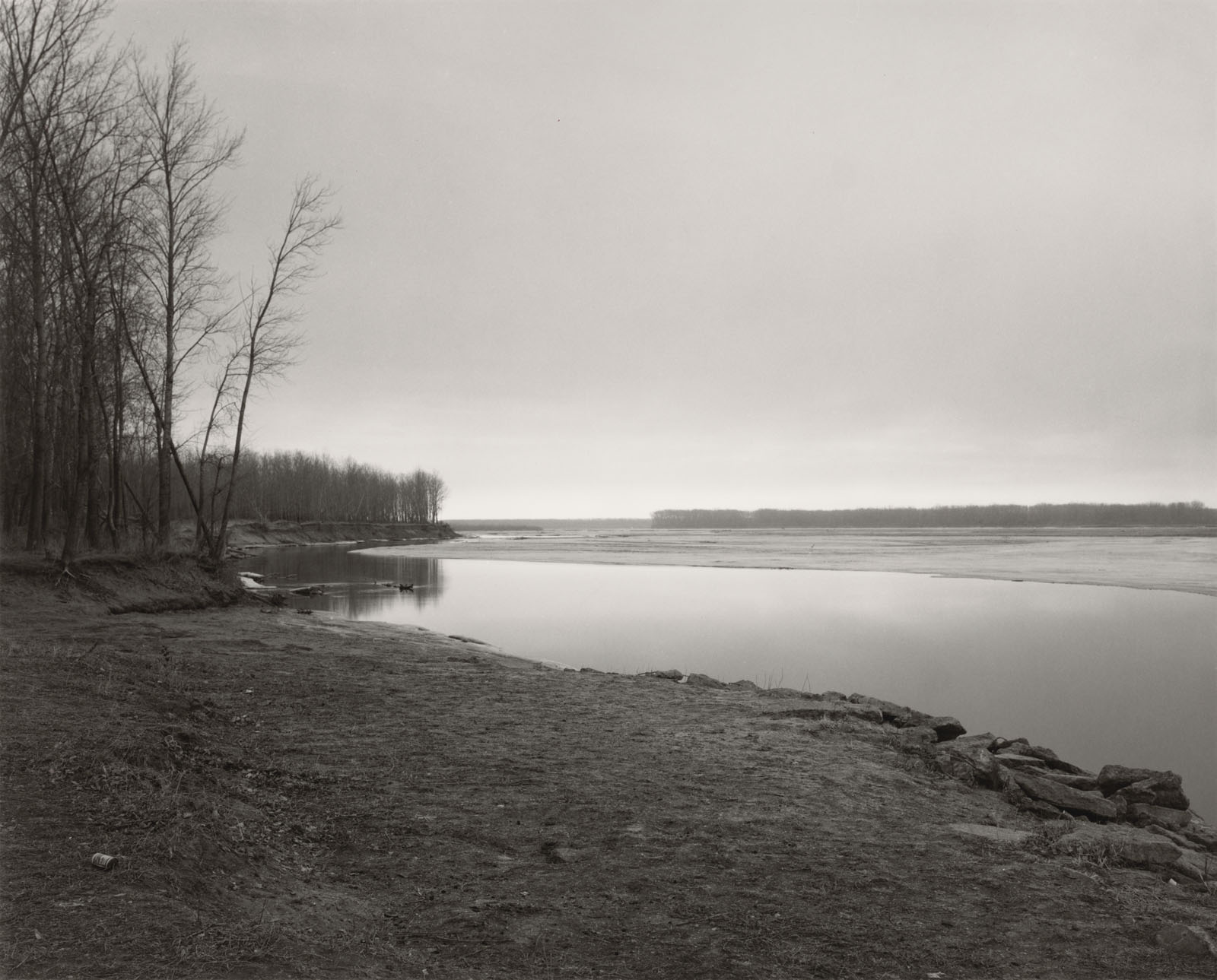
Robert Adams (American, b. 1937)
Missouri River, Clay County, South Dakota
1977
Gelatin silver print
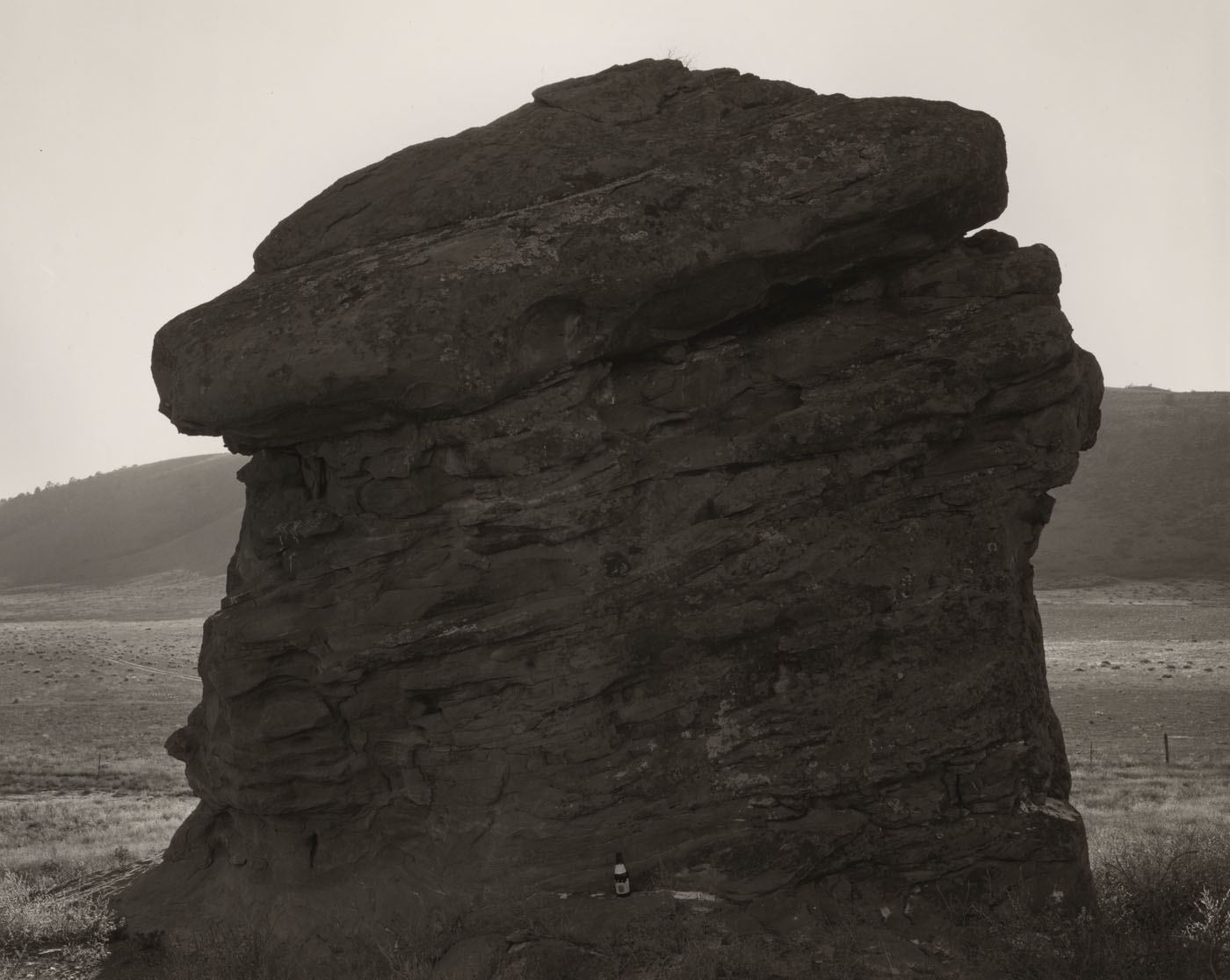
Robert Adams (American, b. 1937)
Larimer County, Colorado
1977
Gelatin silver print
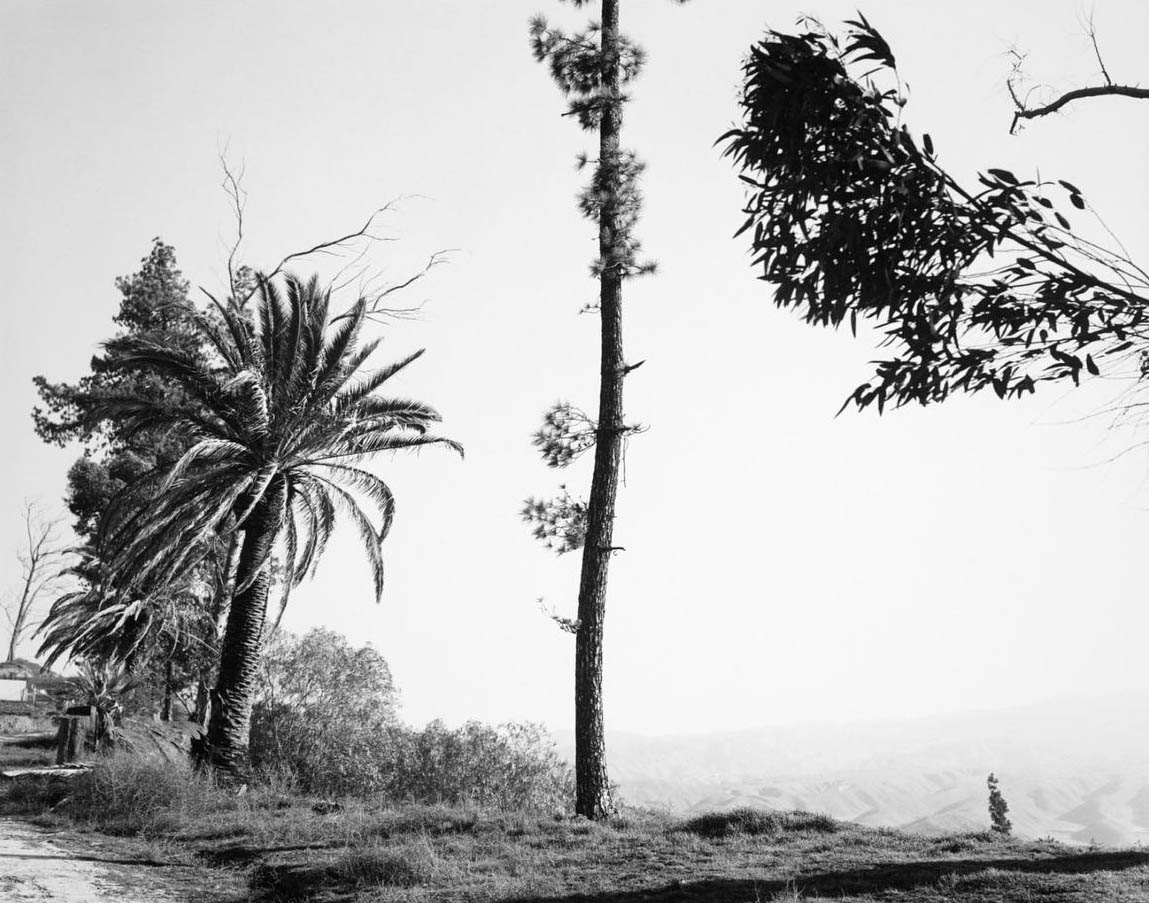
Robert Adams (American, b. 1937)
Edge of San Timoteo Canyon, Redlands, California
1978
Gelatin silver print
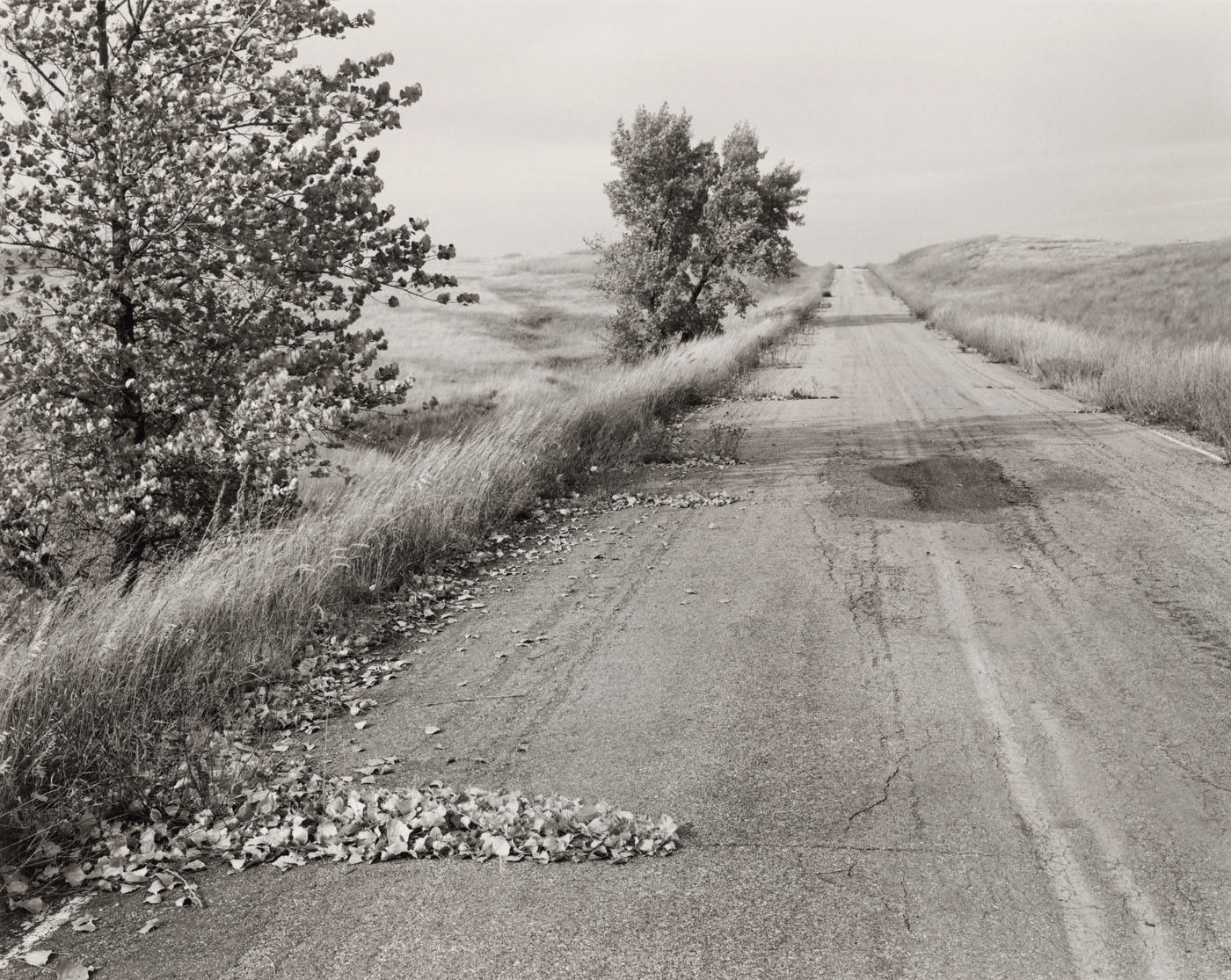
Robert Adams (American, b. 1937)
Nebraska State Highway 2, Box Butte County, Nebraska
1978, printed 1991
Gelatin silver print
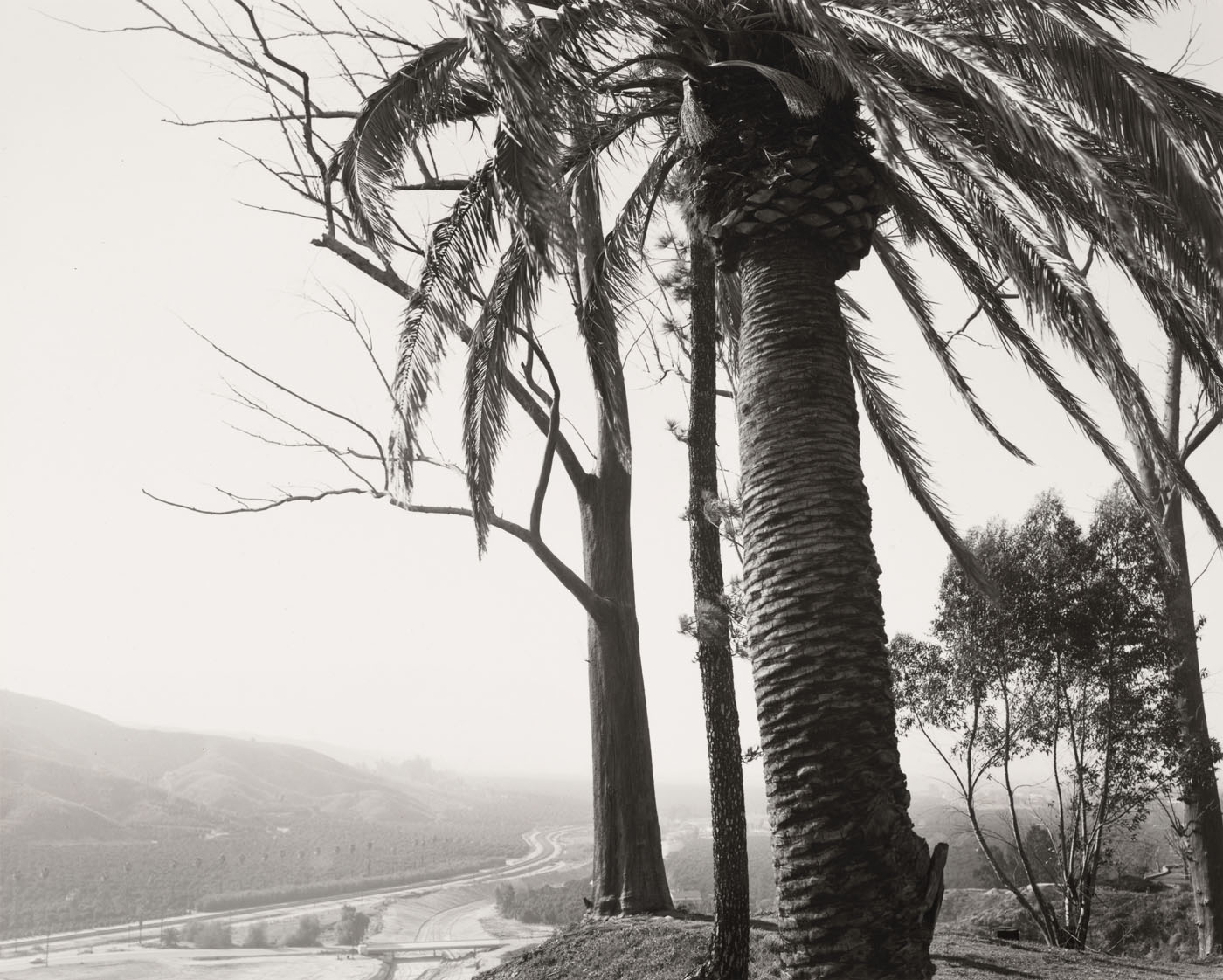
Robert Adams (American, b. 1937)
Edge of San Timoteo Canyon, Redlands, California
1978
Gelatin silver print
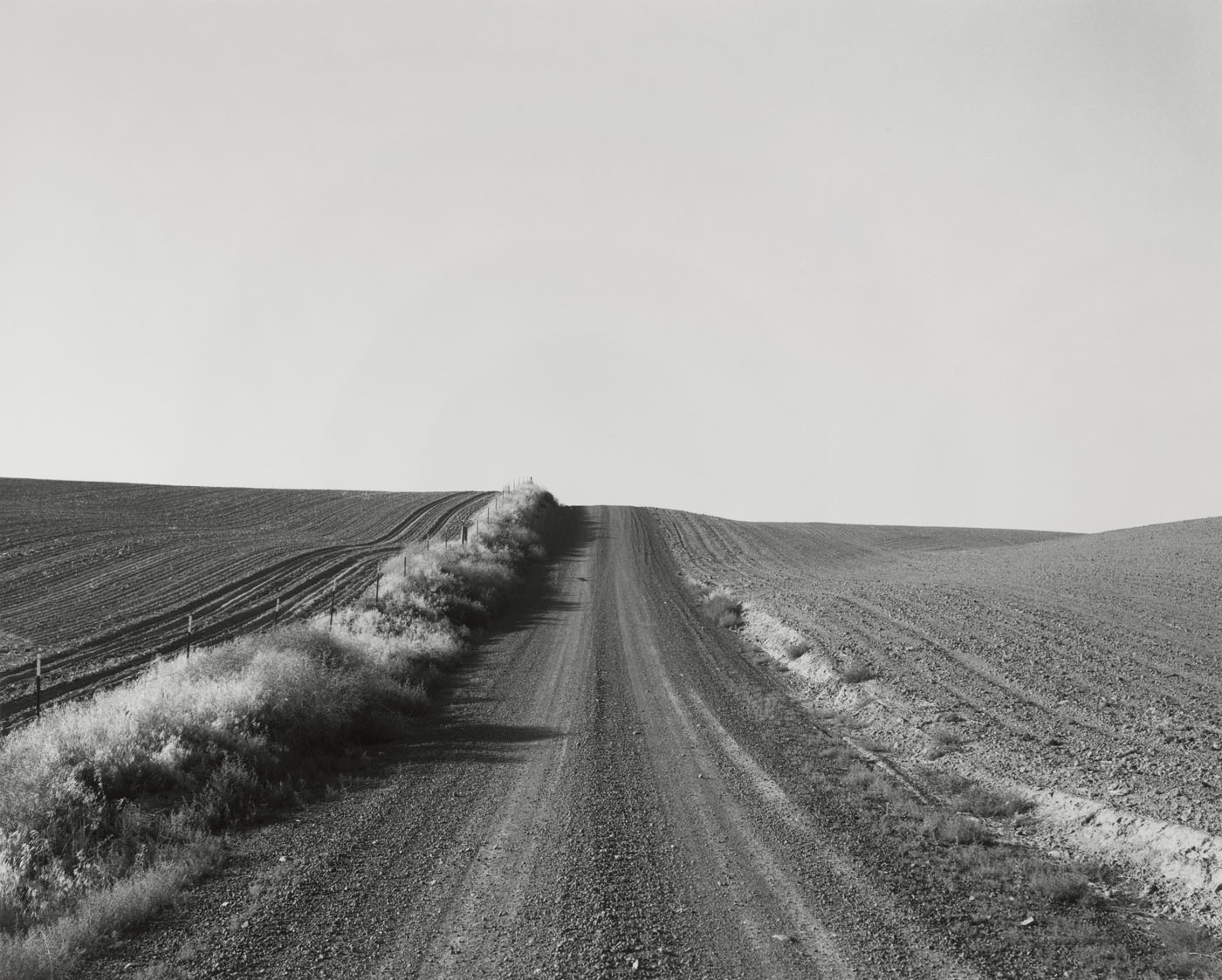
Robert Adams (American, b. 1937)
Umatilla County, Oregon
1978
Gelatin silver print
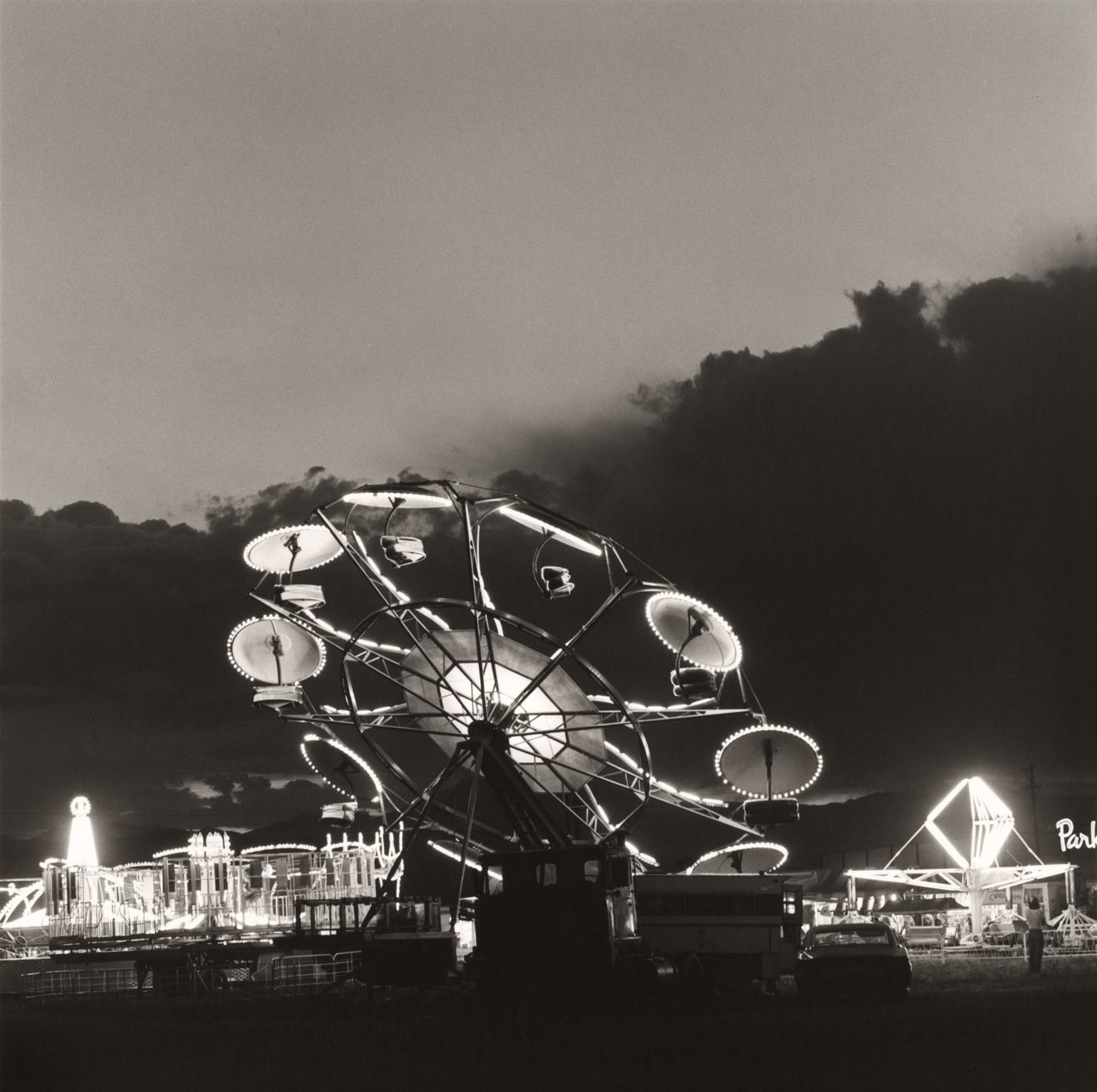
Robert Adams (American, b. 1937)
Longmont, Colorado
1979, printed 1985
Gelatin silver print
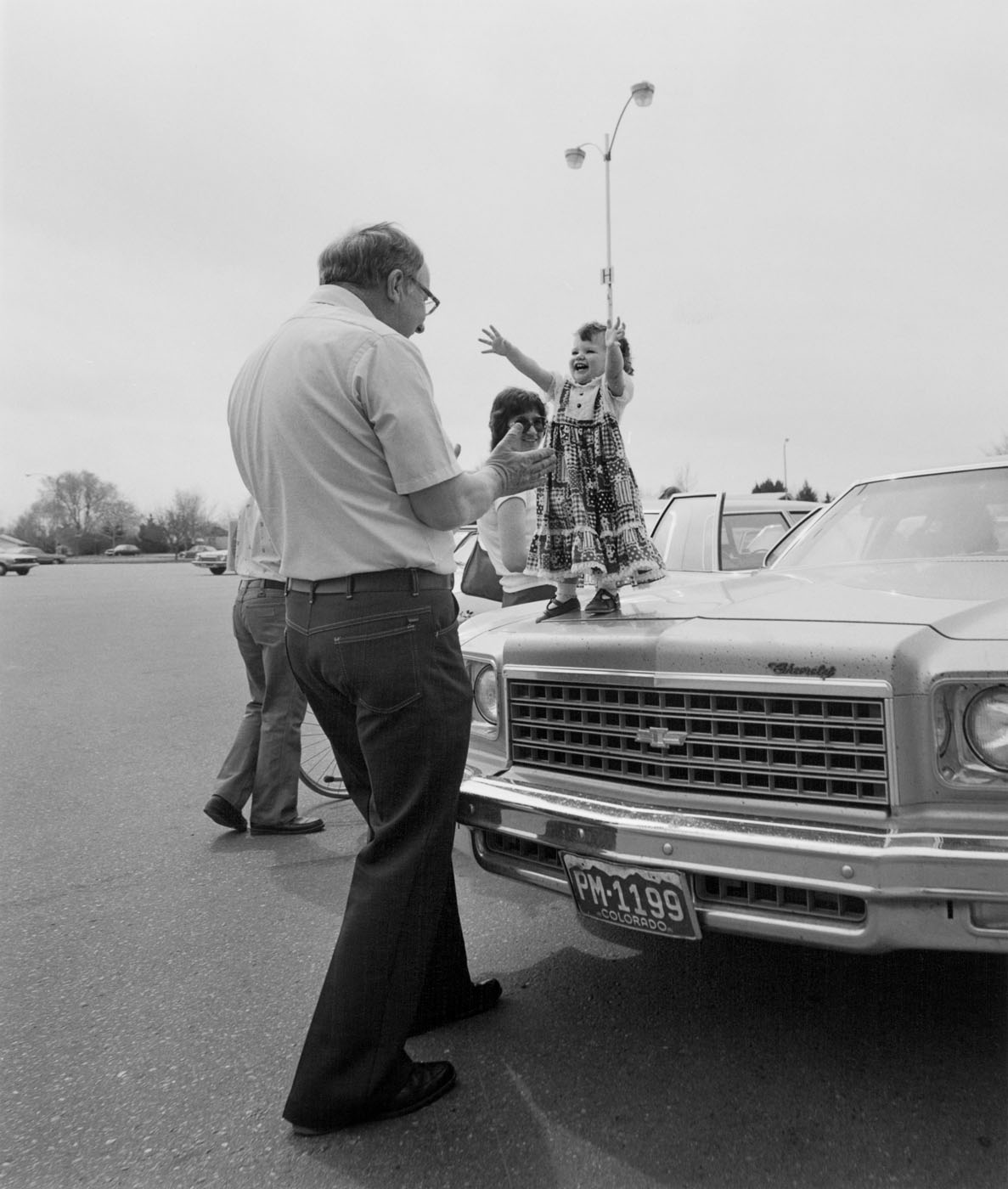
Robert Adams (American, b. 1937)
Denver
1981
Gelatin silver print
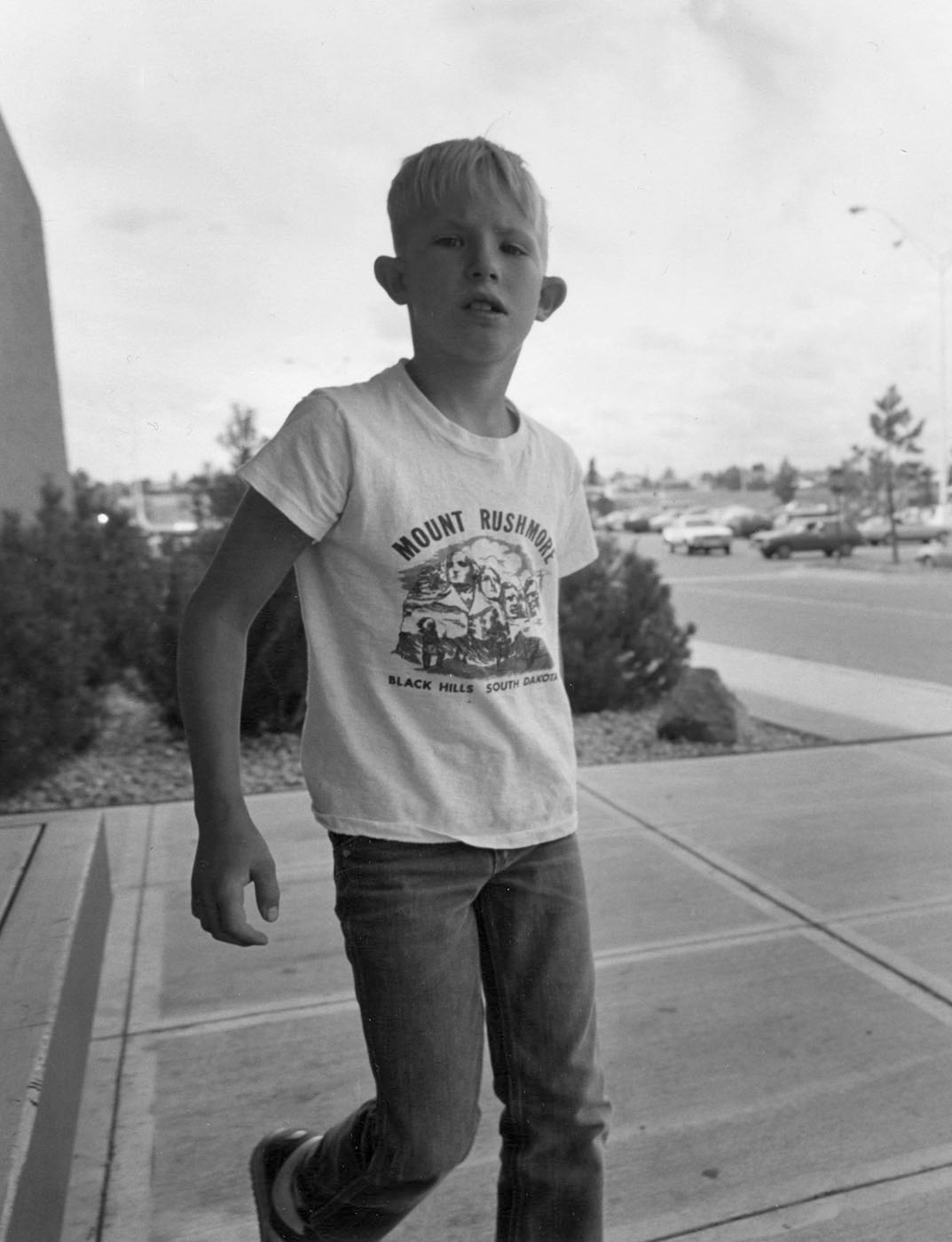
Robert Adams (American, b. 1937)
Denver
1981
Gelatin silver print

Robert Adams (American, b. 1937)
Santa Ana Wash, Redlands, California
1982
Gelatin silver print

Robert Adams (American, b. 1937)
New Development on a Former Citrus-Growing Estate, Highland, California
1983
Gelatin silver print
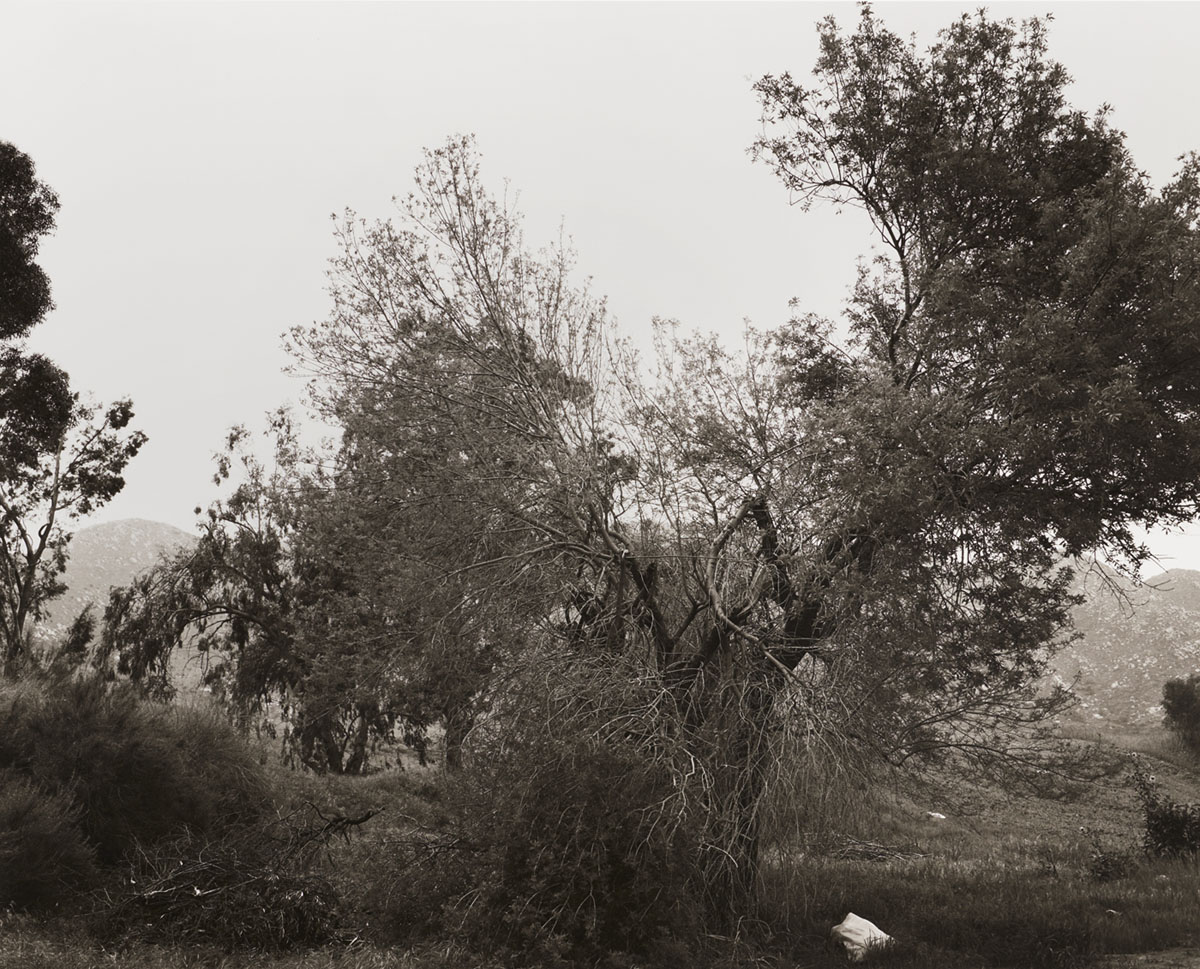
Robert Adams (American, b. 1937)
Broken Trees, East of Riverside, California
1983
Gelatin silver print
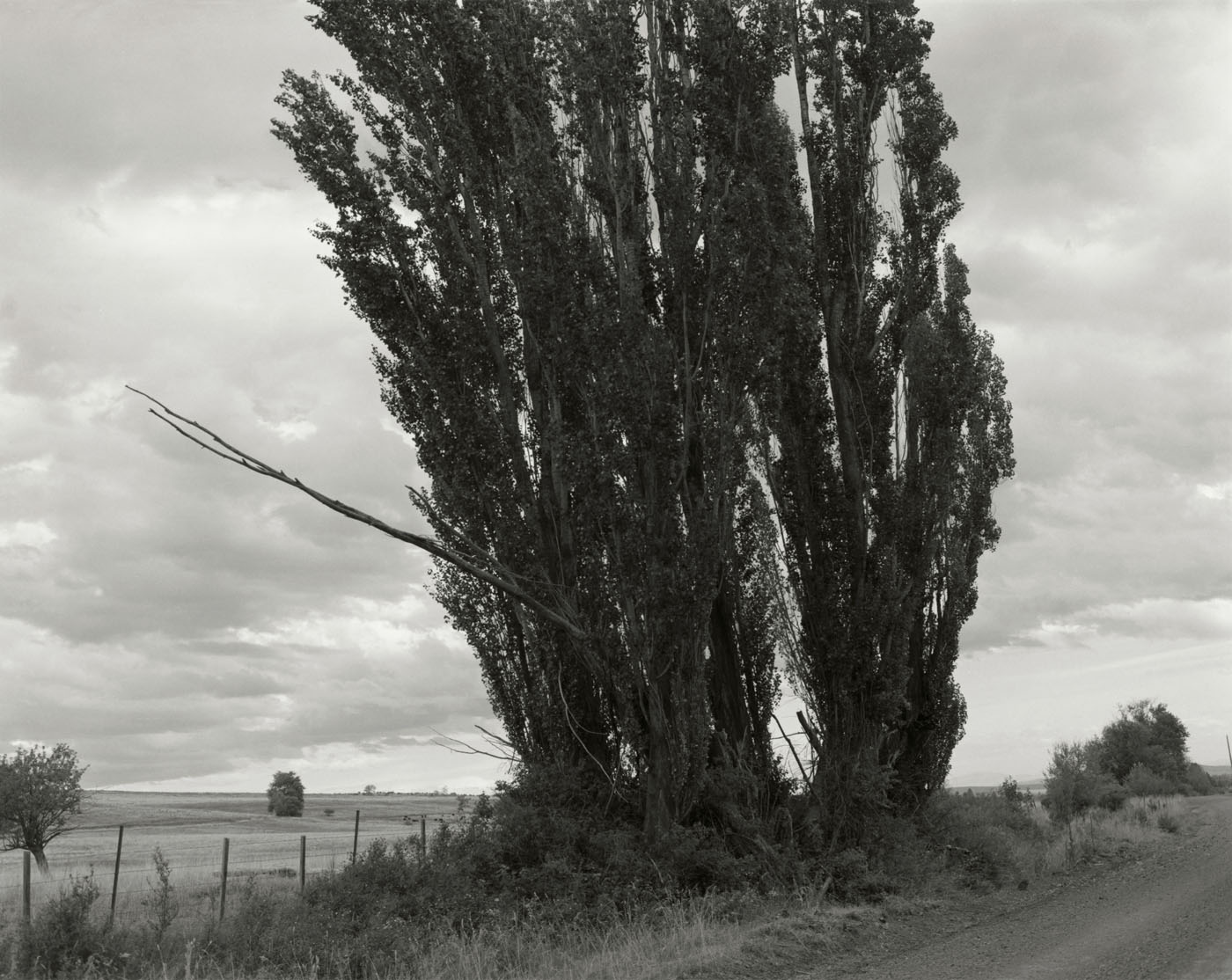
Robert Adams (American, b. 1937)
Baker County, Oregon
2000
Gelatin silver print
Robert Adams exhibitions and photographs on Art Blart
~ Exhibition: ‘American Silence: The Photographs of Robert Adams’ at the National Gallery of Art, Washington, May – October 2022
~ Exhibition: ‘Robert Adams: The Place We Live, a retrospective selection of photographs’ at Los Angeles County Museum of Art (LACMA), March – June 2012
~ Exhibition: ‘Robert Adams: The Place We Live, A Retrospective Selection of Photographs’ at the Denver Art Museum (DAM), September 2011 – January 2012
~ Exhibition: ‘Robert Adams:
The Place We Live, A Retrospective Selection of Photographs’ at the Vancouver Art Gallery, September 2010 – January 2011
Ansel Adams (American, 1902-1984)
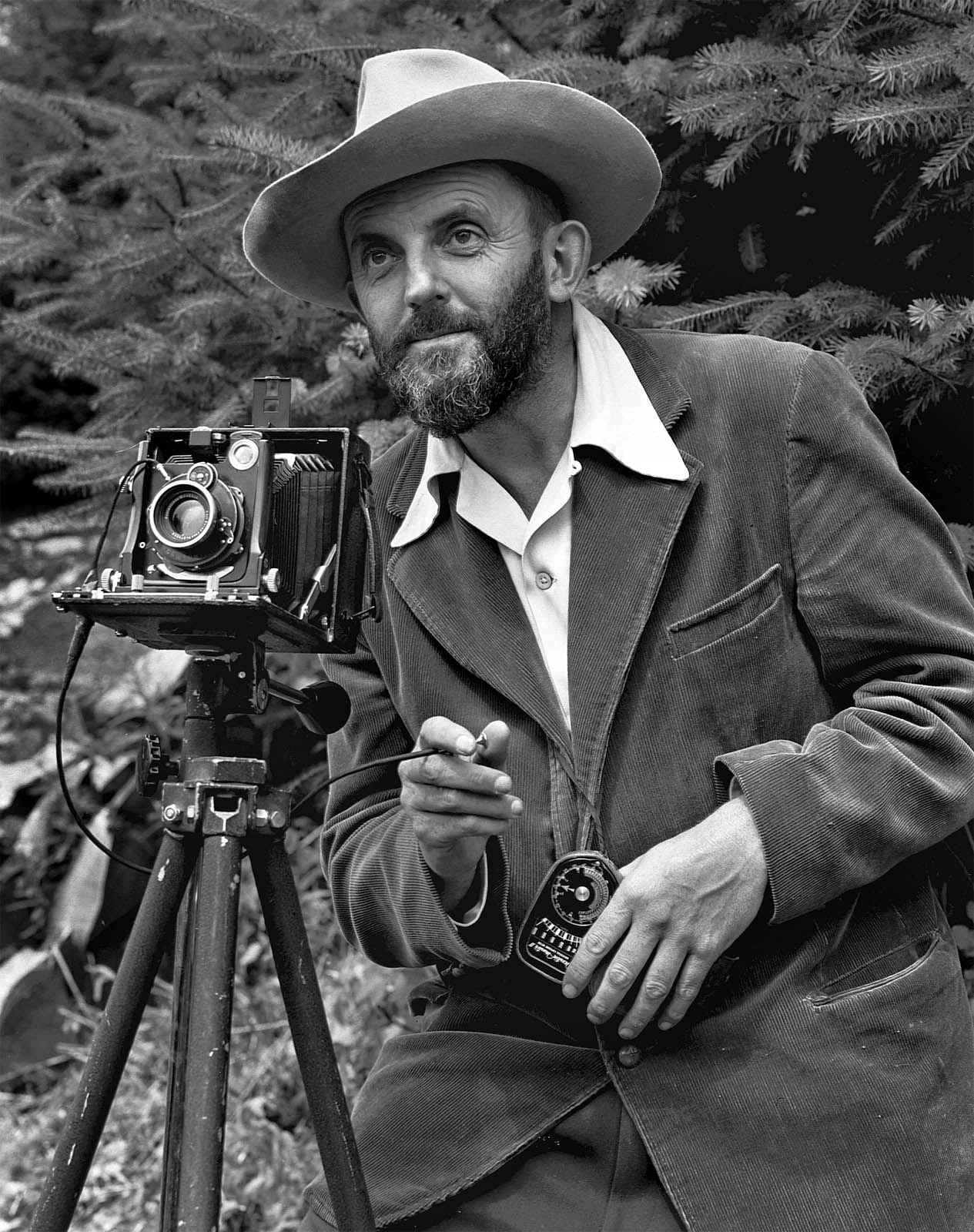
J. Malcolm Greany (American, 1915-1999)
Ansel Adams
c. 1950
Gelatin silver print
Man and imagination
Most people could not fail to know the superb landscape work of Ansel Adams (American, 1915-1999), that master of the large format camera that he used to produce stunning black and white silver gelatin photographs of great formal beauty and technical prowess, the rich detail and tonal range of his landscape photographs used “in service of what he called the “spiritual-emotional” aspects of parks and wilderness, conveying their restorative power to as wide an audience as possible.” His photographs are so well known that they became icons and he a legend in his own lifetime. But all is not as effortless in his beautiful modernist photographs as they seem.
Early landscape photographs from his 1927 portfolio Parmelian Prints of the High Sierras show Adams’ indebtedness to Pictorialist and Modernist photography. Indeed these elemental and muscular photographs show a dramatic use of dark and light hues in the near/far construction of the picture frame, the warm toned prints adding to their chthonic, almost underground and dystopian nature. Dark and brooding, dystopian and abstract. Those dark tones have a warmth that is contradictory – a lack of light: yet warmth! So there is a fiction at their heart… and that is why their dark brooding never seems a threat for they were based on a dream-world that couldn’t exist. What a difference to the later straight-ahead aesthetic of the artist and Group f64 (“a group founded by Adams of seven 20th-century San Francisco Bay Area photographers who shared a common photographic style characterised by sharply focused and carefully framed images seen through a particularly Western viewpoint.” ~ Wikipedia).
Other mutations and obfuscations are hidden from view “in order” that the artist achieve his desired transcendence of the American landscape. Adams cropped out attendant carparks and people viewing the scene even as other artists such as Seema Weatherwax incorporated them into their work (in the 1940s) as “indelible reminders of a Yosemite modernised for tourism – reminders that Adams typically left out of his artistic work.” Adams even manipulated the negative where necessary, for example removing a road that inconveniently ran through the centre of a canyon that destroyed his imaginative (and Western) vision of the pristine Sierra Nevada. So much for his “absolute realism” and honest simplicity in service of a maximum emotional statement. …
An extractive, imaginative and emotional Western “nature” then, is at the heart of Adam’s work and his “marketing the view” – whether that be national parks, empty bays before the construction of the Golden Gate Bridge, or Native Americans. While he was a tireless champion of photography as a legitimate form of fine art and an unremitting activist for conservation and wilderness preservation, Adams’ photographs are a creation of a myth of his own of a pristine wilderness which had never co-existed with man. To our benefit, Adams had his ideals and he let them manifest themselves in his imagination.
Dr Marcus Bunyan 2023

Ansel Adams (American, 1902-1984)
Monolith – The Face of Half Dome, Yosemite National Park
1927
Gelatin silver print

Ansel Adams (American, 1902-1984)
Pine Forest in Snow, Yosemite National Park
c. 1932
Gelatin silver print
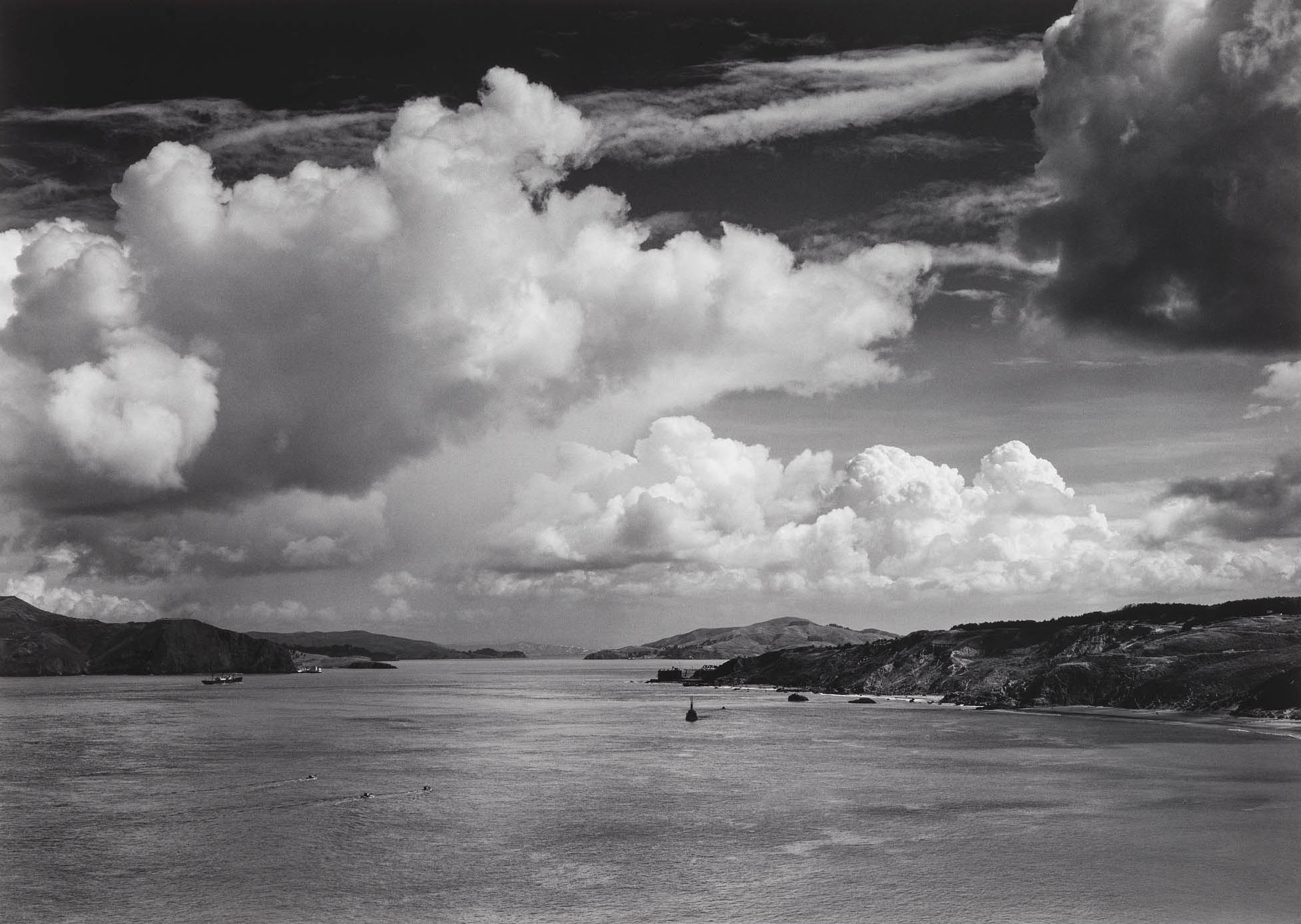
Ansel Adams (American, 1902-1984)
The Golden Gate Before the Bridge
1932
Gelatin silver print
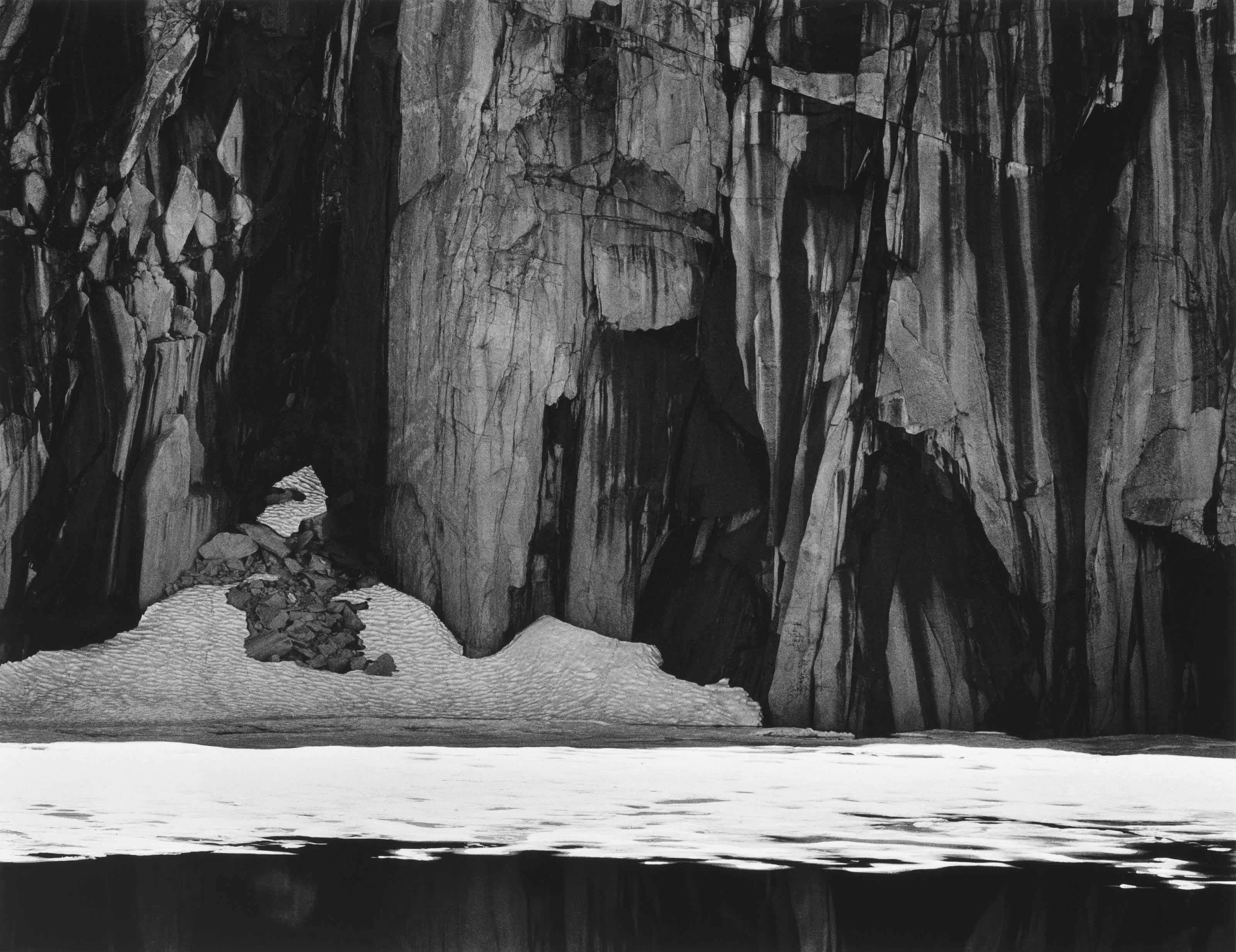
Ansel Adams (American, 1902-1984)
Frozen Lake and Cliffs, Kaweah Gap, Sierra Nevada, California
1932
Gelatin silver print

Ansel Adams (American, 1902-1984)
Yosemite Valley, Yosemite National Park
1934
Gelatin silver print
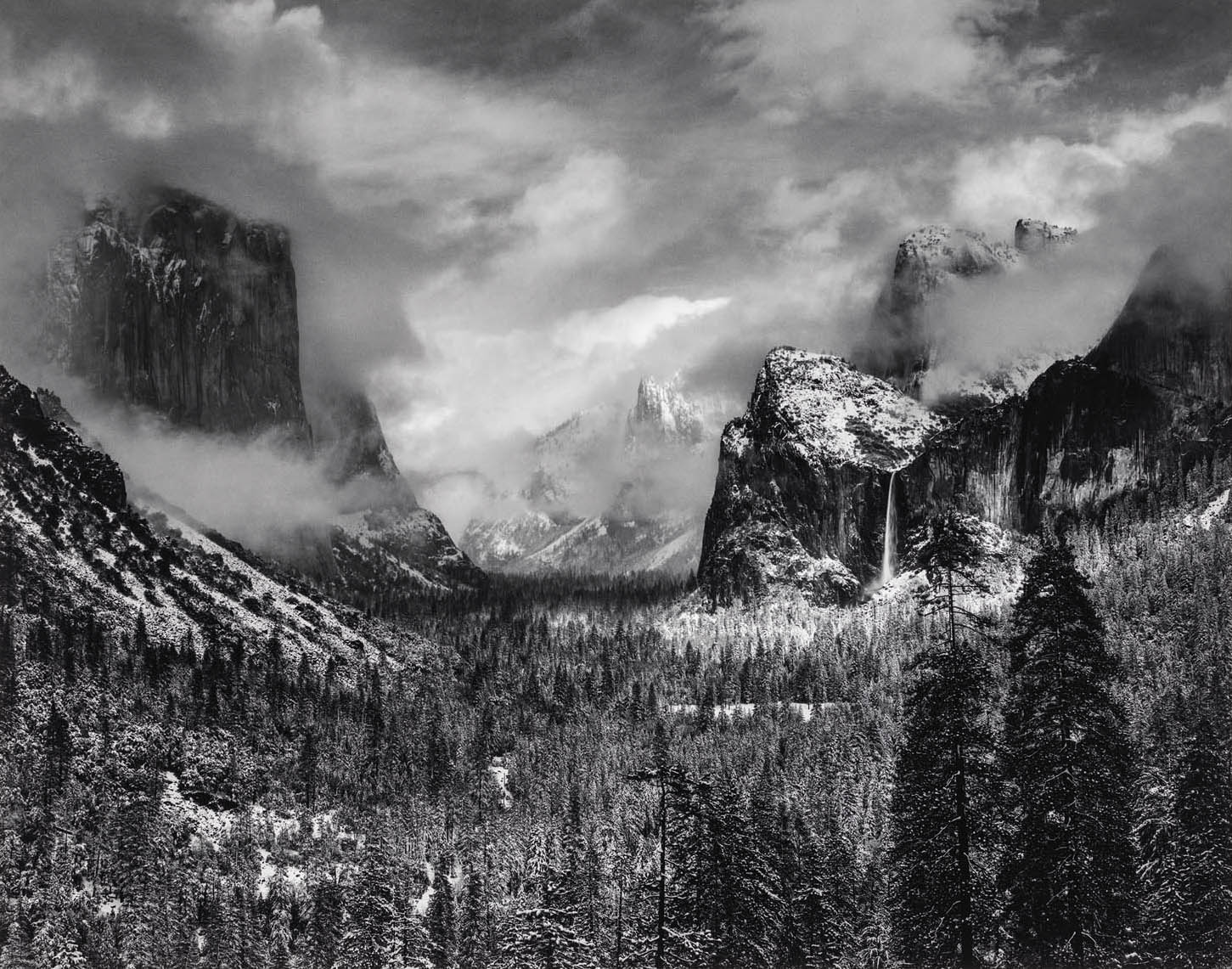
Ansel Adams (American, 1902-1984)
Clearing Winter Storm, Yosemite National Park
About 1937
Gelatin silver print
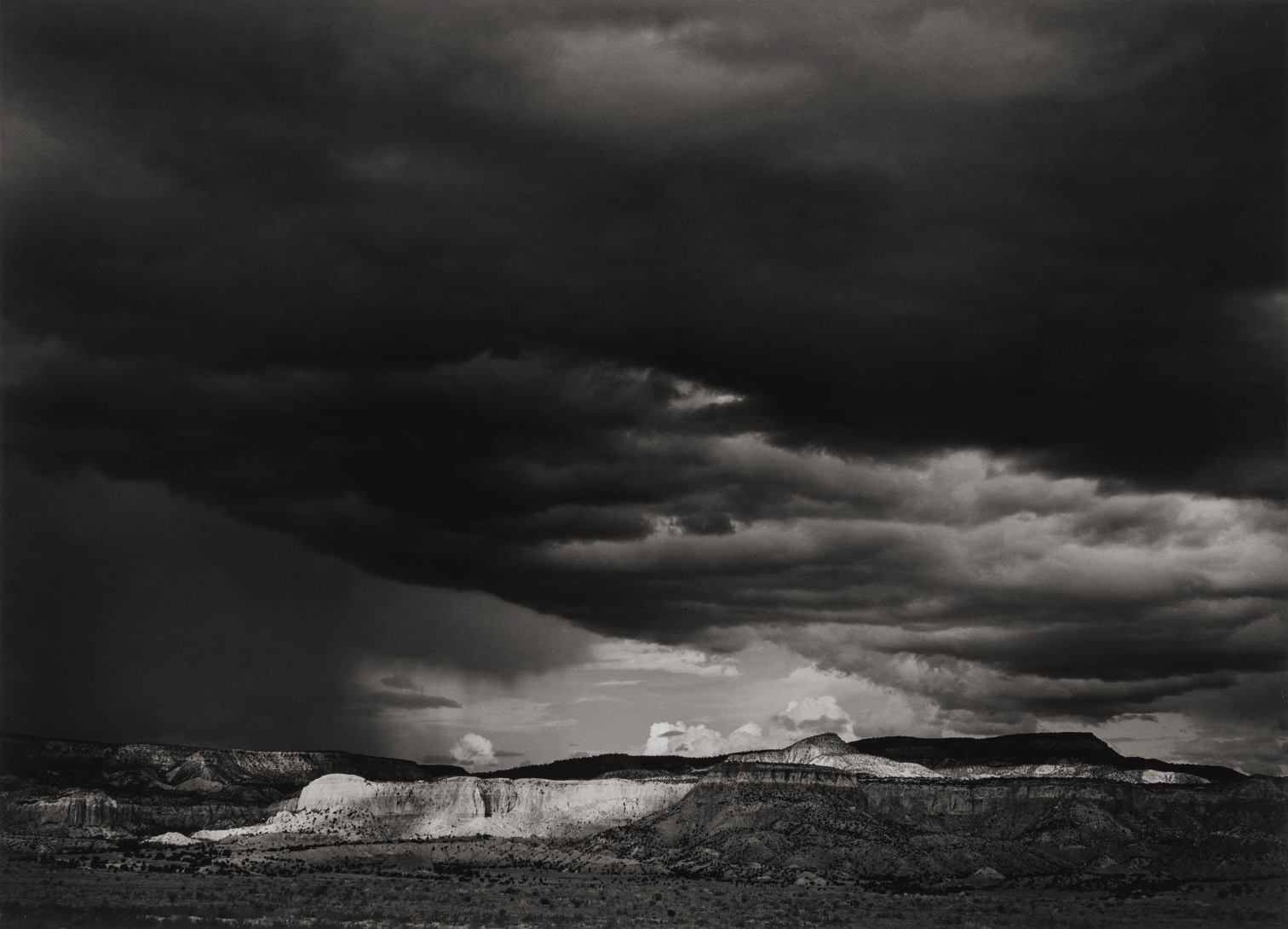
Ansel Adams (American, 1902-1984)
Thunderstorm, Ghost Ranch, Chama River Valley, Northern New Mexico
1937
Gelatin silver print

Ansel Adams (American, 1902-1984)
Georgia O’Keeffe and Orville Cox
1937
Gelatin silver print
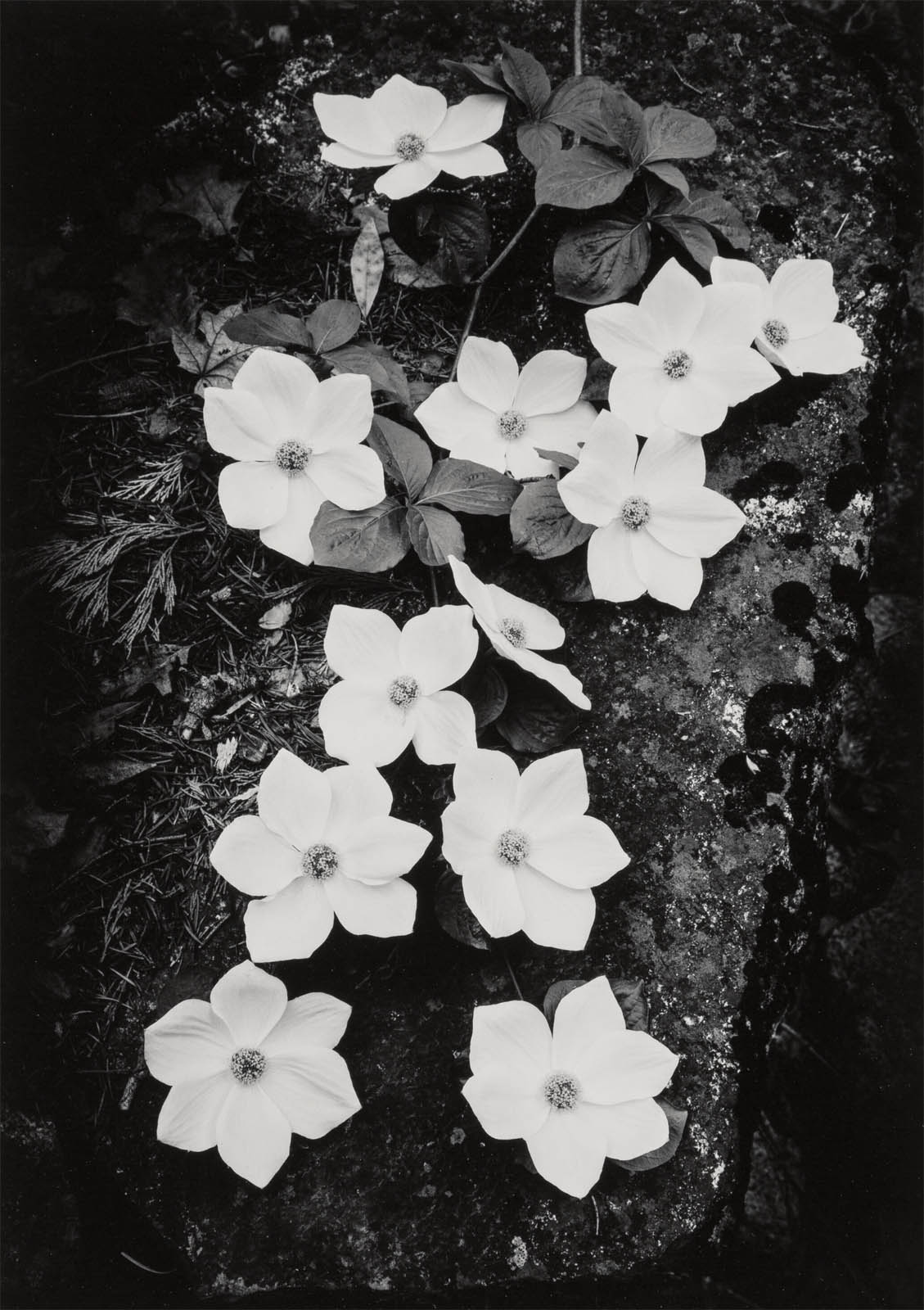
Ansel Adams (American, 1902-1984)
Dogwood, Yosemite National Park, California
1938
Gelatin silver print

Ansel Adams (American, 1902-1984)
Merced River, Cliffs, Autumn
1939
Gelatin silver print

Ansel Adams (American, 1902-1984)
White House Ruin, Canyon de Chelly National Monument, Arizona
1941
Gelatin silver print
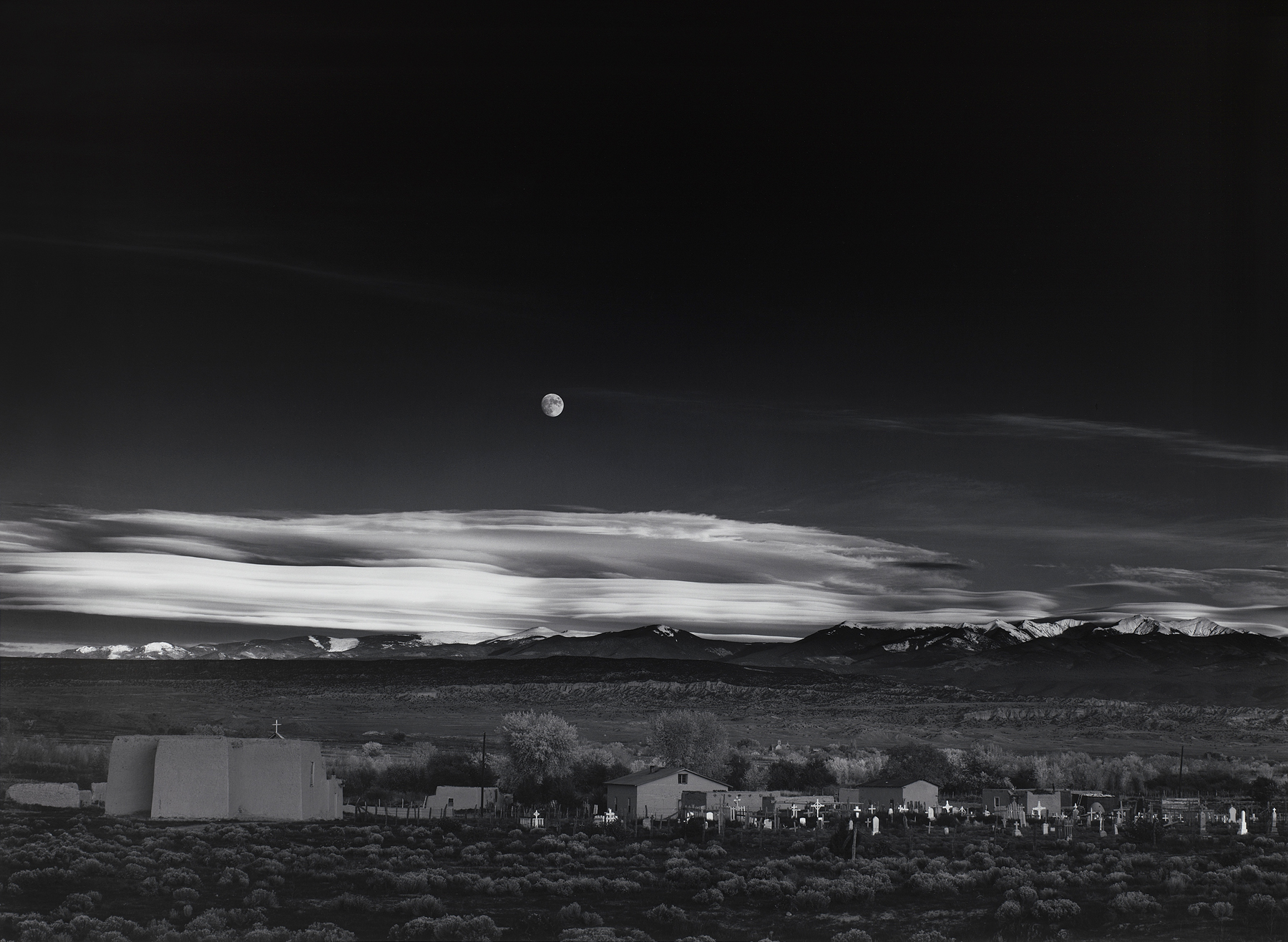
Ansel Adams (American, 1902-1984)
Moonrise, Hernandez, New Mexico
1941
Gelatin silver print

Ansel Adams (American, 1902-1984)
The Tetons and Snake River, Grand Teton National Park, Wyoming
1942
Gelatin silver print

Ansel Adams (American, 1902-1984)
Mount Williamson from Manzanar, Sierra Nevada, California
1944
Gelatin silver print
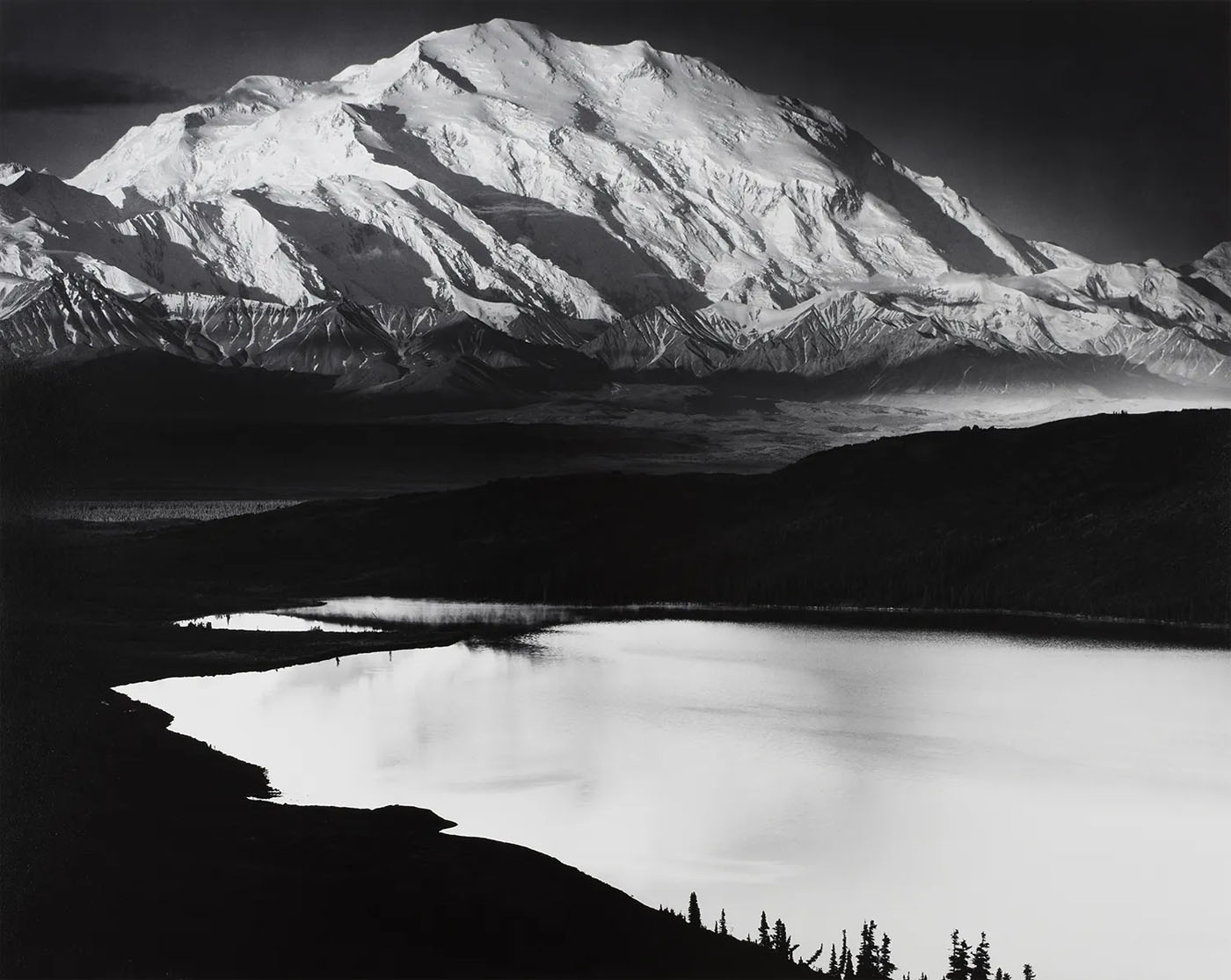
Ansel Adams (American, 1902-1984)
Mount McKinley and Wonder Lake, Alaska
1948
Gelatin silver print
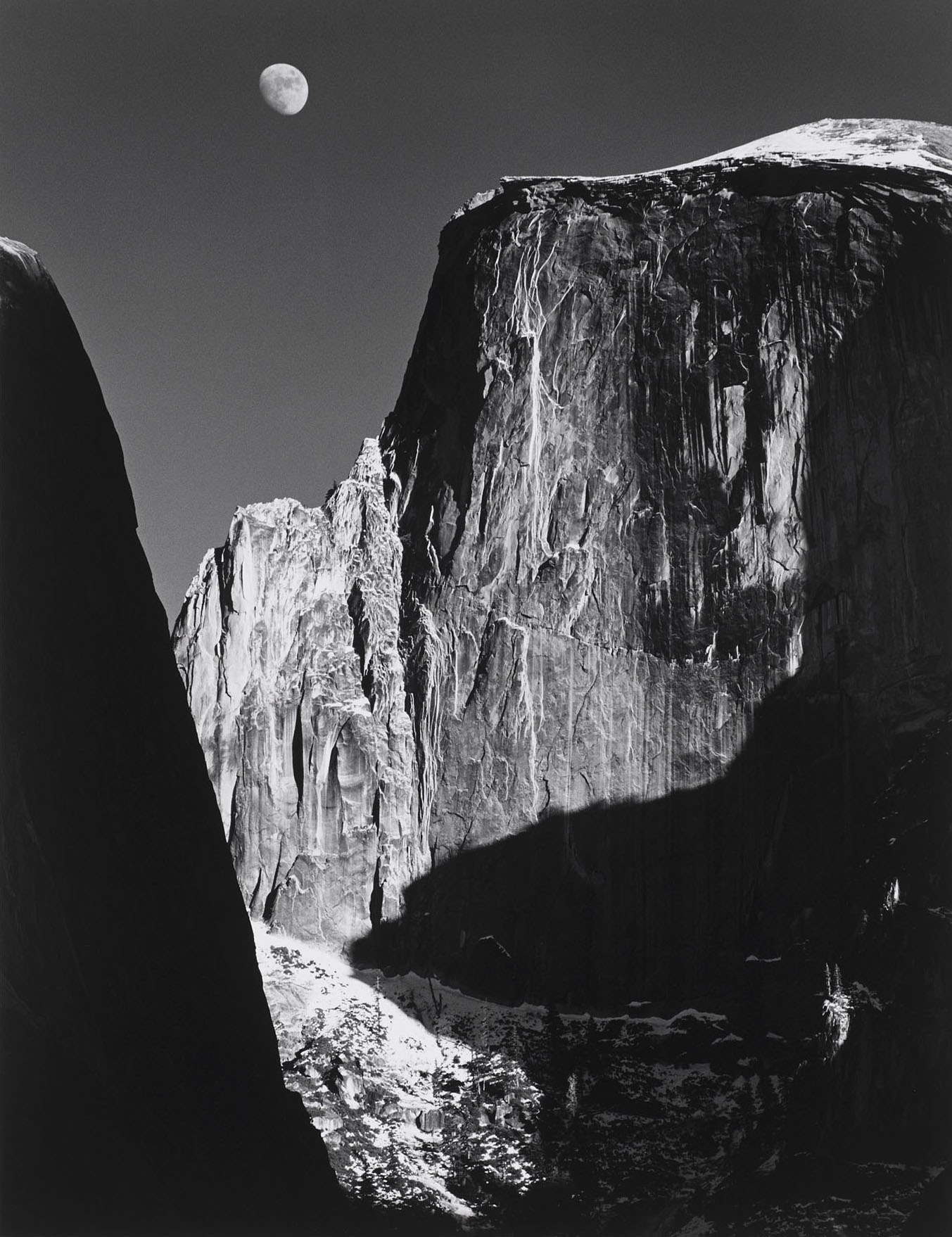
Ansel Adams (American, 1902-1984)
Moon and Half Dome, Yosemite National Park
1960
Gelatin silver print
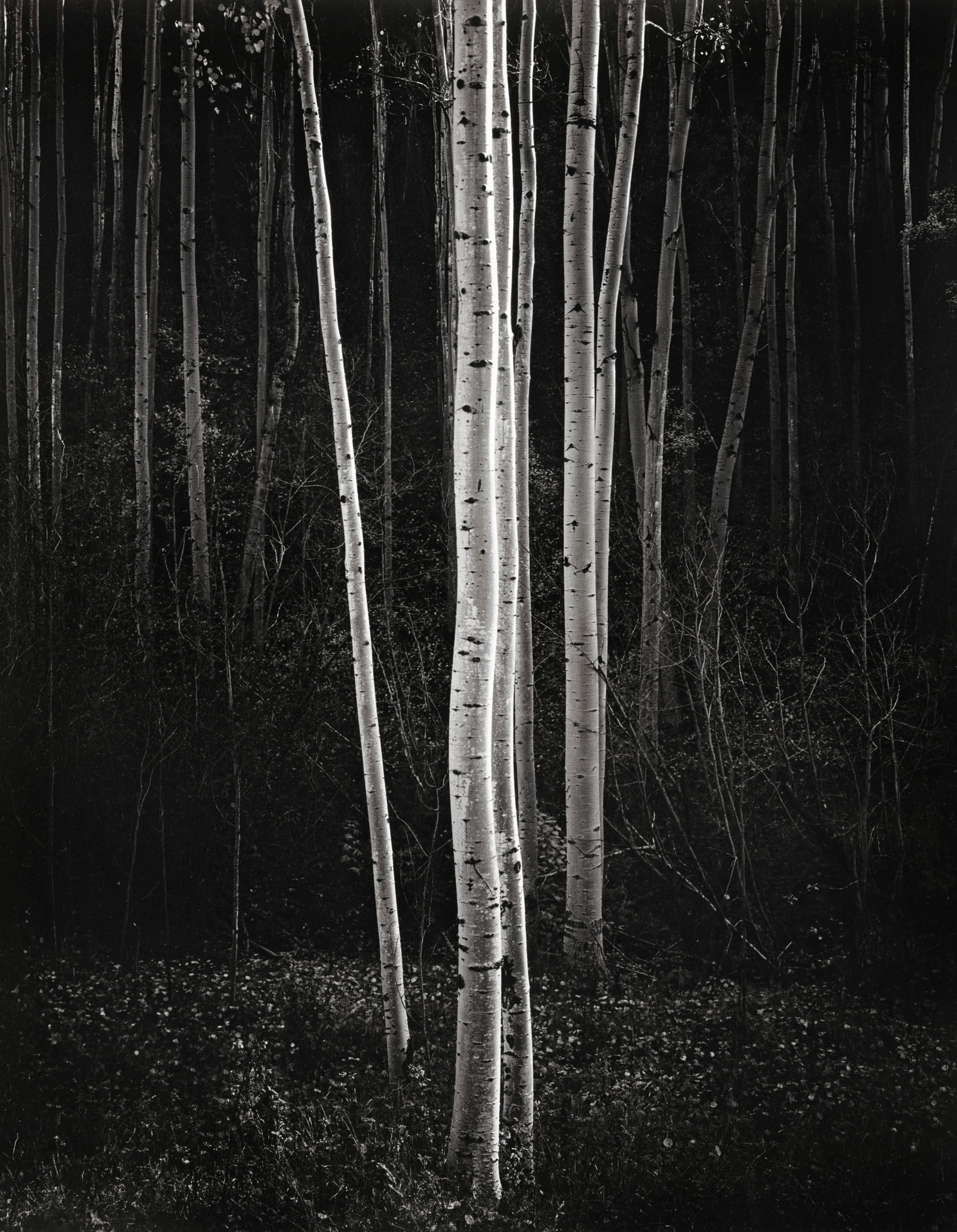
Ansel Adams (American, 1902-1984)
Aspens, Northern New Mexico
1958
Gelatin silver print
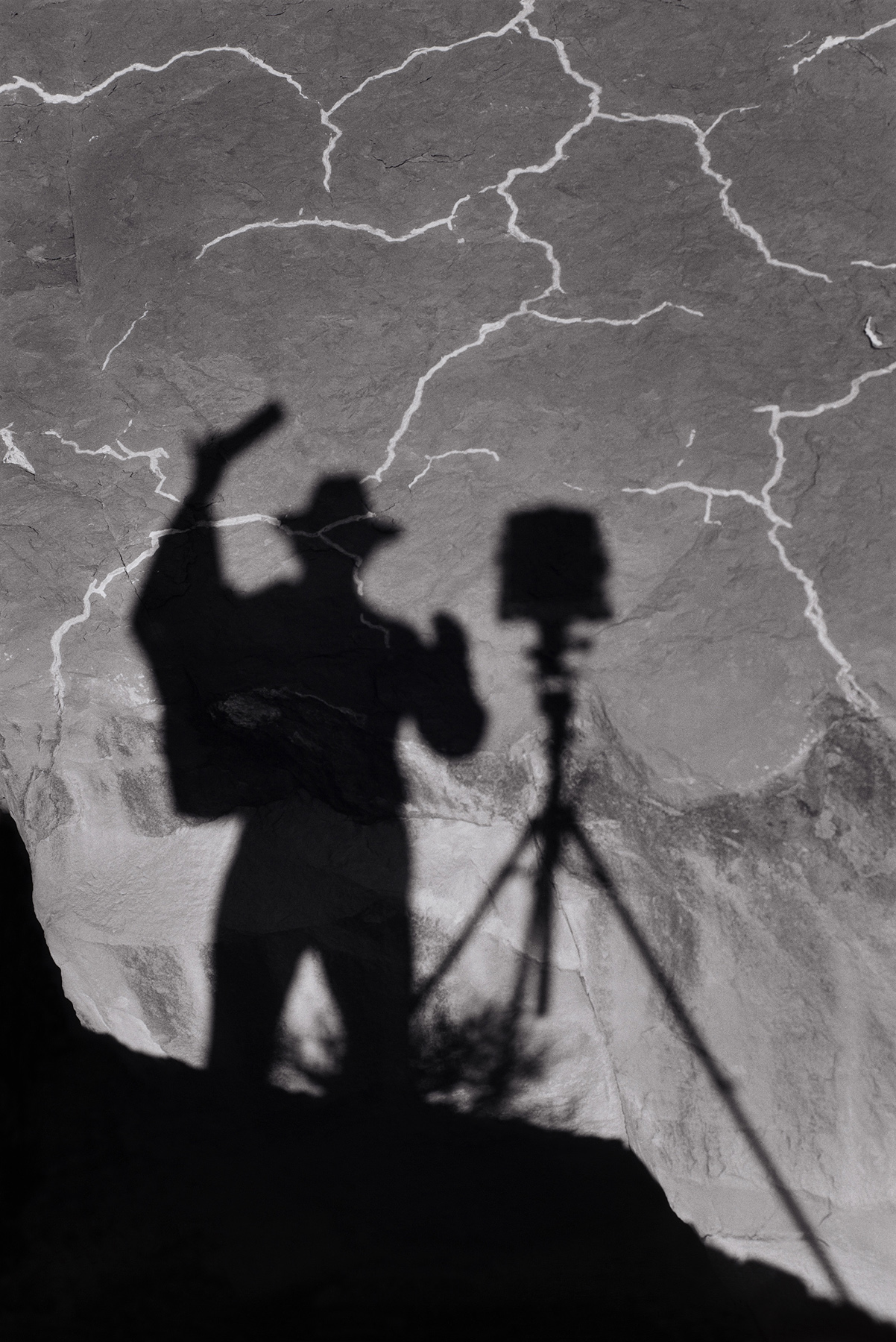
Ansel Adams (American, 1902-1984)
Self‑Portrait, Monument Valley, Utah
1958
Gelatin silver print
Ansel Adams exhibitions and photographs on Art Blart
~ Exhibition: ‘Ansel Adams in Our Time’ at the de Young museum, San Francisco, April – July 2023
~ Exhibition: ‘Ansel Adams in Our Time’ at the Museum of Fine Arts, Boston, December 2018 – February 2019
~ Exhibition: ‘Manzanar: The Wartime Photographs Of Ansel Adams’ at the Jundt Art Gallery, Gonzaga University, Spokane, WA, January – March 2014
~ Exhibition: ‘Ansel Adams: At the Water’s Edge’ at the Peabody Essex Museum, Salem MA, June – October 2012
~Exhibition: ‘Ansel Adams: A Life’s Work’ at Museum of Photographic Arts, San Diego, May – October 2009
Berenice Abbott (American, 1898-1991)

Walker Evans (American, 1903-1975)
Berenice Abbott
1929-1930
Gelatin silver print
Old New York, new New York
While her debt to that French master photographer Eugène Atget (1857-1927) is acknowledged through Abbott’s statement that she planned “to do for New York what Atget did for Paris,” Abbott’s photographs and her ‘point of view’ differ significantly to that of her Parisian hero.
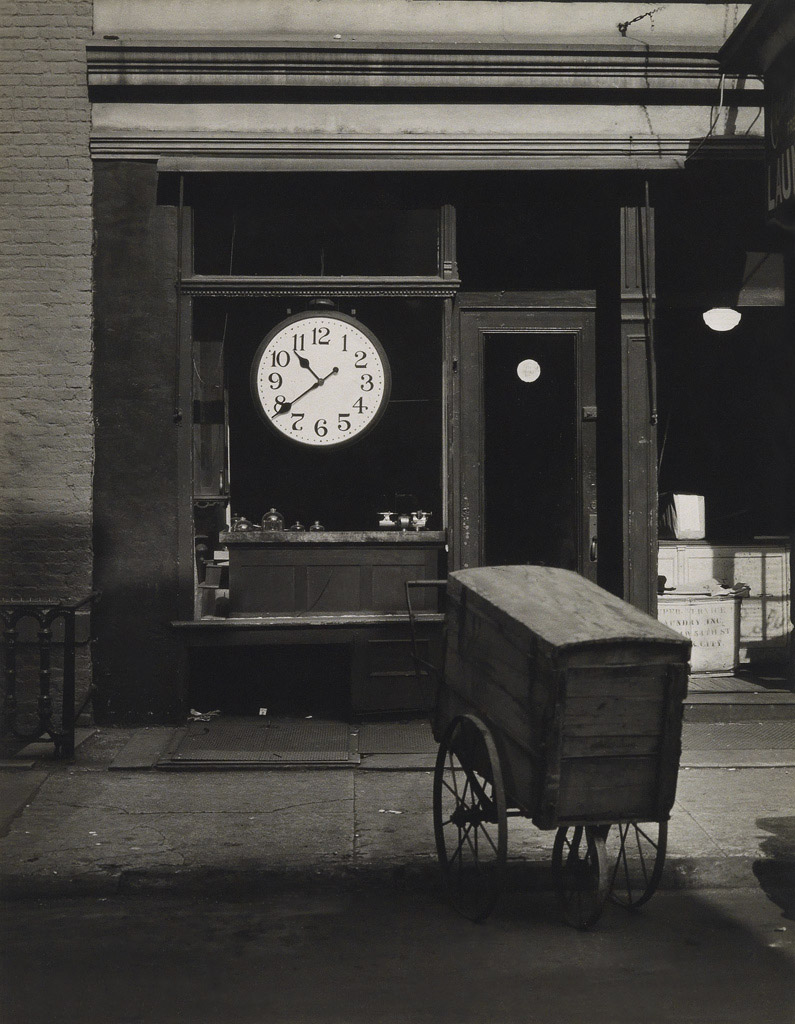
Inflections of the influence of the Parisian master are present in the work, but in the project Changing New York Abbott develops a unique visual language through her representation of city life. Her photographs of shop fronts are more static and formal than that of Atget, more interested in the multiplicities of form than they are of reflections in glass, or ghostly people standing in doorways. Further, Atget would never have taken a photograph such as Gunsmith and Police Department, 6 Centre Market Place, Manhattan (1937) because the angle of the composition looking upwards is too severe, too modernist. Similarly, the placement by Abbott of the lamppost and U.S. Mail box in Old Law Tenements, 35-47 East 1st Street (1937) as the focus of attention, make this photograph uniquely her own.
Abbott photographs the co-mingled elements of old New York and new New York – the crowded tenements, rushing people, and “grand canyons” lined with monolithic skyscrapers of the bustling metropolis – as a city caught in the shadows of a piercing New York light. If you have been to New York you know that the city has that light, a hard, clinical light that bounces off surfaces until it sinks into the deepening shadows and recesses of overshadowed buildings. In her vital, still, intense, renditions of the cityscape Abbott’s photographs capture this light.
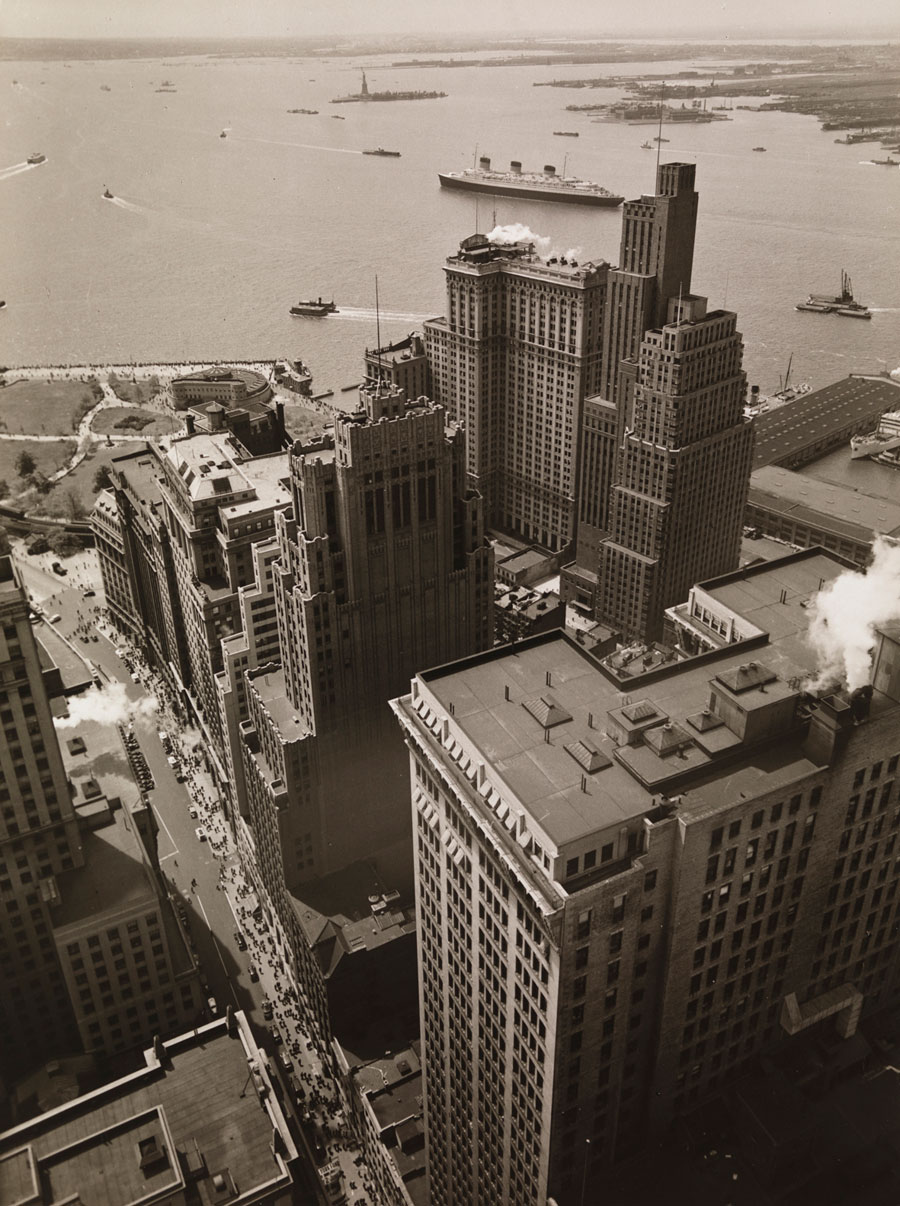
But what really changes her attitude (or altitude you might say) to the city is Abbott’s depiction of those edifices of modernism that are the crowning glory of New York: the skyscraper. Paraphrasing Karen Chambers from her article, “Paris to New York: Photographs by Eugène Atget and Berenice Abbott,” we can say that Abbott’s photographs of skyscrapers are different from the human scale of Atget’s photographs and of Abbott’s of a disappearing New York. Whether looking up from the bowls of the city (Canyon: Broadway and Exchange Place, 1936); across at the regimented forms of building (New York Telephone Company’s Lower Broadway Building, 1930-1931); or down from a God-like perspective (Waterfront, from roof of Irving Trust Company Building, 1938), Abbott’s photographs of skyscrapers and the spaces they inhabit perfectly capture the layered forms and walls of isolation of the contemporary working metropolis, complete with Tempo of the City automatons.
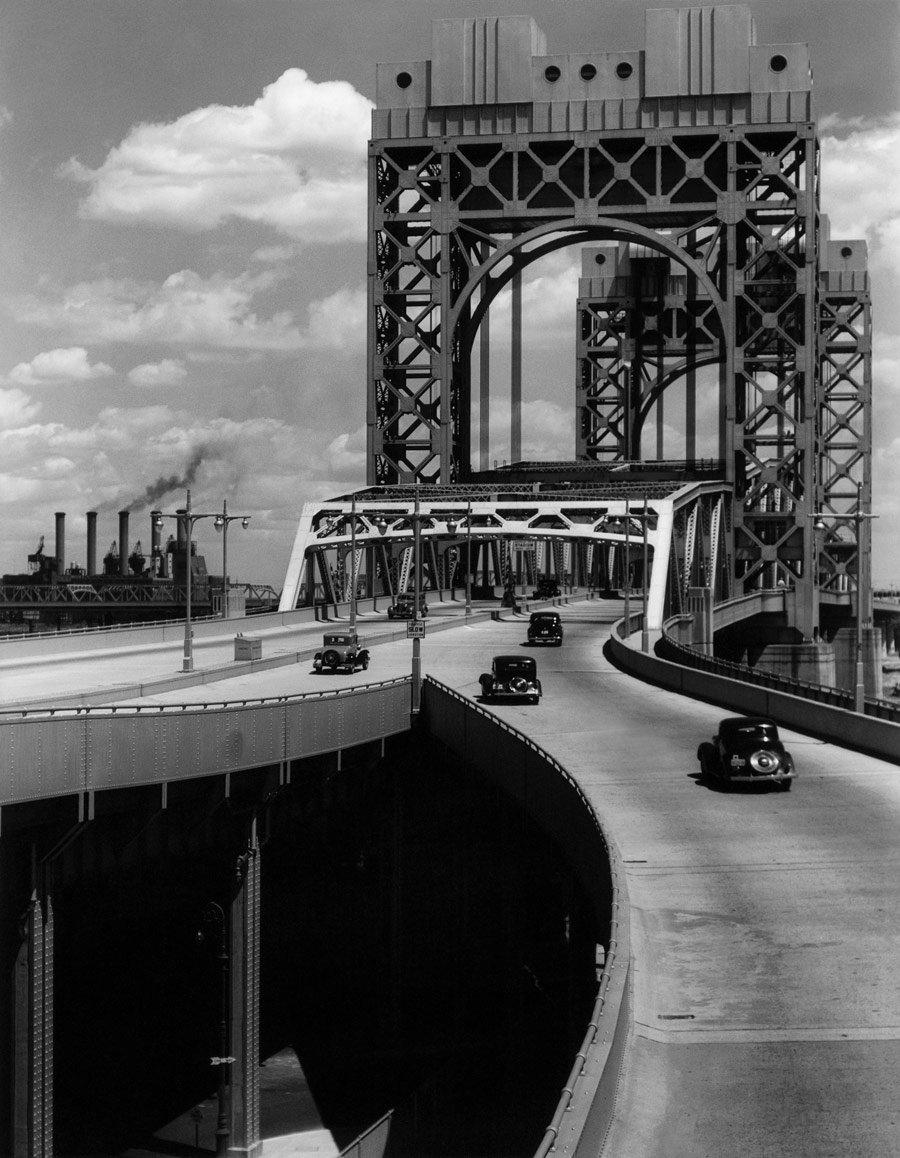
Through the meritocracy of her talent, Abbott’s vision soars and plunges, meticulously, into the utopian / dystopian fabric of the city, Atget influences subsumed into American light, form and culture… the brooding hulks of towering skyscrapers; the skeletal form of bridges; and Abbott’s clear persistence of vision – seeing modernity clearly, with focus, in focus.
Dr Marcus Bunyan 2020
Berenice Abbott (American, 1898-1991) is remembered for her magnificent photographs of New York City and its urban environs, photographs that show the influence of Atget in their attention to detail and understanding of the placement of the camera, and imaging of old and new parts of the city (much as Atget had photographed old Paris before it was destroyed). However, these photographs are uniquely her own, with their modernist New Vision aesthetic, bold perspectives and use of deep chiaroscuro to enhance form within the photograph. Abbott’s best known project, Changing New York (1935-1939) eventually consisted of 305 photographs that document the buildings of Manhattan, some of which are now destroyed. As the text on Wikipedia insightfully notes:
“Abbott’s project was primarily a sociological study imbedded within modernist aesthetic practices. She sought to create a broadly inclusive collection of photographs that together suggest a vital interaction between three aspects of urban life: the diverse people of the city; the places they live, work and play; and their daily activities. It was intended to empower people by making them realize that their environment was a consequence of their collective behavior (and vice versa). Moreover, she avoided the merely pretty in favor of what she described as “fantastic” contrasts between the old and the new, and chose her camera angles and lenses to create compositions that either stabilized a subject (if she approved of it), or destabilized it (if she scorned it).”
Gaëlle Morel observes, “Rather than the kind of nostalgic approach often brought to bear on a city’s landmarks and typical sites, this ensemble offers an exploration of the nature of modernity and focuses on the ways in which the past and future are temporarily linked together. Seeking to reinvent the forms and functions of photography in relation to the practice of documentary, Abbott sets out to capture the “disappearance of the moment” by juxtaposing motifs from a city subject to an unprecedented process of demolition and reconstruction.”
While Abbott’s photographs are definitely modernist in nature I believe that today they can also be seen as deeply nostalgic, emerging as they do in the period after the Great Depression when the economy was on the move again, a peaceful time before the oncoming armageddon of the Second World War, closely followed by the fear of nuclear annihilation and the threat of communist indoctrination. They are timeless portraits of a de/reconstructed city. The images seem to float in the air, breathe in the shadows. This is the disappearance of the moment into the enigma of past, present, future – where the photograph becomes eternal, where the best work of both Atget and Abbott resides.
Dr Marcus Bunyan 2012
Berenice Abbott (American, 1898-1991)
Eugène Atget
1927
Gelatin silver print
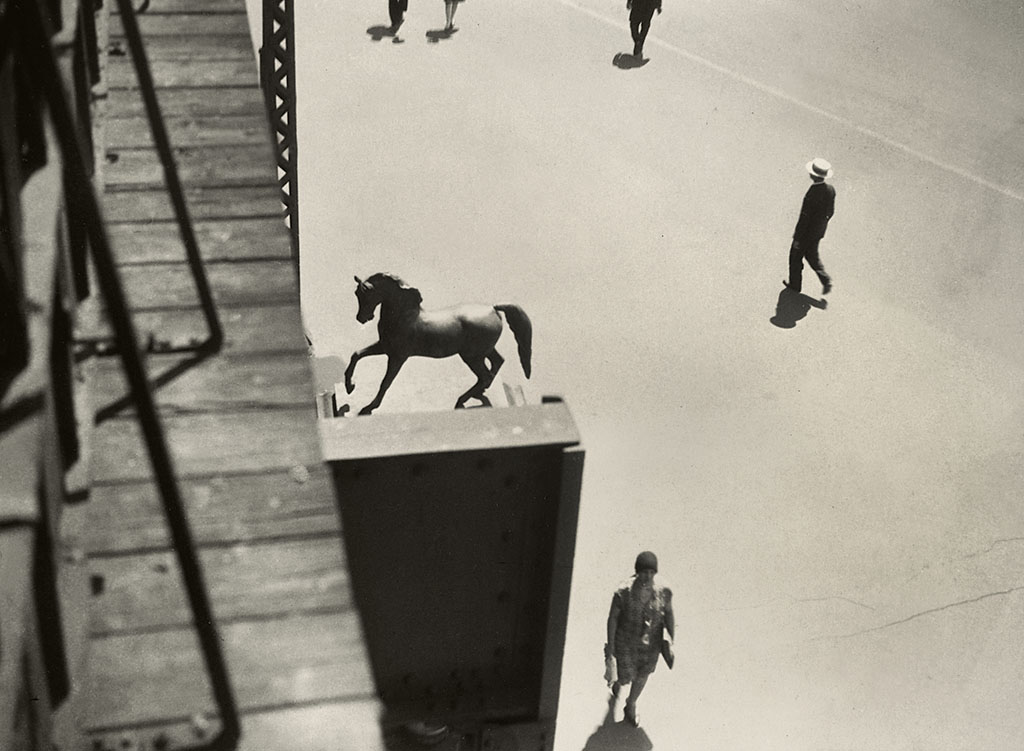
Berenice Abbott (American, 1898-1991)
The El at Columbus and Broadway
1929
Gelatin silver print
![Berenice Abbott (American, 1898-1991) [Sumner Healy Antique Shop, 942 3rd Avenue near 57th Street, Manhattan] 1930s, printed 1936](https://significantsnappers.com/wp-content/uploads/2024/10/abbott-sumner-healy-antique-shop.jpg "Berenice Abbott (American, 1898-1991) [Sumner Healy Antique Shop, 942 3rd Avenue near 57th Street, Manhattan] 1930s, printed 1936")
Berenice Abbott (American, 1898-1991)
[Sumner Healy Antique Shop, 942 3rd Avenue near 57th Street, Manhattan]
1930s, printed 1936
Gelatin silver print
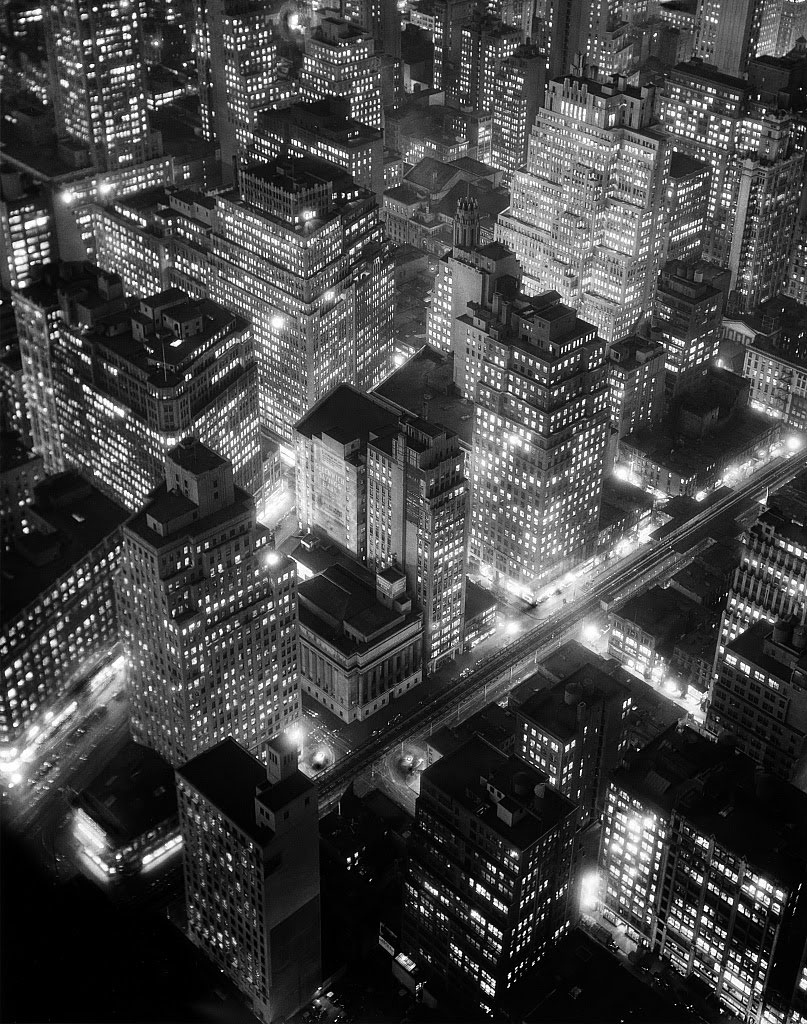
Berenice Abbott (American, 1898-1991)
Night View, New York City
1932
Gelatin silver print
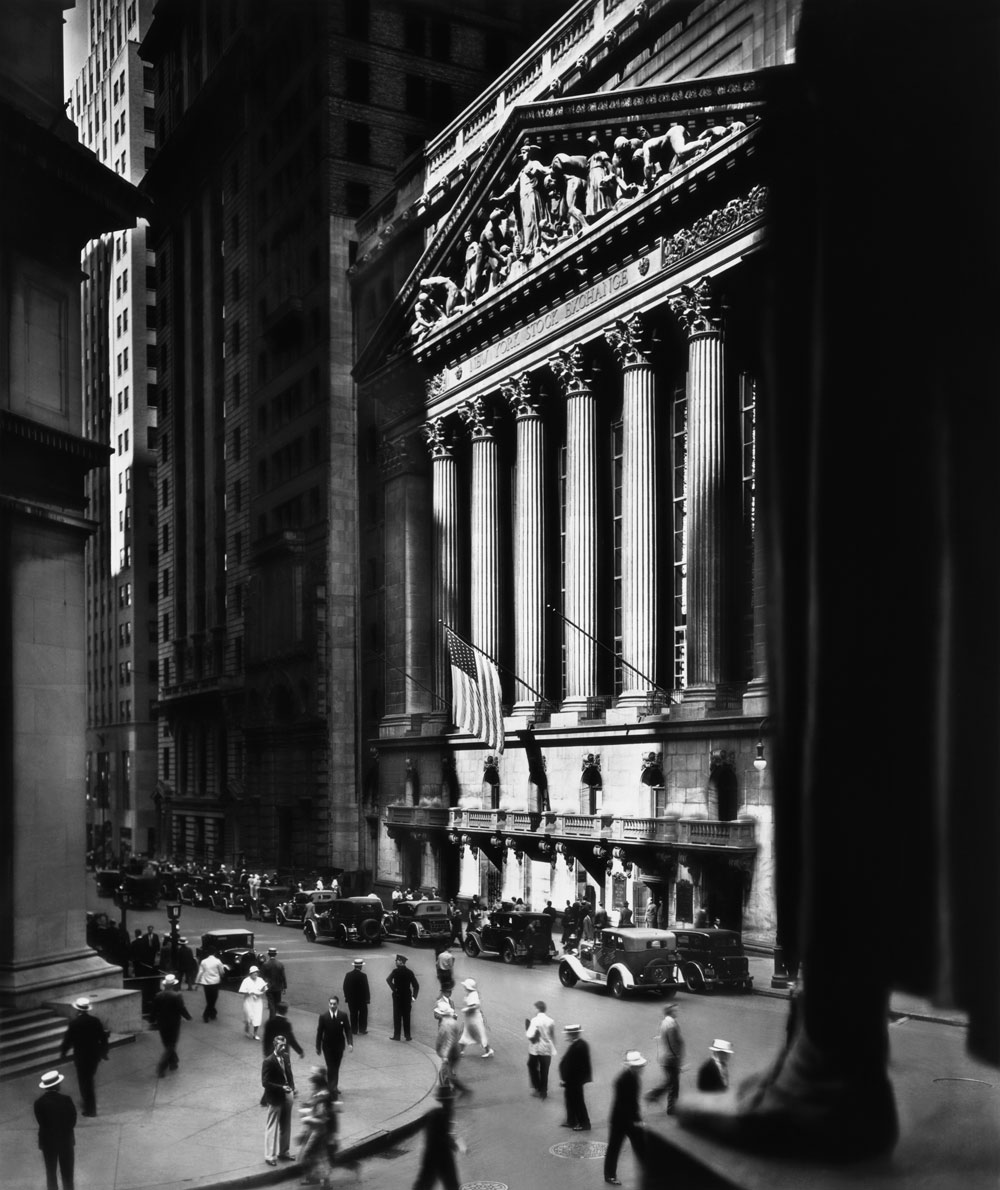
Berenice Abbott (American, 1898-1991)
New York Stock Exchange, New York City
1933
Gelatin silver print
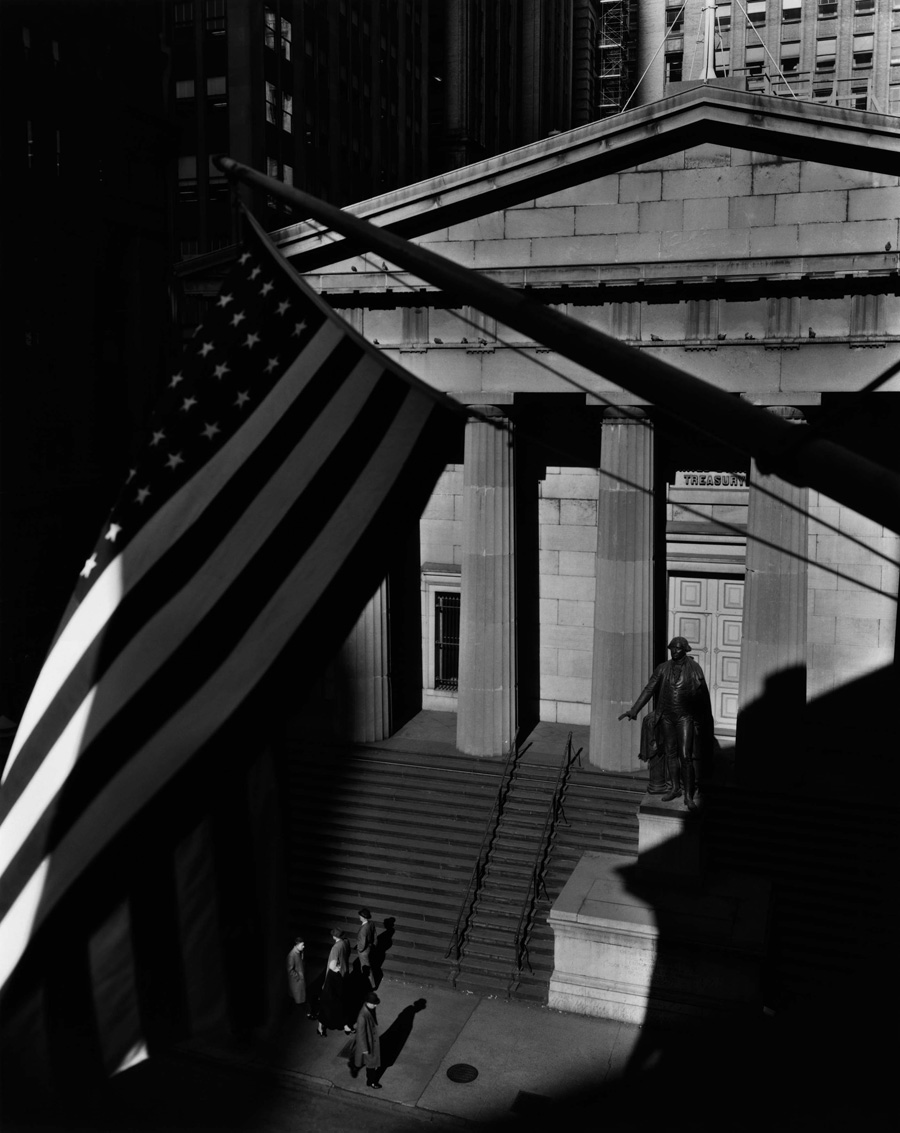
Berenice Abbott (American, 1898-1991)
Treasury Building, New York City
1933
Gelatin silver print
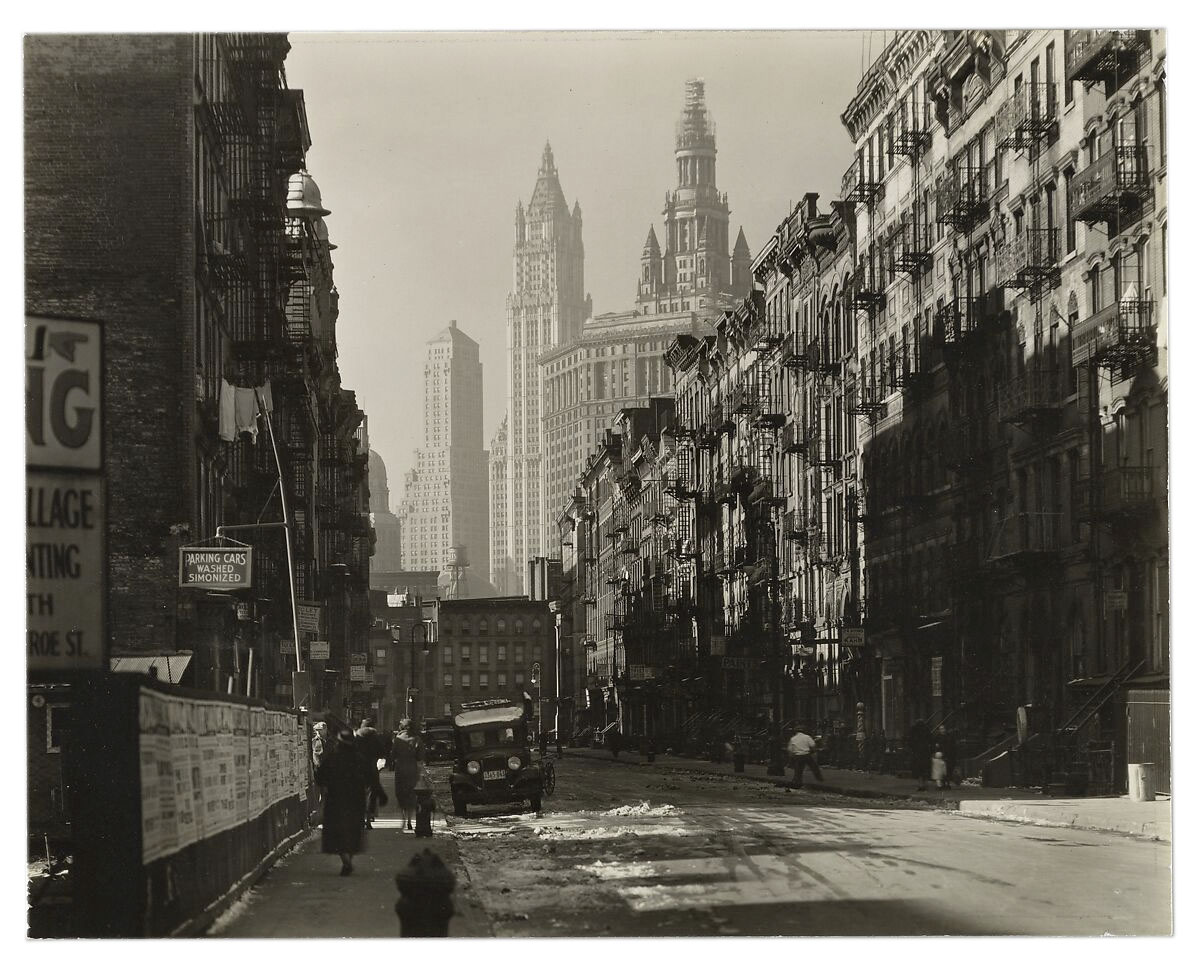
Berenice Abbott (American, 1898-1991)
Henry Street from Market, Looking West, Manhattan
1935
Gelatin silver print

Berenice Abbott (American, 1898-1991)
Newsstand, 32nd Street and 3rd Avenue, Manhattan
1935
Gelatin silver print
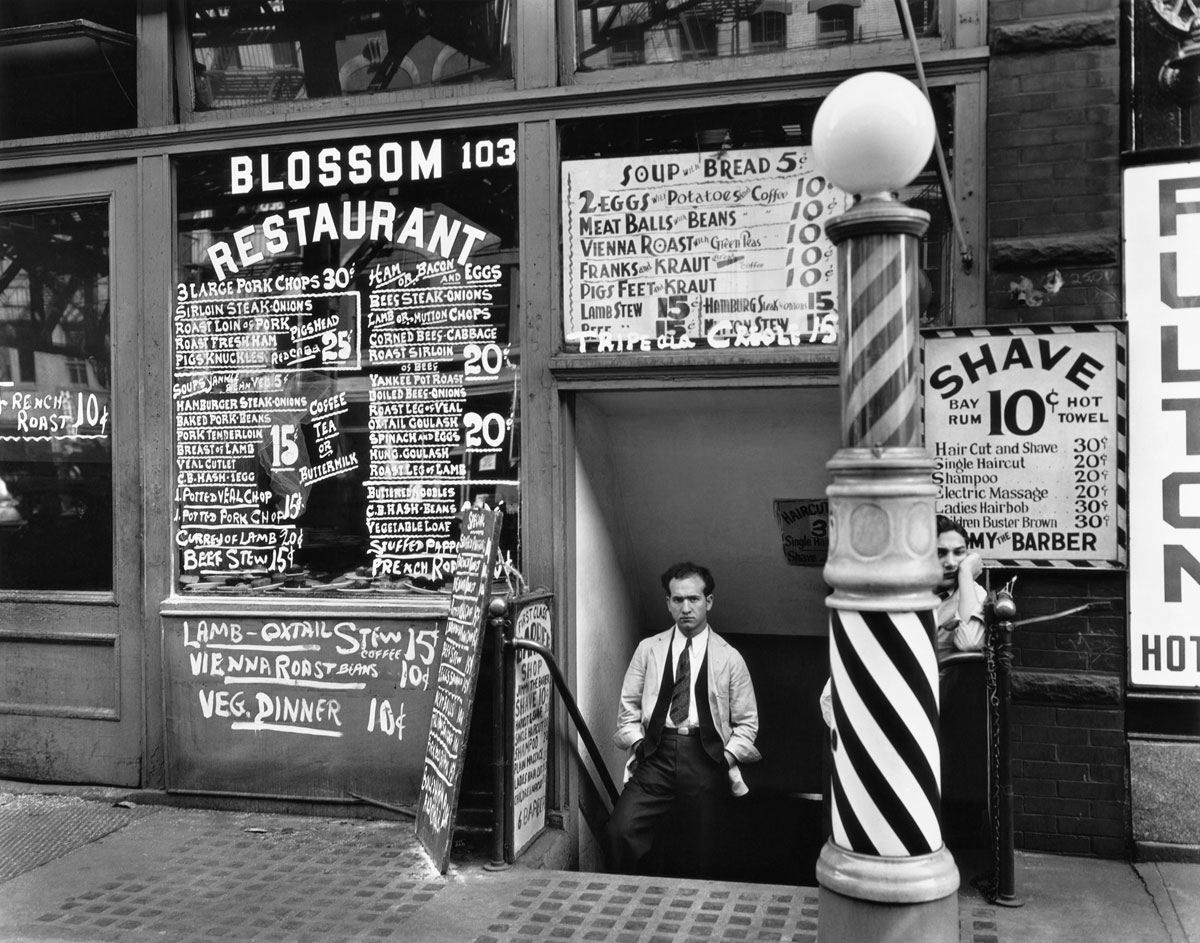
Berenice Abbott (American, 1898-1991)
Blossom Restaurant, 103 Bowery, New York City, October 24, 1935
1935
Gelatin silver print

Berenice Abbott (American, 1898-1991)
Miner, Greenview, West Virginia
1935
Gelatin silver print
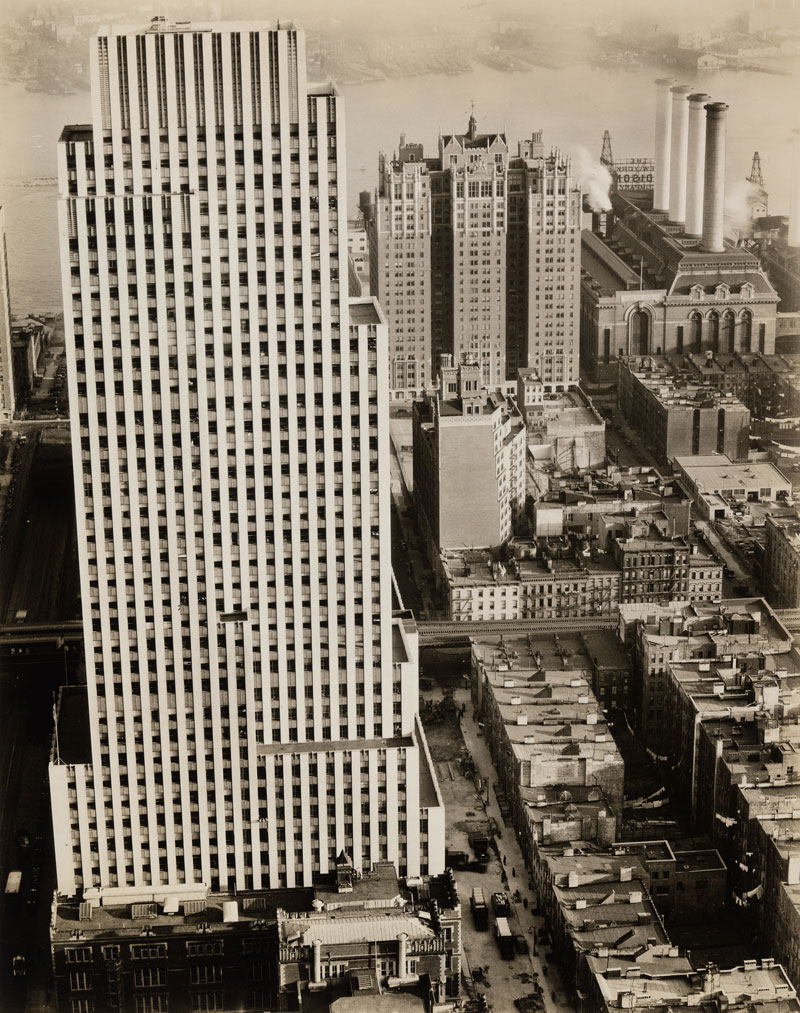
Berenice Abbott (American, 1898-1991)
Daily News Building, 220 East 42nd Street, Manhattan
November 21, 1935
Gelatin silver print
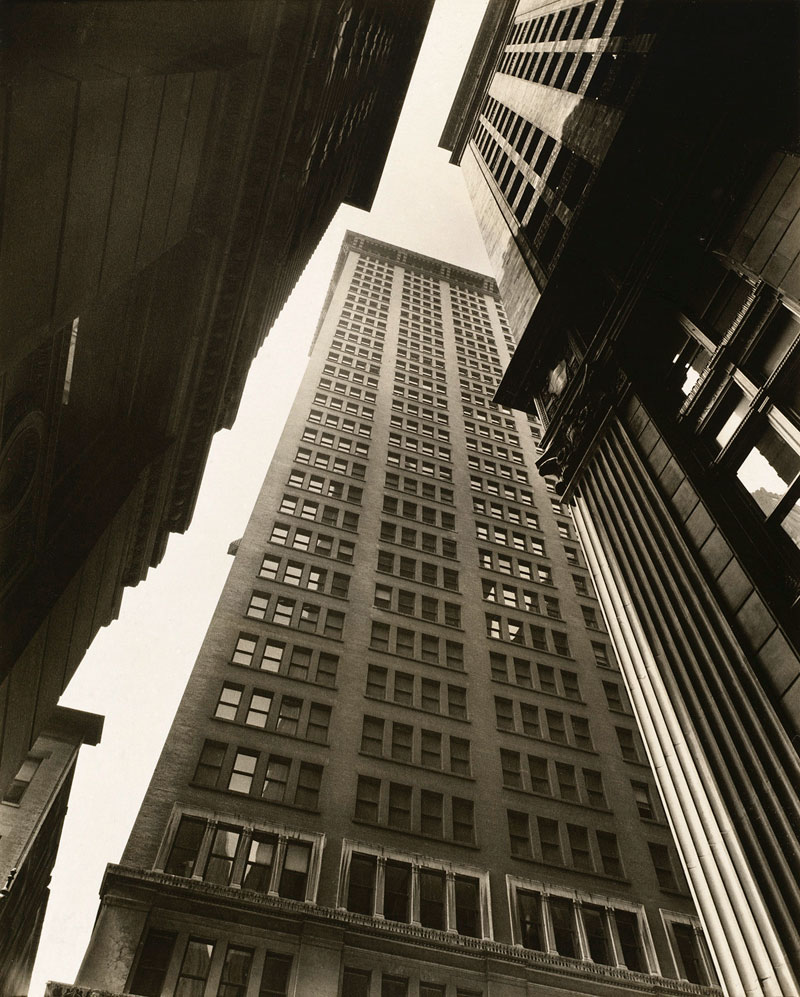
Berenice Abbott (American, 1898-1991)
Canyon, Broadway and Exchange Place
1936
Gelatin silver print
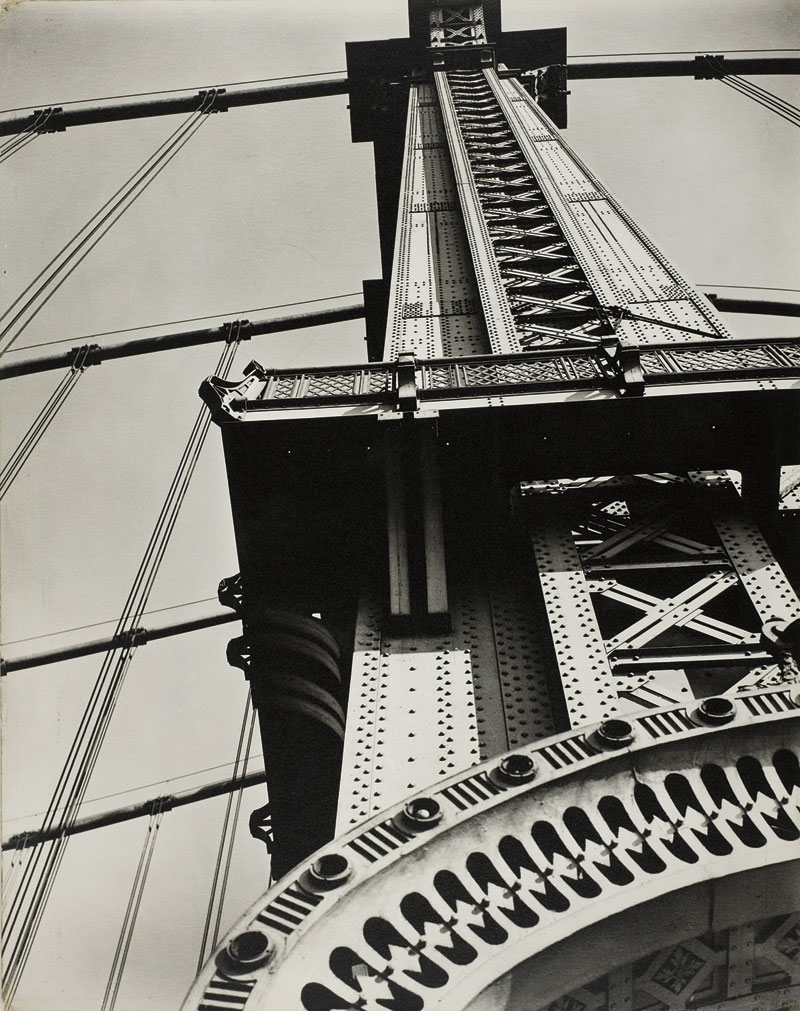
Berenice Abbott (American, 1898-1991)
Manhattan Bridge, Looking Up
1936
Gelatin silver print
![Berenice Abbott (American, 1898-1991) [Manhattan Bridge] 1936](https://significantsnappers.com/wp-content/uploads/2024/10/abbott-manhattan-bridge.jpg "Berenice Abbott (American, 1898-1991) [Manhattan Bridge] 1936")
Berenice Abbott (American, 1898-1991)
[Manhattan Bridge]
1936
Gelatin silver print
![Berenice Abbott (American, 1898-1991) [The El, 2nd and 3rd Avenue Lines, Bowery and Division Street, Manhattan] 1936](https://significantsnappers.com/wp-content/uploads/2024/10/abbott-the-el-2nd-and-3rd-avenue-lines-bowery-and-division-street-manhattan.jpg "Berenice Abbott (American, 1898-1991) [The El, 2nd and 3rd Avenue Lines, Bowery and Division Street, Manhattan] 1936")
Berenice Abbott (American, 1898-1991)
[The El, 2nd and 3rd Avenue Lines, Bowery and Division Street, Manhattan]
1936
Gelatin silver print

Berenice Abbott (American, 1898-1991)
Fifth Avenue Houses (5th Avenue and 8th Street)
1936, printed later
Gelatin silver print
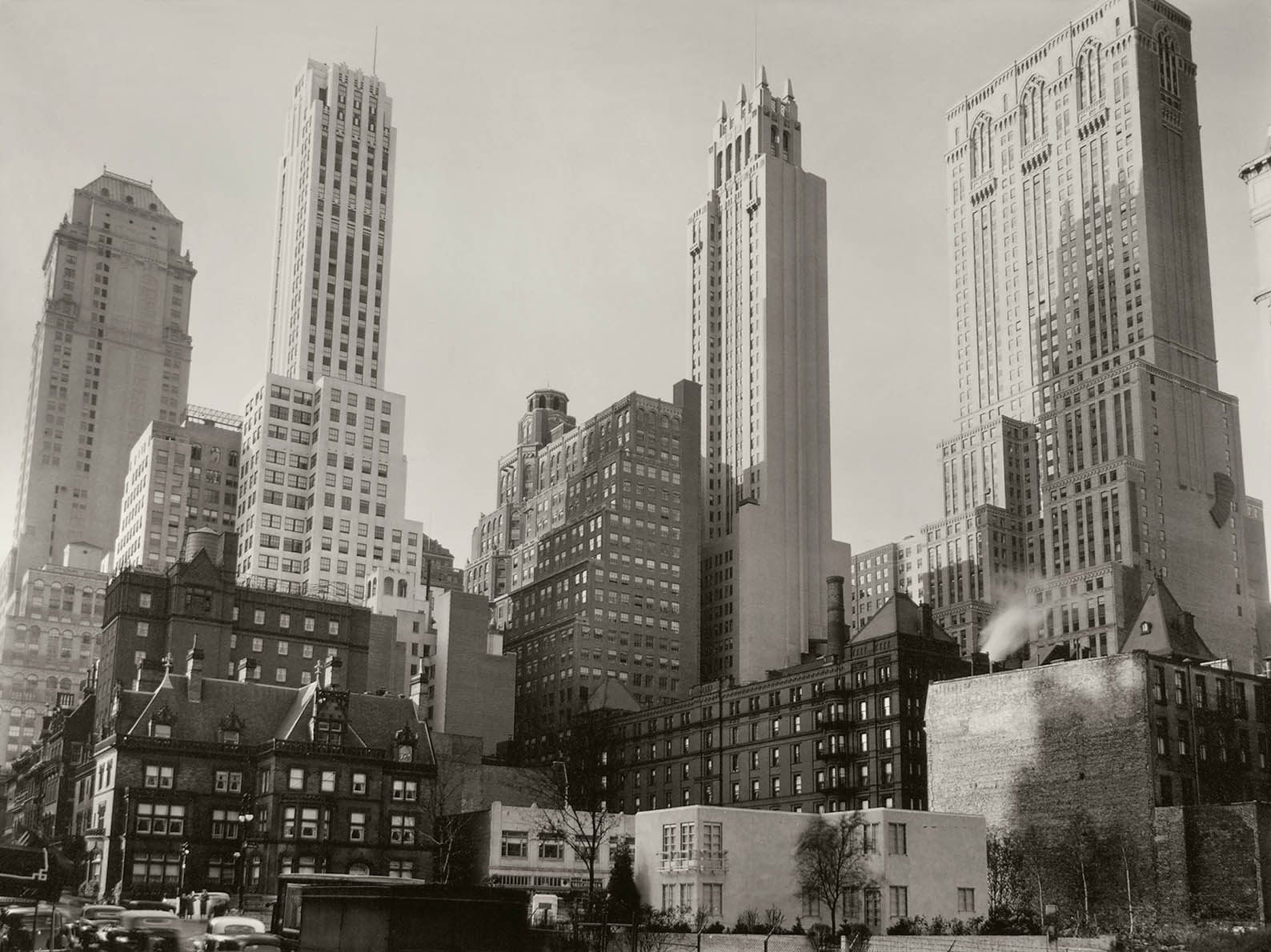
Berenice Abbott (American, 1898-1991)
Park Avenue and 39th Street, New York
1936
Gelatin silver print

Berenice Abbott (American, 1898-1991)
West Street
1936
Gelatin silver print
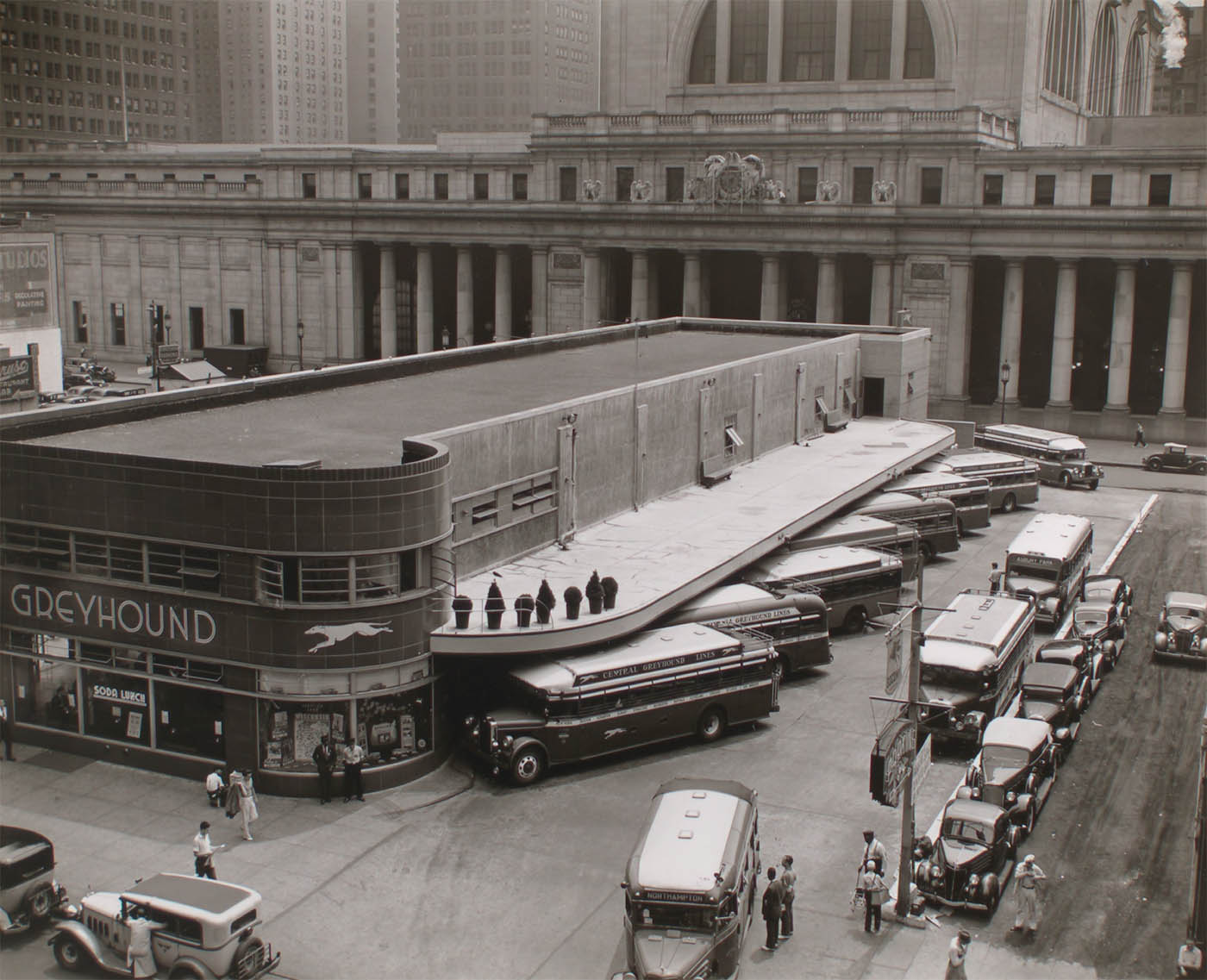
Berenice Abbott (American, 1898-1991)
Greyhound Bus Terminal, 33rd and 34th Streets between Seventh and Eighth Avenues, Manhattan
1936
Gelatin silver print

Berenice Abbott (American, 1898-1991)
Brooklyn Bridge, With Pier 21, Pennsylvania R.R.
1937
Gelatin silver print
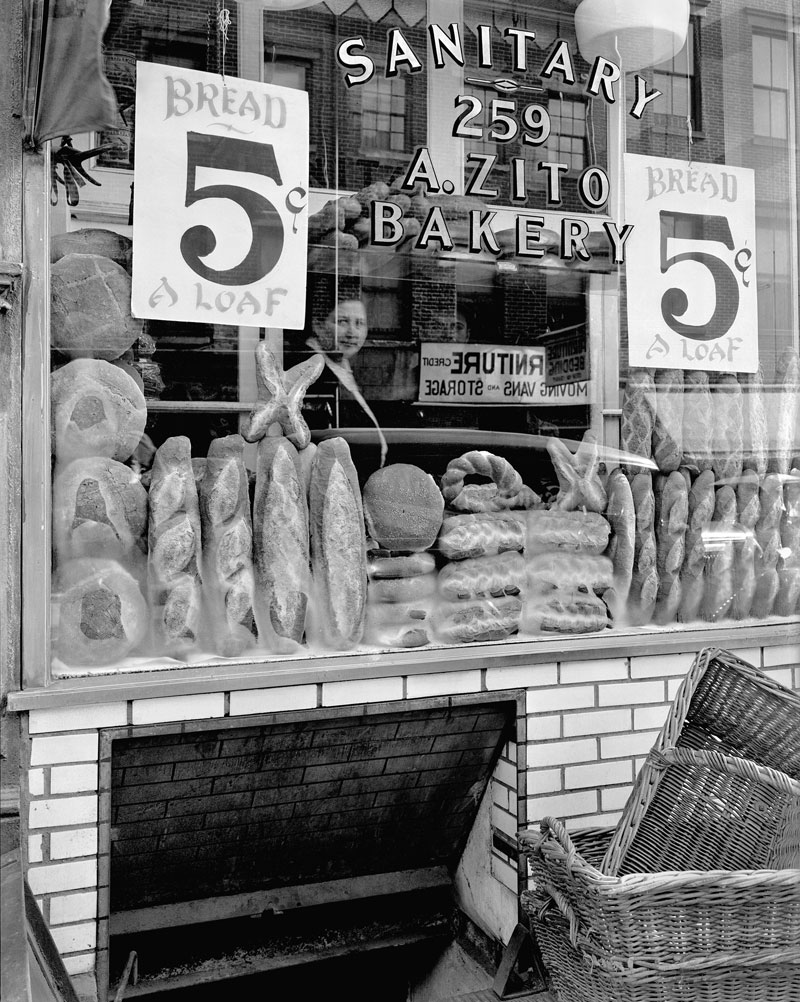
Berenice Abbott (American, 1898-1991)
Bread Store, 259 Bleecker Street
1937
Gelatin silver print

Berenice Abbott (American, 1898-1991)
Cheese Store, 276 Bleecker Street, Manhattan
1937
Gelatin silver print
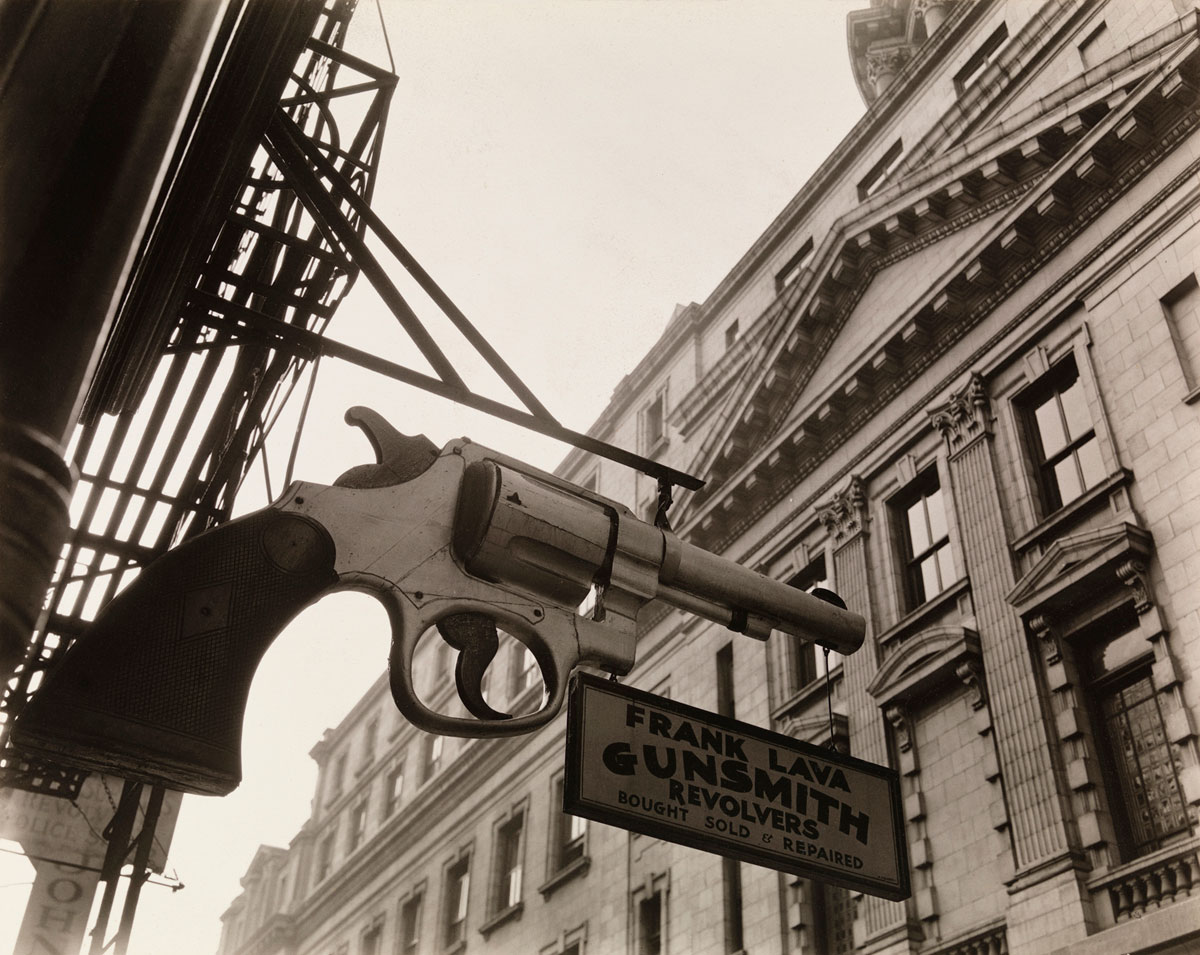
Berenice Abbott (American, 1898-1991)
Gunsmith and Police Department Headquarters, 6 Centre Market Place and 240 Centre Street, New York City, February 4, 1937
1937
Gelatin silver print
Berenice Abbott (American, 1898-1991)
Triborough Bridge, East 125th Street Approach, New York City, June 29, 1937
1937
Gelatin silver print

Berenice Abbott (American, 1898-1991)
Flat Iron Building, Broadway and Fifth Avenue, New York City
1938
Gelatin silver print
Berenice Abbott (American, 1898-1991)
Broadway to the Battery, New York City, May 4, 1938
1938
Gelatin silver print

Berenice Abbott and Elizabeth McCausland
Changing New York
New York: E. P. Dutton & Company, 1939
Berenice Abbott (American, 1898-1991)
Christopher Street Shop
late 1940s
Gelatin silver print

Berenice Abbott (American, 1898-1991)
Sunoco Station, Trenton, New Jersey
1954
Gelatin silver print
Berenice Abbott (American, 1898-1991)
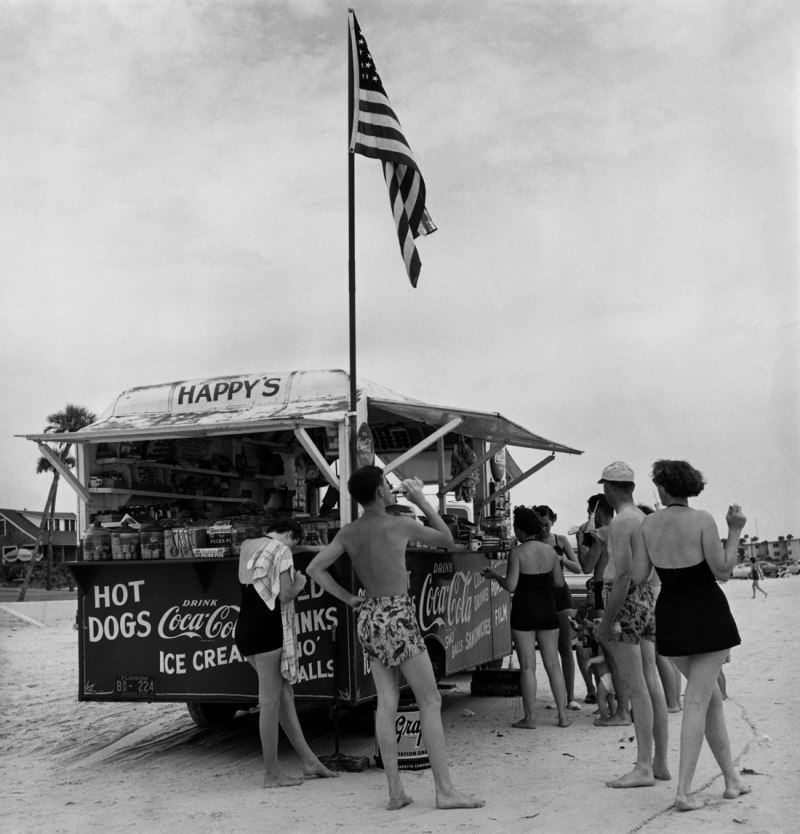
Happy’s Refreshment Stand, Daytona Beach, Florida
1954
Gelatin silver print
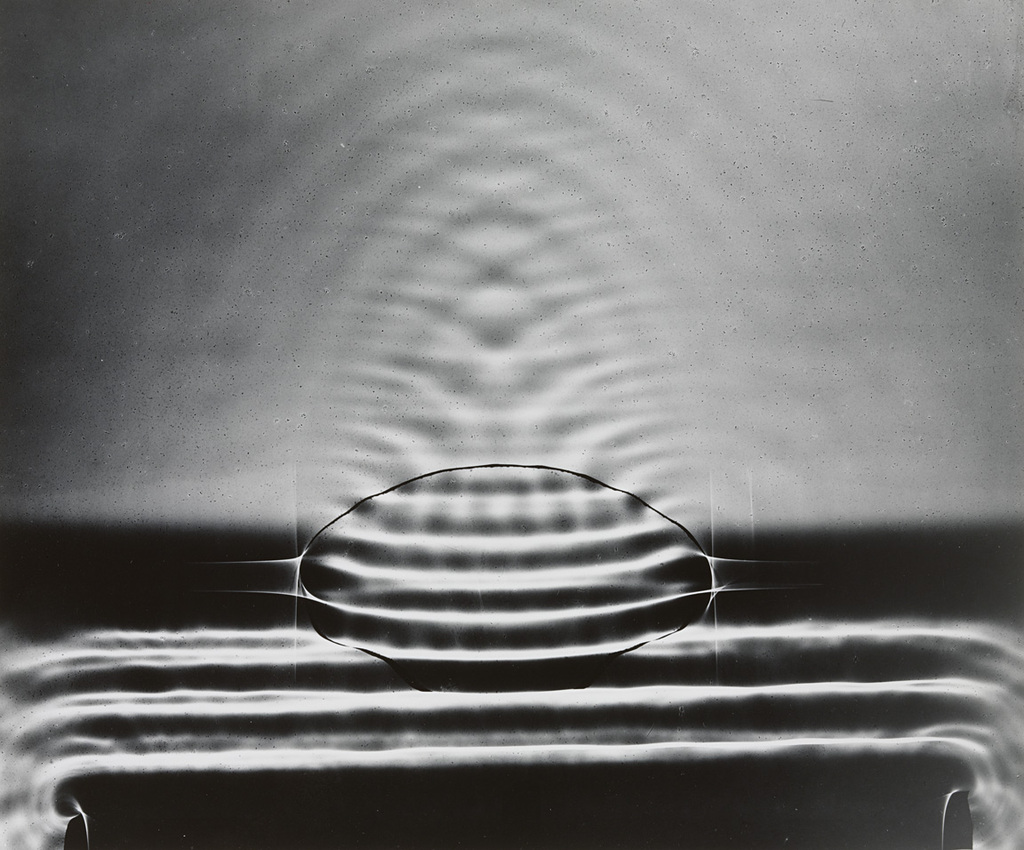
Berenice Abbott (American, 1898-1991)
Focusing Water Waves, Massachusetts Institute of Technology
1958-1961
Gelatin silver print

Berenice Abbott (American, 1898-1991)
Wave Pattern with Glass Plate, Massachusetts Institute of Technology
1958-1961
Gelatin silver print
Berenice Abbott exhibitions and photographs on Art Blart
~ Exhibition: ‘Berenice Abbott’s New York Album, 1929’ at the Metropolitan Museum of Art, New York, March – September 2023
~ European photographic research tour exhibition: ‘Berenice Abbott: Portraits of Modernity’ at Huis Marseille, Amsterdam Part 2, September – December 2019
~ European photographic research tour exhibition: ‘Berenice Abbott: Portraits of Modernity’ at Huis Marseille, Amsterdam Part 1, September – December 2019
~ Exhibition: ‘Berenice Abbott (1898-1991), Photographs’ at Jeu de Paume, Paris, February – April 2012
 Significant Snappers