Anna Atkins (English, 1799-1871)
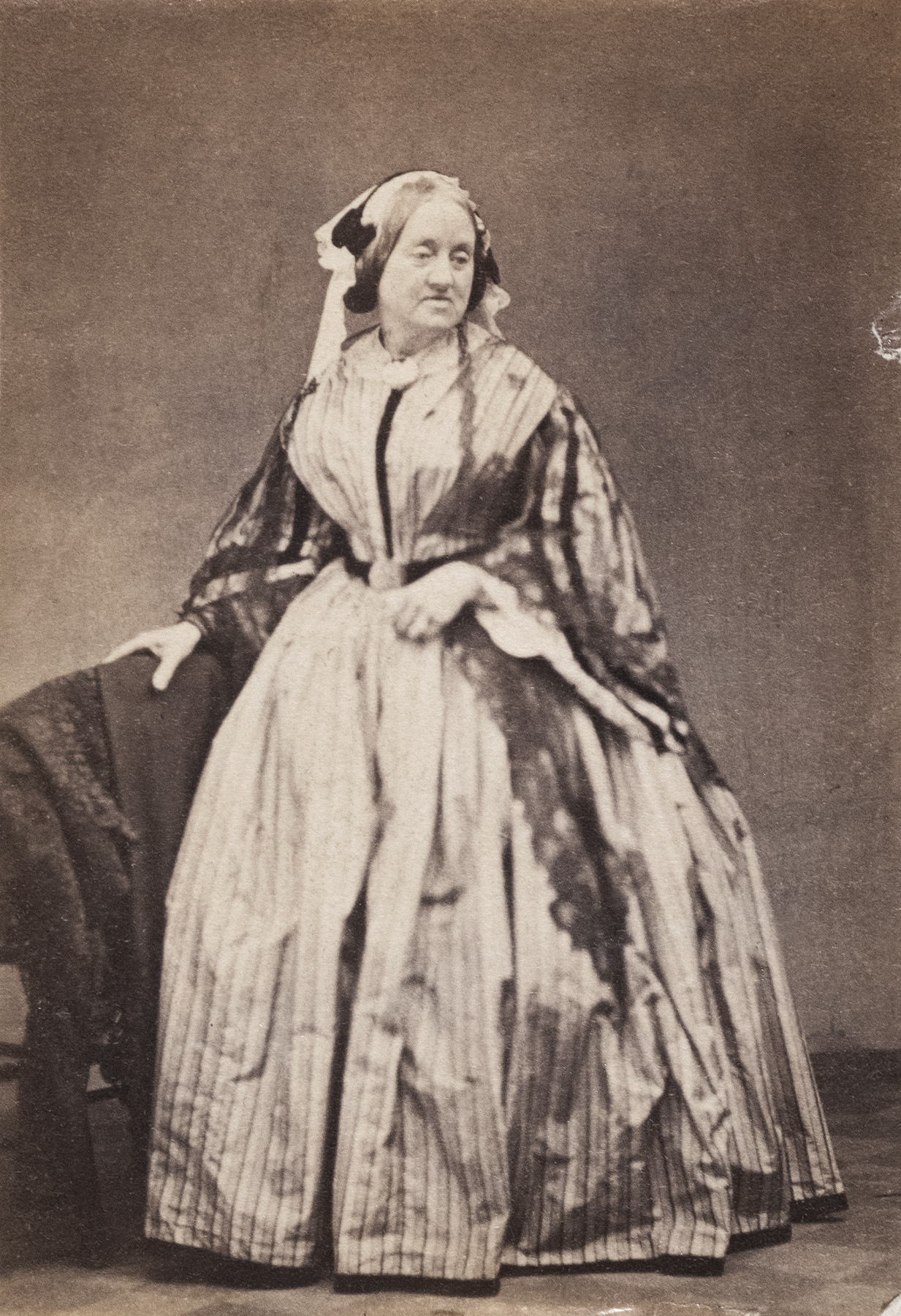
Unknown photographer
Portrait of Anna Atkins
c. 1862
Albumen print
From the Nurstead Court Archives
Anna Atkins (English, 1799-1871) is often considered the first person to publish a book illustrated with photographic images: the self-published book of her cyanotype photograms in the first instalment of Photographs of British Algae: Cyanotype Impressions in October 1843. The date is incredibly early, eight months before June 1844 when the first fascicle of William Henry Fox Talbot’s The Pencil of Nature was released; that book being the “first photographically illustrated book to be commercially published” or “the first commercially published book illustrated with photographs.” (Wikipedia)
Atkins learnt the cyanotype process a year after its invention by Sir John Herschel, a friend of the Atkins family, and then applied the process to algae (specifically, seaweed) by making cyanotype photograms that were contact printed “by placing the unmounted dried-algae original directly on the cyanotype paper”
What is interesting to me is not just Atkins choice of the new medium of photography to describe, both scientifically and aesthetically, the beauty and detail of her collection of seaweeds; but within that new medium of photography, she chose not the photogenic or calotype process, but the graphic cyanotype process with its vivid use of the colour blue, a ‘means of reproducing notes and diagrams, as in blueprints’.
Here we have a process that reproduces reality as in a diagram, a diagrammatic process that is then doubly reinforced when Atkins places her specimens directly on the cyanotype paper producing a photogram, a photographic image made without a camera. The resultant negative shadow image shows variations in tone that are dependent upon the transparency of the objects used. (Wikipedia)
Atkins photographs, produced “with great daring, creativity, and technical skill” are “a groundbreaking achievement in the history of photography and book publishing.” While Atkins’ books can be seen as the first systematic application of photography to science, each photograph used for scientific study or display of its species or type, there is a much more holistic creative project going on here.
Can you imagine the amount of work required to learn the calotype process, gather your thoughts, photograph the specimens, make the prints, write the text to accompany the images, and prepare the number of volumes to self-publish the book, all within a year? For any artist, this amount of concentrated, focused work requires an inordinate amount of time and energy and, above all, a clear visualisation of the outcome that you want to achieve.
That this was achieved by a woman in 1843, “in contrast to the constraints experienced by women in Victorian England,” makes Atkins achievement of scientific accuracy, ethereal beauty and sublime transcendence in her photographs truly breathtaking.
Dr Marcus Bunyan
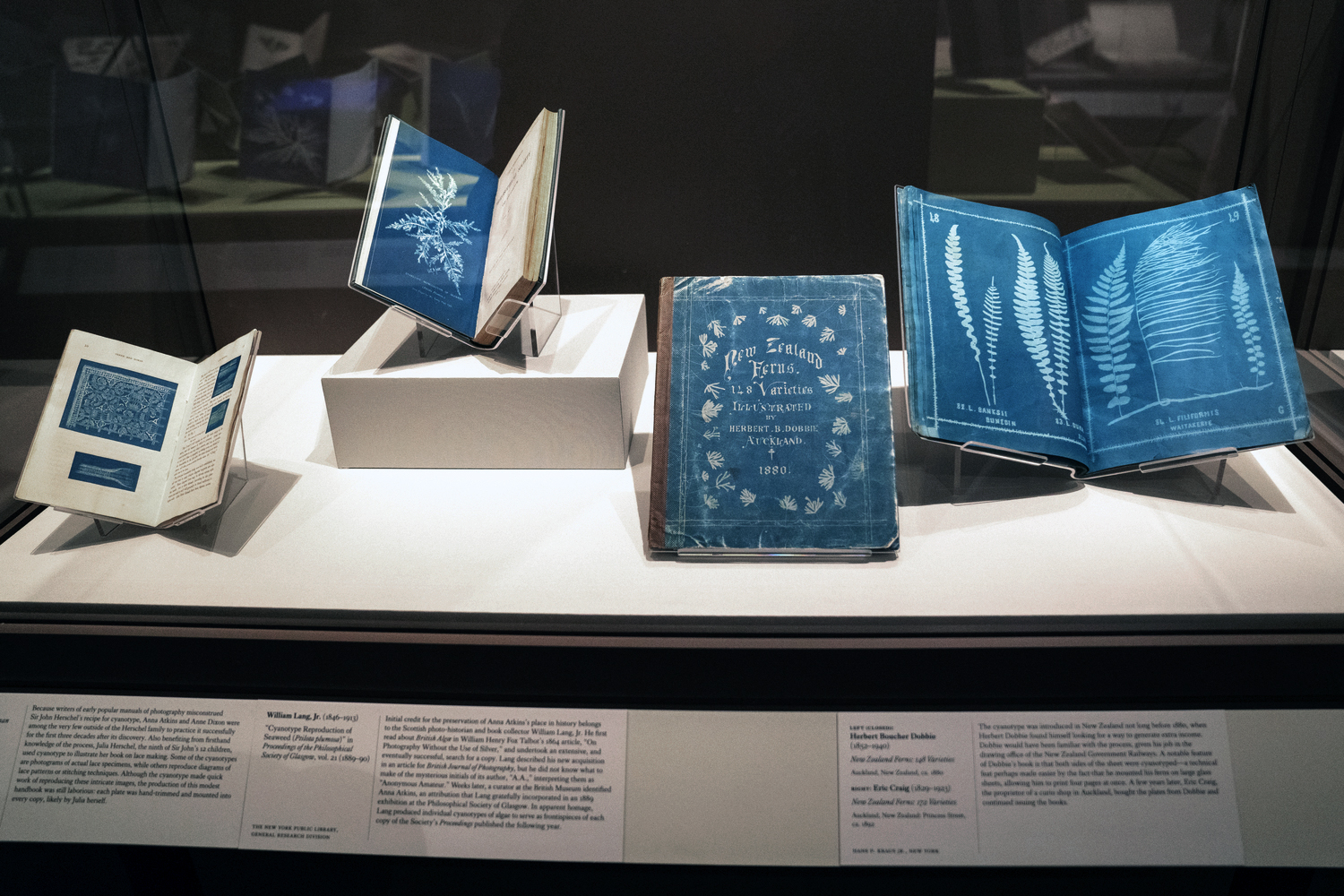
Installation view of the exhibition Blue Prints: The Pioneering Photographs of Anna Atkins at The New York Public Library

Anna Atkins (English, 1799-1871)
Laminaria bulbosa from Photographs of British Algae: Cyanotype Impressions
1843
Cyanotype
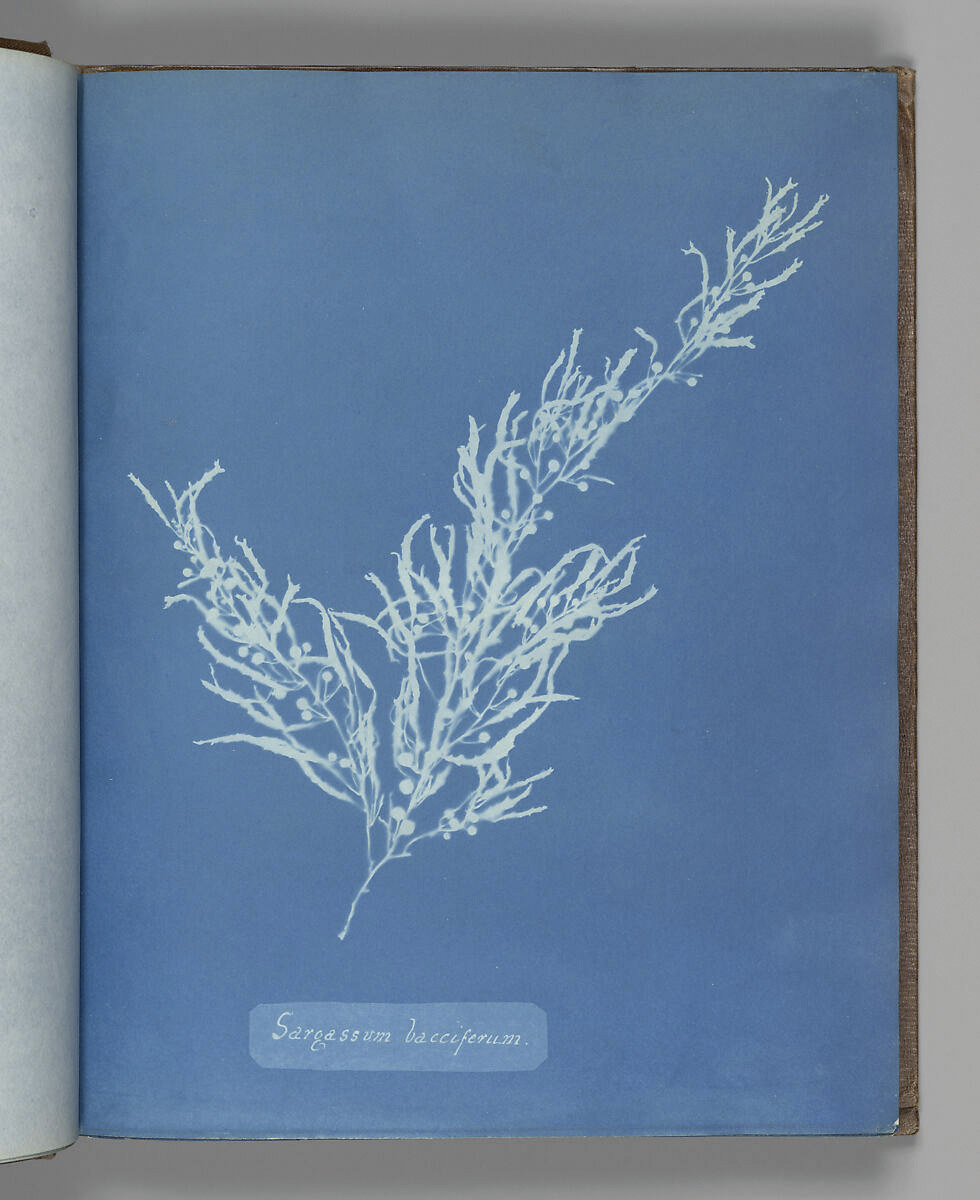
Anna Atkins (British, 1799-1871)
Sargassum bacciferum from Photographs of British Algae: Cyanotype Impressions (1843-1853)
1843
Cyanotype

Anna Atkins (British, 1799-1871)
Ferns, Specimen of Cyanotype
1840s
Cyanotype
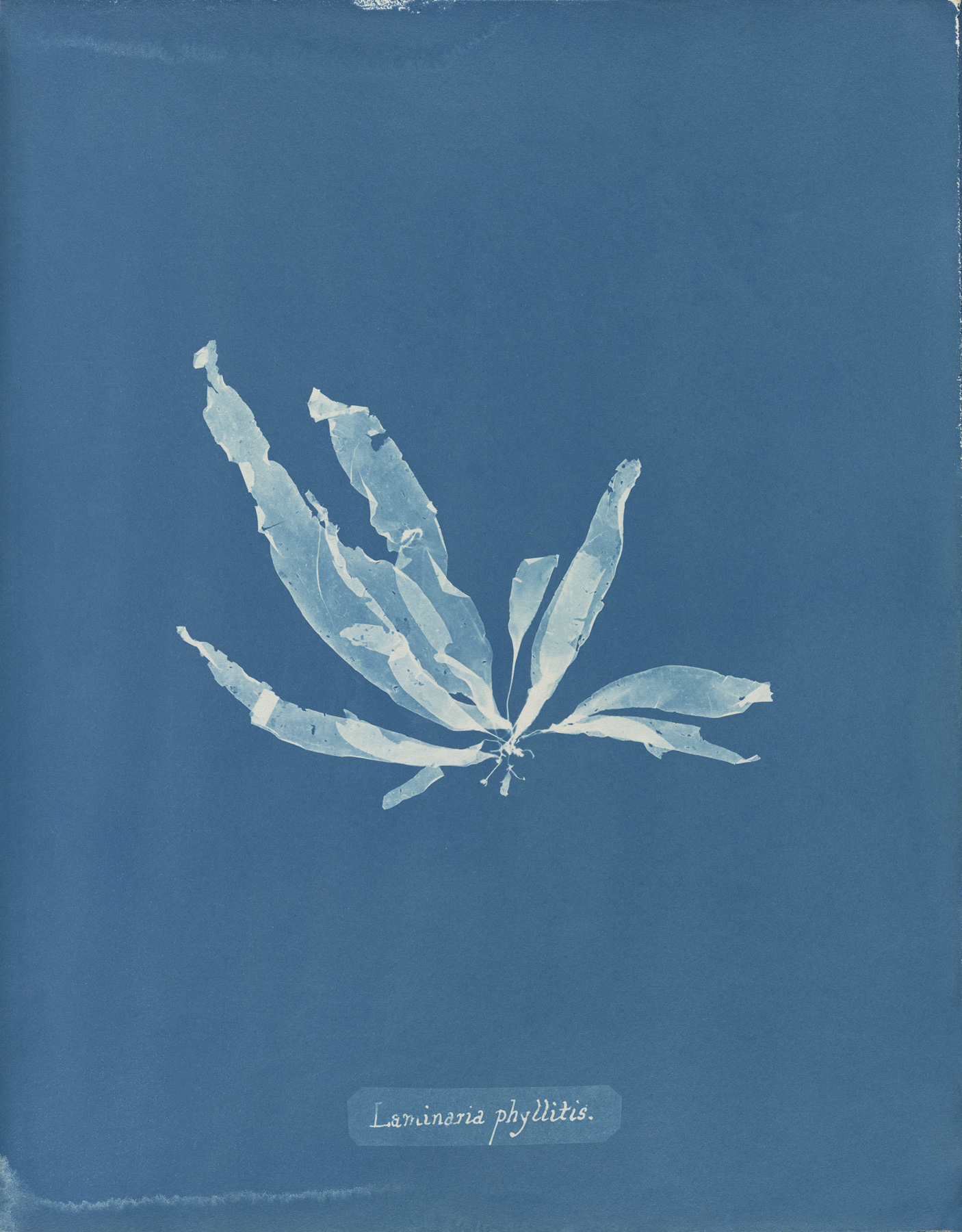
Anna Atkins (English, 1799-1871)
Laminaria phyllitis from Part V of Photographs of British Algae: Cyanotype Impressions
1844-1845
Cyanotype

Anna Atkins (English, 1799-1871)
Furcellaria fastigiata from Part IV, version 2 of Photographs of British Algae: Cyanotype Impressions
1846 or later
Cyanotype
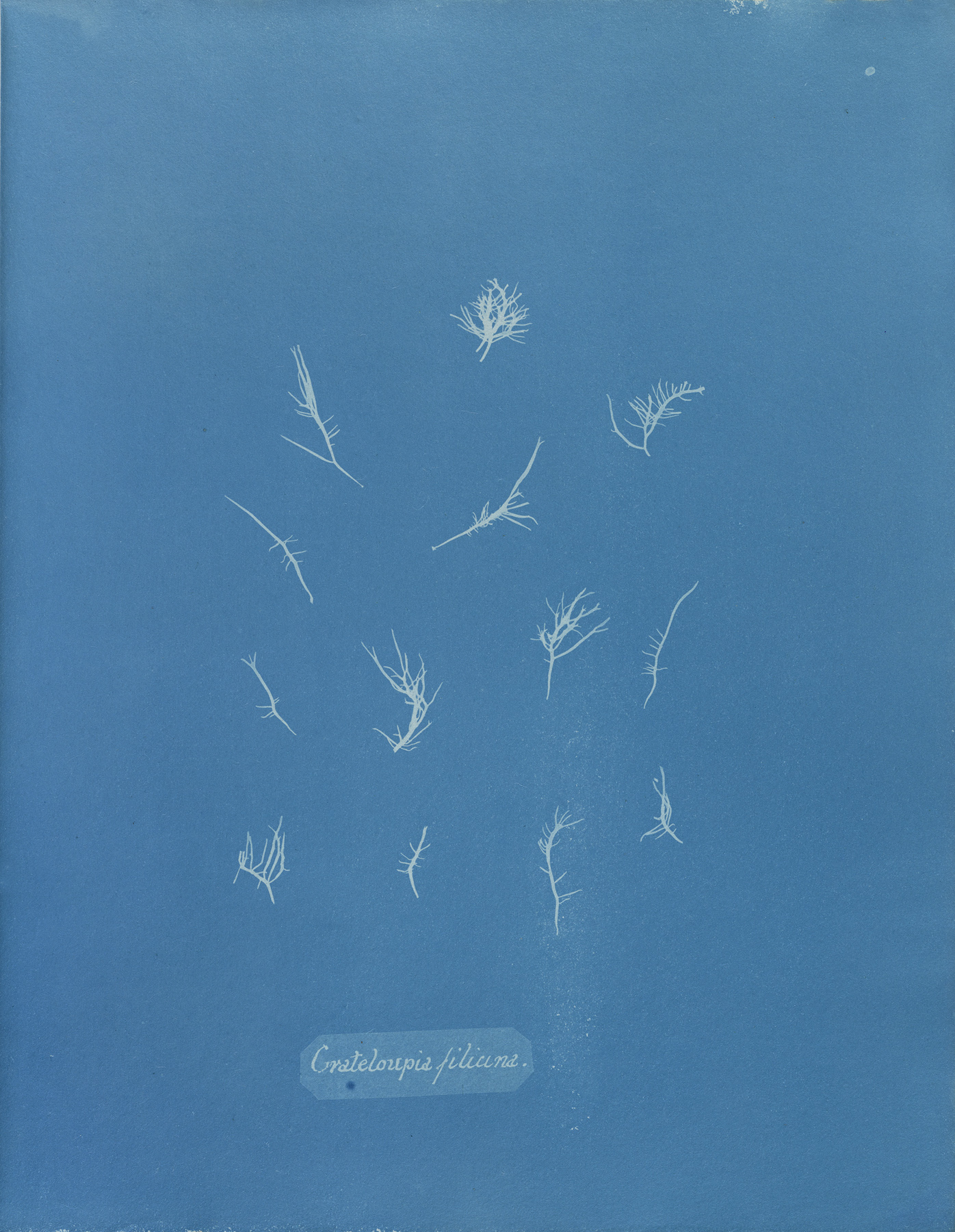
Anna Atkins (English, 1799-1871)
Grateloupia filicina from Part IX of Photographs of British Algae: Cyanotype Impressions
1848-1849
Cyanotype
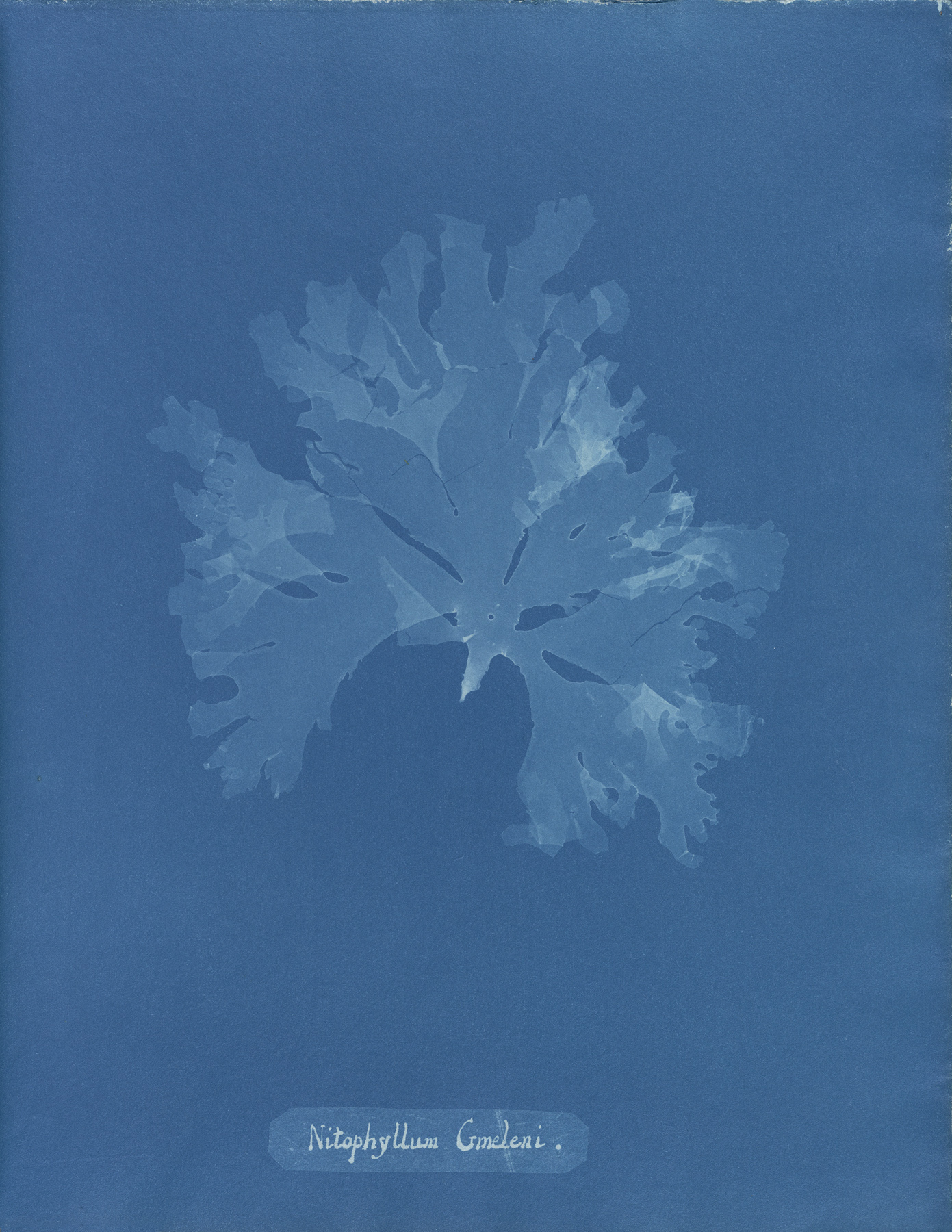
Anna Atkins (English, 1799-1871)
Nitophyllum gmeleni from Part XI of Photographs of British Algae: Cyanotype Impressions
1849-1850
Cyanotype

Anna Atkins (English, 1799-1871)
Halyseris polypodioides from Part XII of Photographs of British Algae: Cyanotype Impressions
1849-1850
Cyanotype
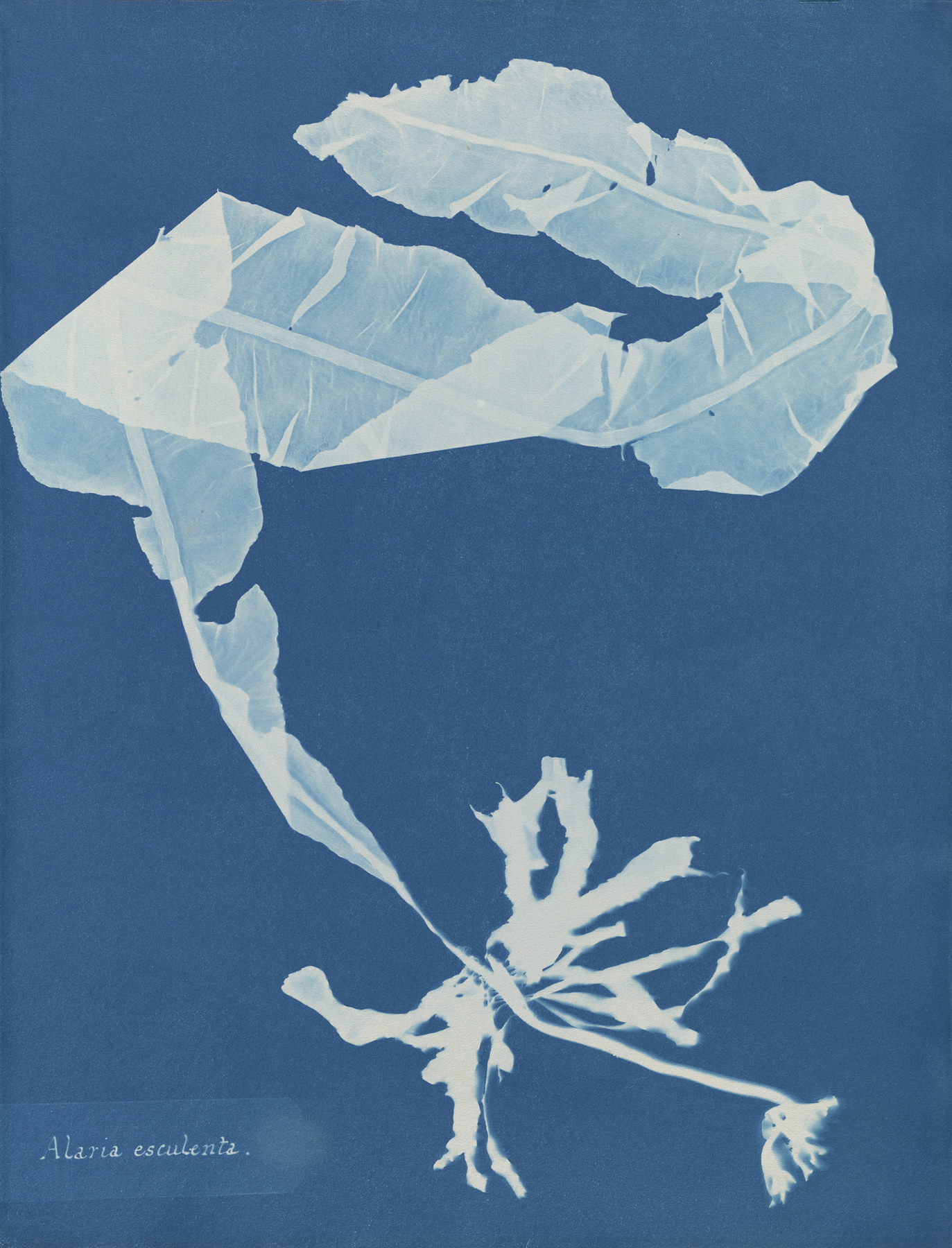
Anna Atkins (English, 1799-1871)
Alaria esculenta from Part XII of Photographs of British Algae: Cyanotype Impressions
1849-1850
Cyanotype

Anna Atkins (English, 1799-1871)
Dictyota dichotoma, in the young state & in fruit from Part XI of Photographs of British Algae: Cyanotype Impressions
1849-1850
Cyanotype
![Anna Atkins (English, 1799-1871) 'Ceylon [examples of ferns]' c. 1850](https://significantsnappers.com/wp-content/uploads/2024/11/anna-atkins-ceylon.jpg "Anna Atkins (English, 1799-1871) 'Ceylon [examples of ferns]' c. 1850")
Anna Atkins (English, 1799-1871)
Ceylon [examples of ferns]
c. 1850
Cyanotype

Anna Atkins (British, 1799-1871)
Mauritius from Cyanotypes of British and Foreign Flowering Plants and Fern
1851-1854
Cyanotype
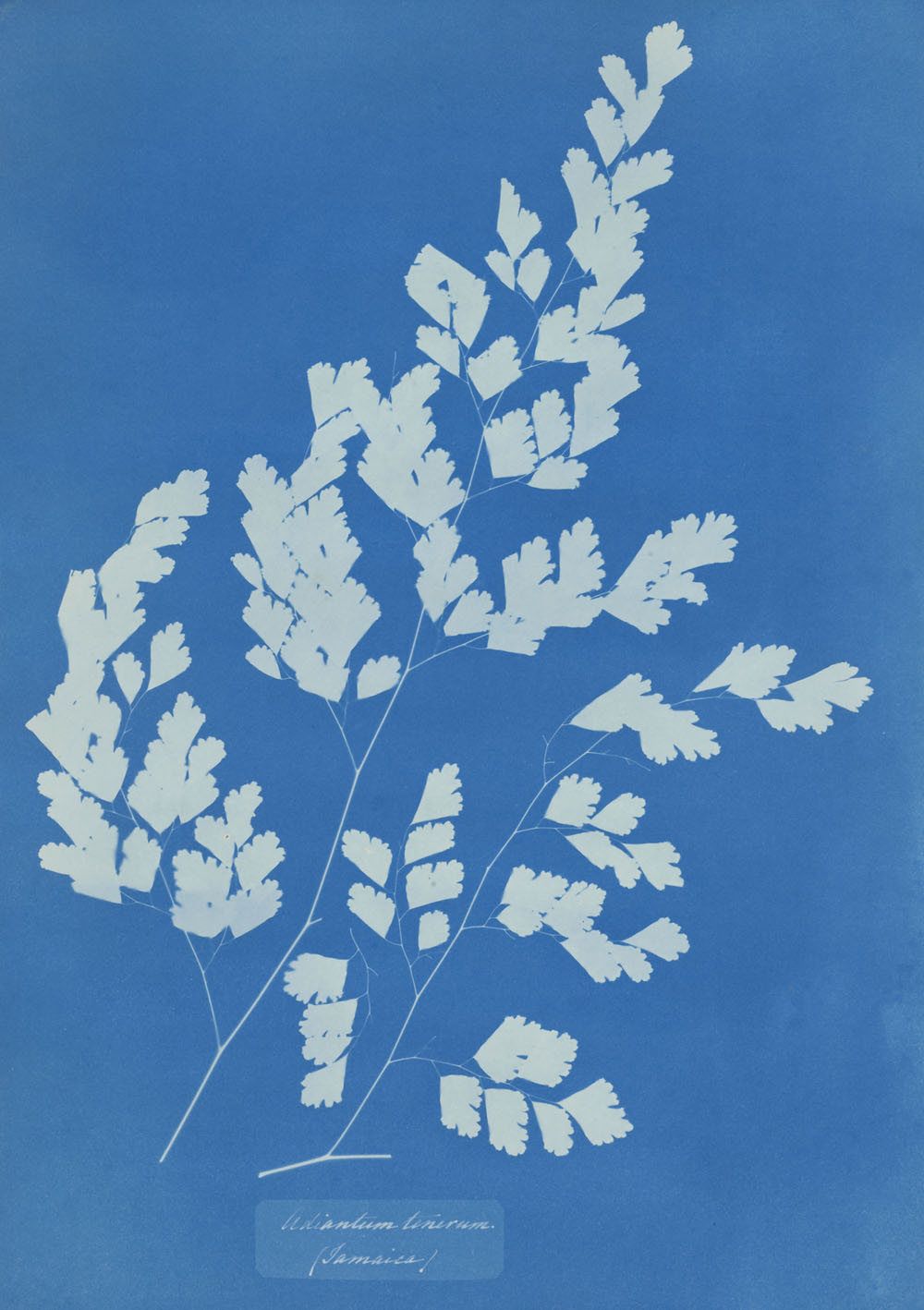
Anna Atkins (English, 1799-1871)
Adiantum tenerum (Jamaica)
c. 1852
Cyanotype
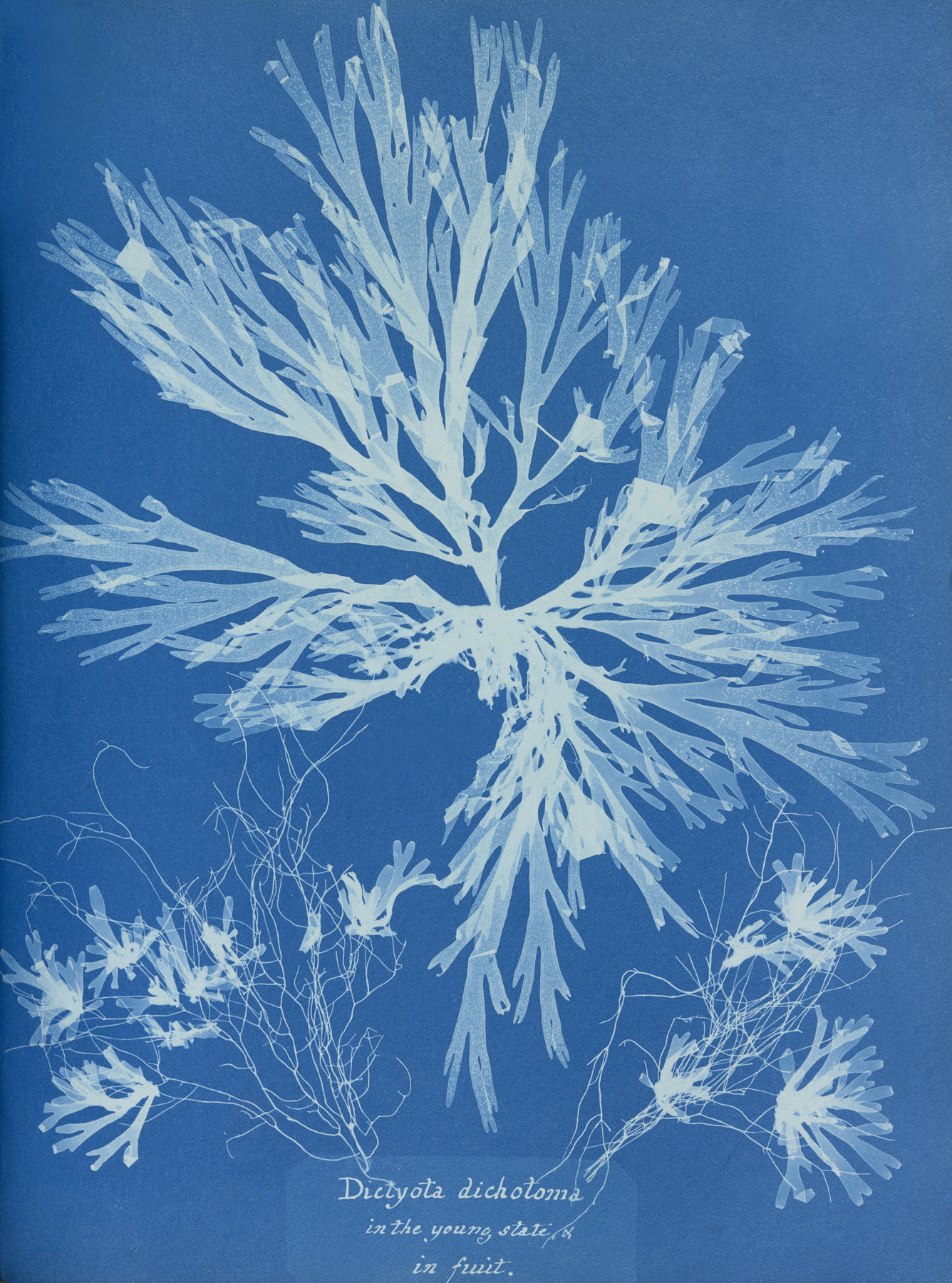
Anna Atkins (English, 1799-1871)
Plate 55 – Dictyota dichotoma, in the young state and in fruit from Volume 1, Part 1 of Photographs of British Algae: Cyanotype Impressions
1853
Cyanotype
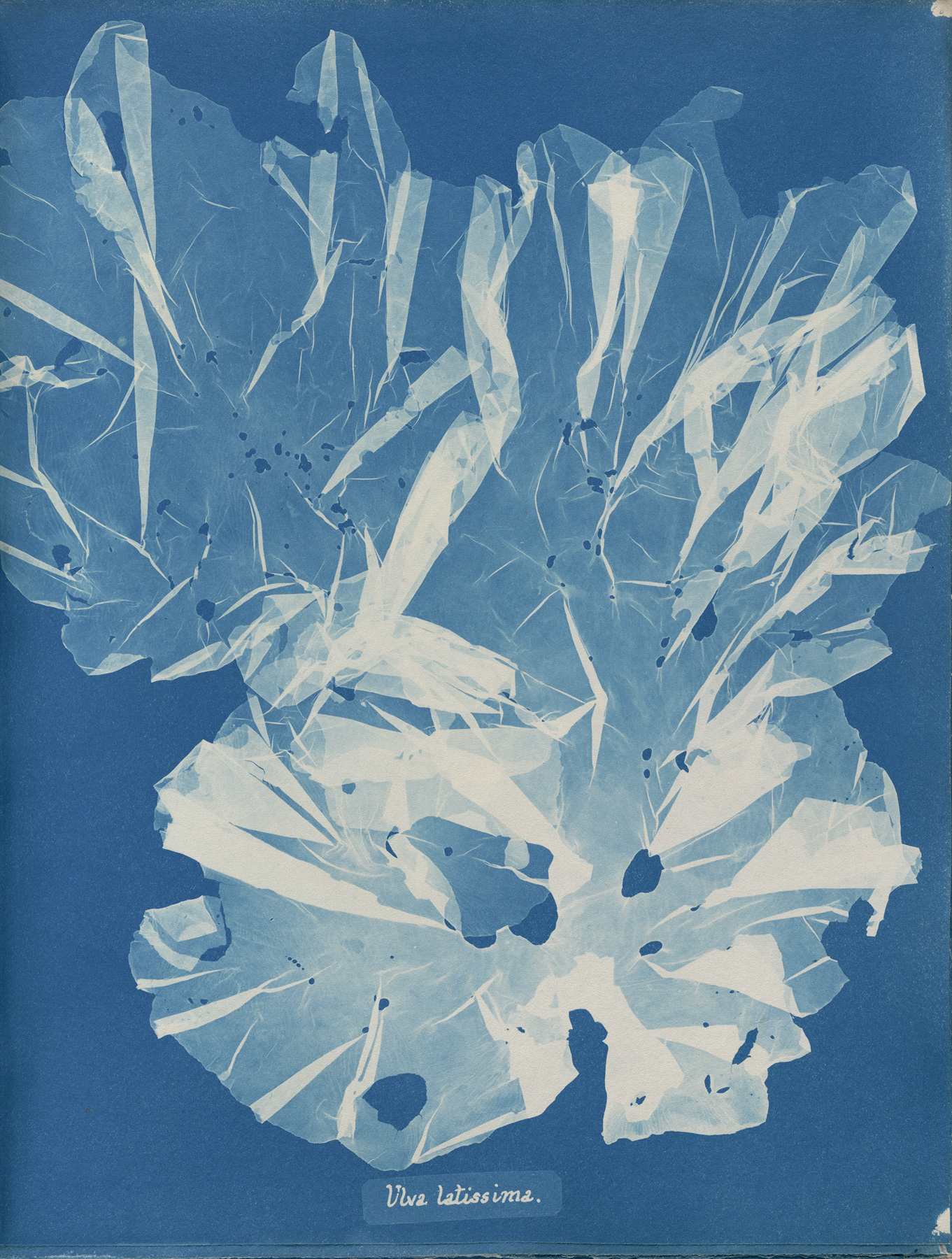
Anna Atkins (English, 1799-1871)
Ulva latissima from Volume III of Photographs of British Algae: Cyanotype Impressions
1853
Cyanotype
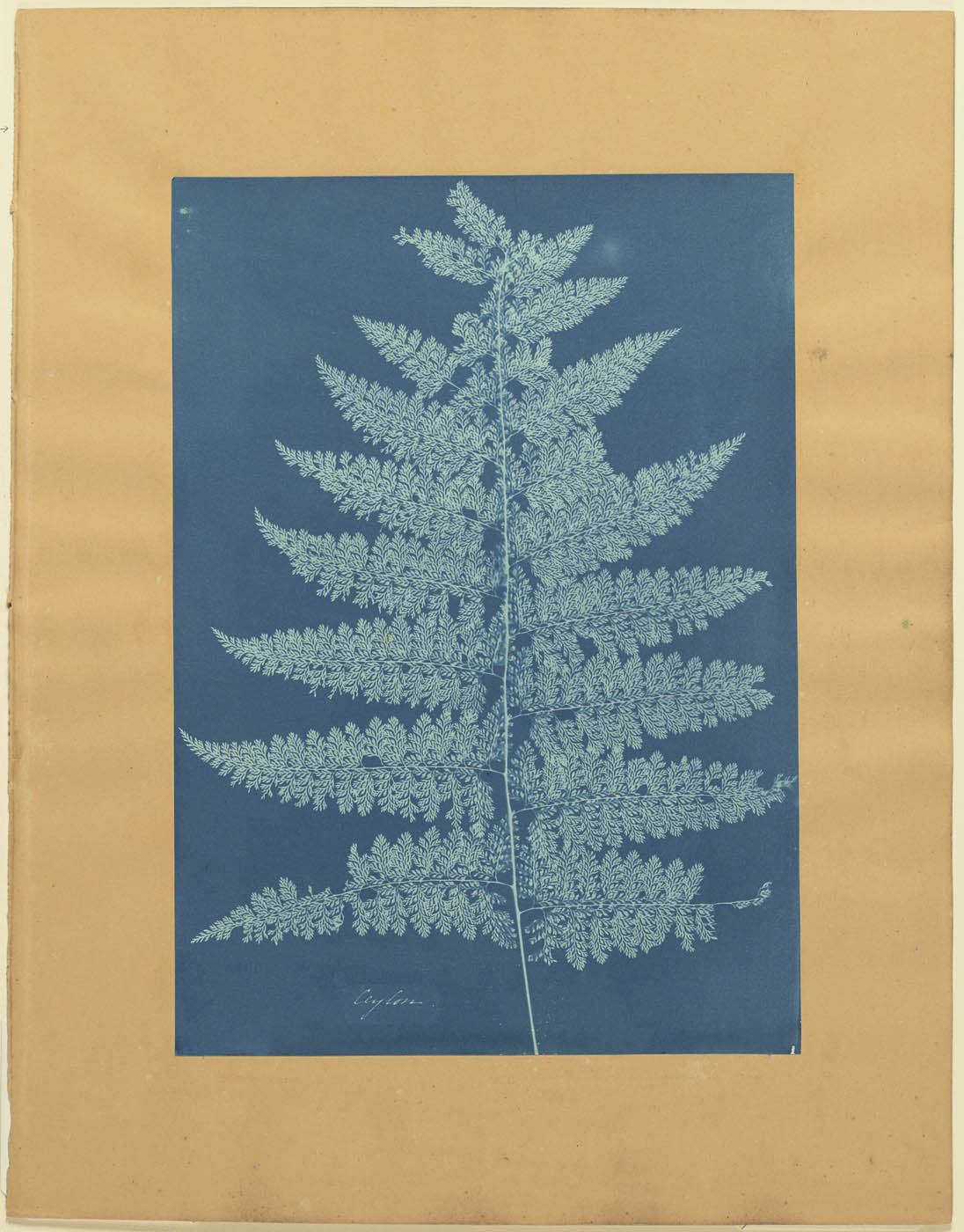
Anna Atkins (British, 1799-1871) possibly with Anne Dixon (British, 1799-1877)
Ceylon/Fern
About 1854
Cyanotype
Image: 34.8 × 24.7cm (13 11/16 × 9 3/4 in.)
Sheet: 48.3 × 37.5cm (19 × 14 3/4 in.)
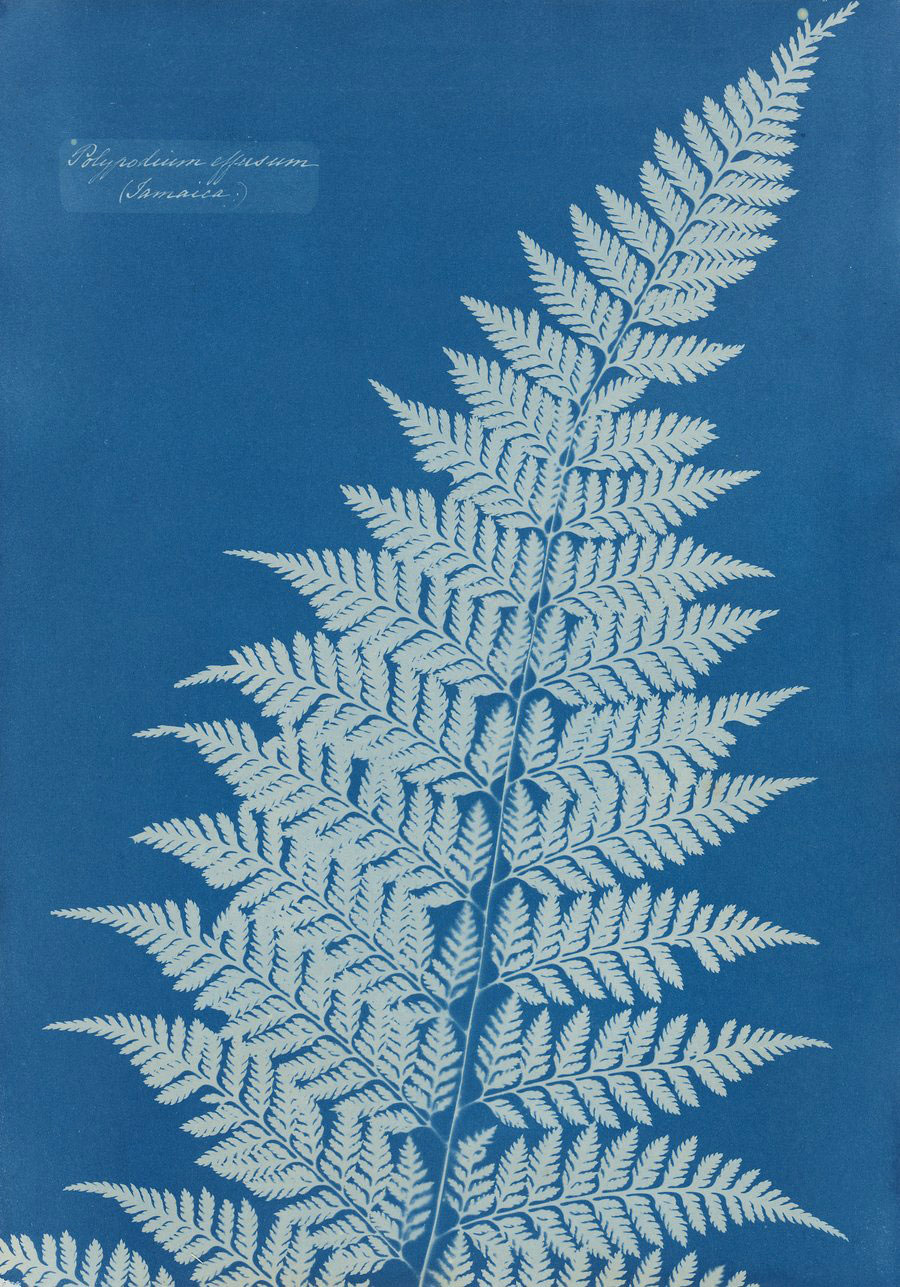
Anna Atkins (English, 1799-1871)
Polypodium effusum (Jamacia) from the Cyanotypes of British and Foreign Flowering Plants and Ferns
c. 1854
Cyanotype photograph
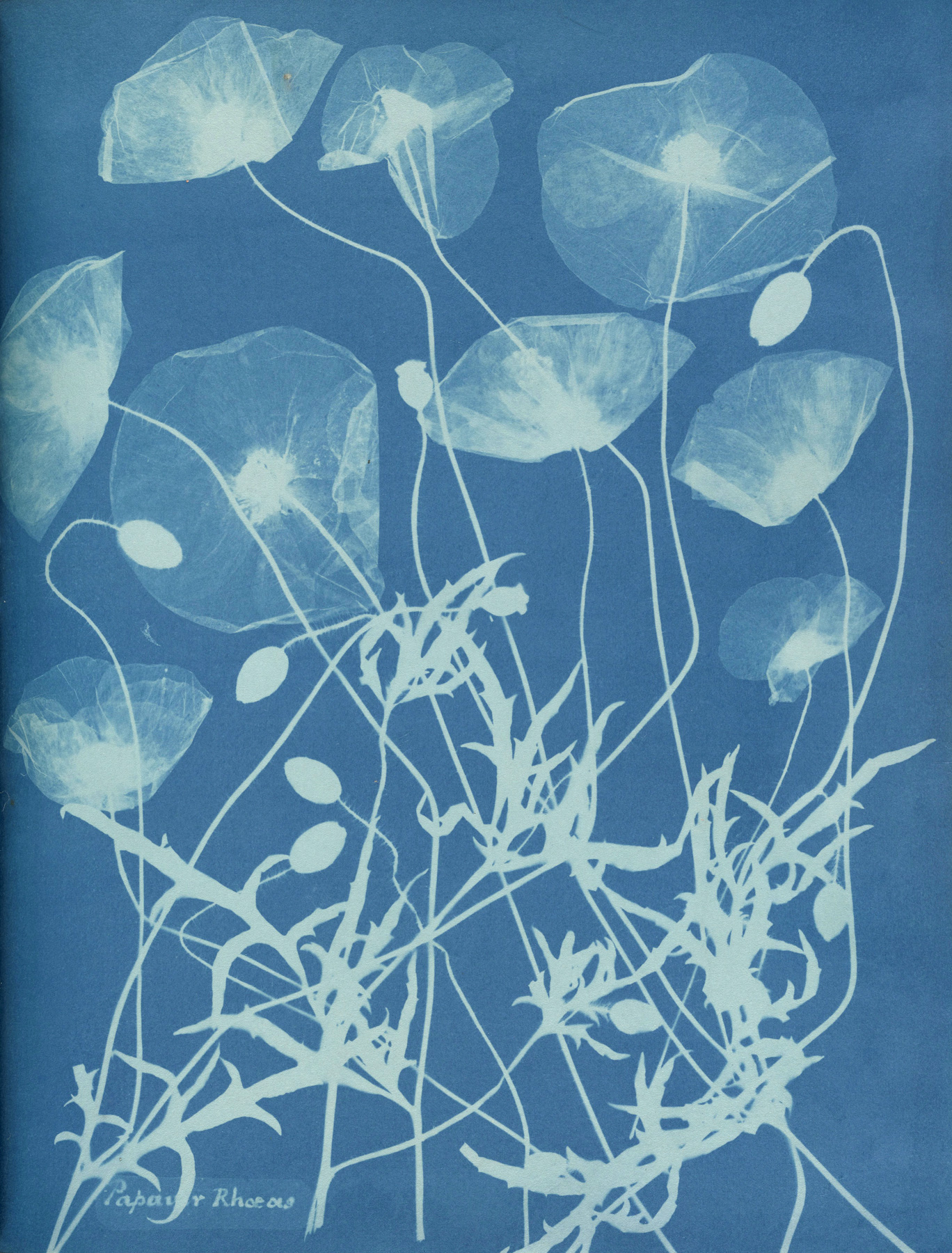
Anna Atkins (English, 1799-1871) and Anne Dixon (British, 1799-1864)
Papaver rhoeas from a presentation album to Henry Dixon
1861
Cyanotype
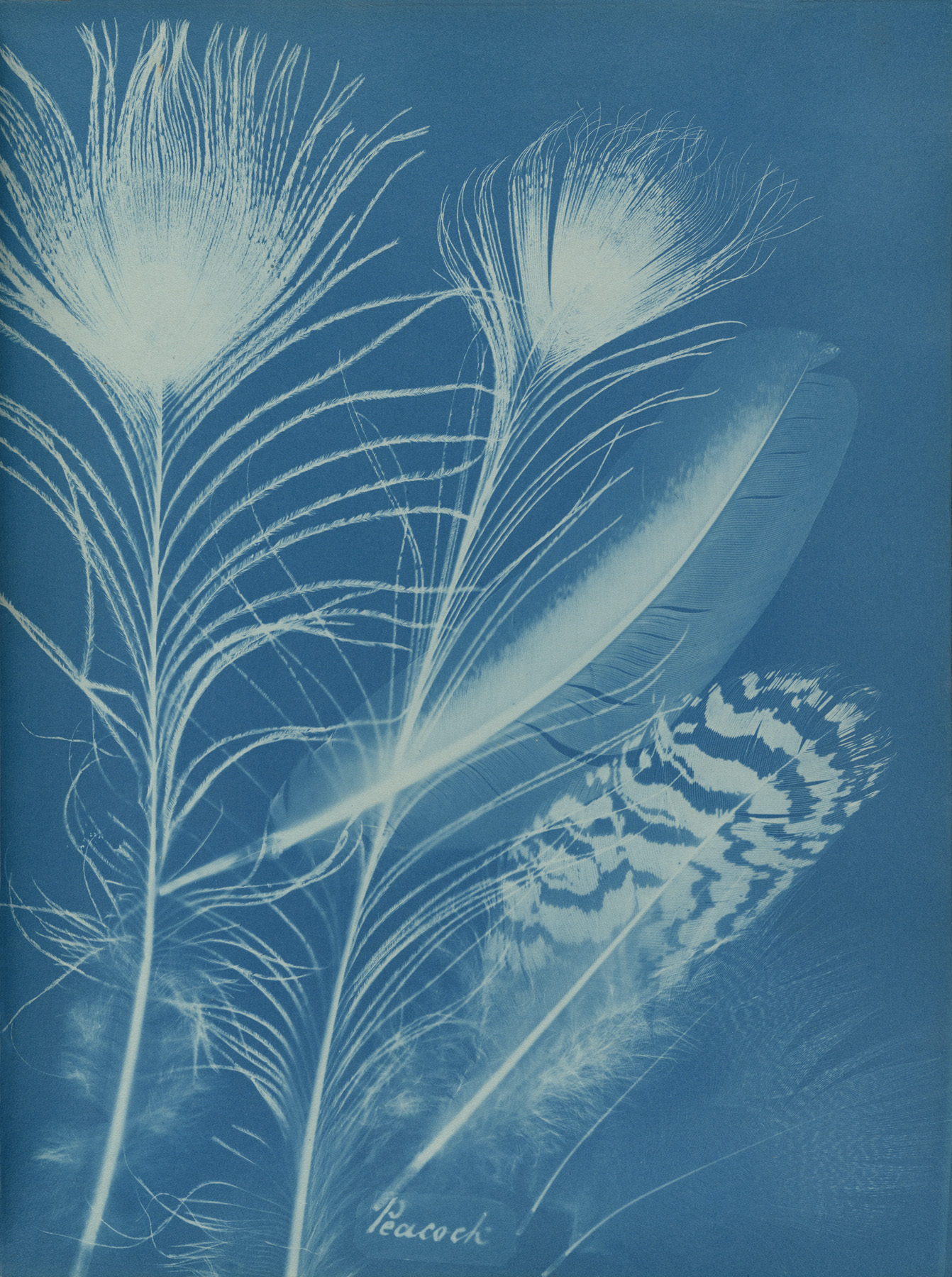
Anna Atkins (English, 1799-1871) and Anne Dixon (British, 1799-1864)
Peacock from a presentation album to Henry Dixon
1861
Cyanotype
 Significant Snappers